A HUMMING RV air conditioner is normal, but a rattle, buzz, grind, or squeal means something is wrong. Most noises fall into a handful of recognizable categories, and the type of noise you’re hearing is one of the best clues to what’s actually wrong. This guide breaks down the most common RV AC noises by type and what each one usually means. Most importantly, we’ll break down which are fine to keep an eye on and which mean it’s time to shut the AC off and call a certified technician.
Why Is My RV AC Making a Loud Noise?
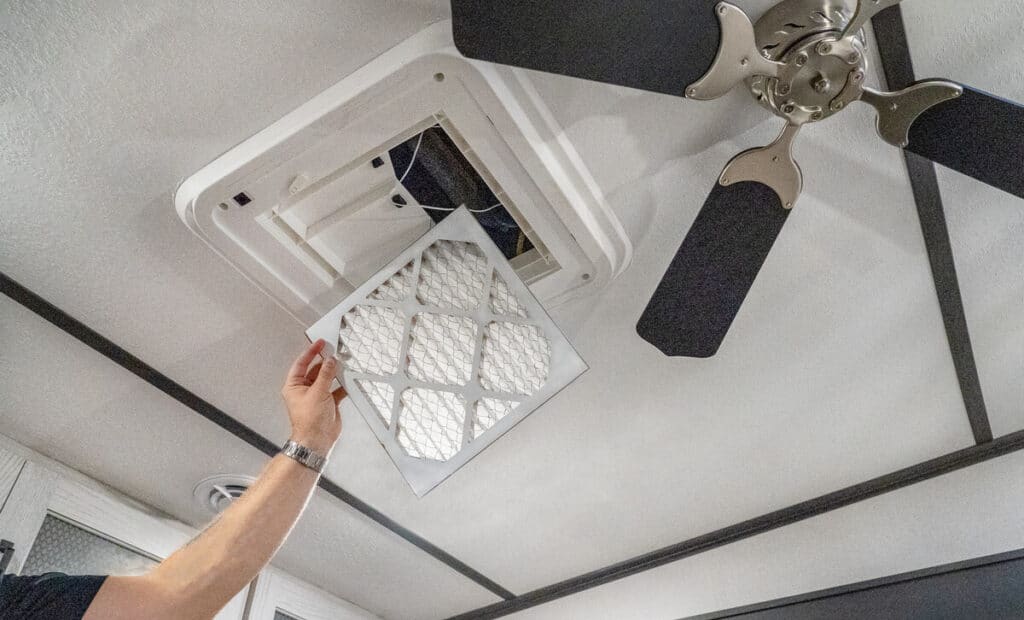
RV air conditioners aren’t silent. A normal amount of fan noise and a soft compressor hum are expected. The noises worth paying attention to are the ones that are new, sudden, or clearly different from how your unit normally sounds.
Most abnormal RV AC noises fall into four categories:
- Rattling is usually mechanical, signaling something loose, vibrating, or making contact that shouldn’t be.
- Buzzing or clicking is usually electrical, indicating a component that’s struggling to engage properly.
- Grinding or loud humming is usually the compressor, which is the component most likely to require professional repair.
- High-pitched squealing is usually the fan motor’s bushings or bearings, which is often a simple, low-cost fix.
- Heavy vibration or pronounced shaking is a signal that the fan is out of balance.
Rattling: Loose Shroud, Debris, or Mounting Issues
Rattling is one of the more common RV AC noises. It’s almost always mechanical, and it often has a straightforward fix. It is usually caused by loose mounting bolts, a cracked or loose exterior shroud, or debris caught in the housing.
If you’re comfortable safely accessing your roof, check the mounting bolts and the shroud’s condition as part of your regular RV AC maintenance routine. If the mounting bolts are loose, the foam gasket between the A/C and the roof membrane has probably lost its pliability and will need to be replaced.
Read our step-by-step RV AC Troubleshooting tips for best practices on properly torquing AC mounting bolts.
Buzzing or Clicking: Electrical Component Issues
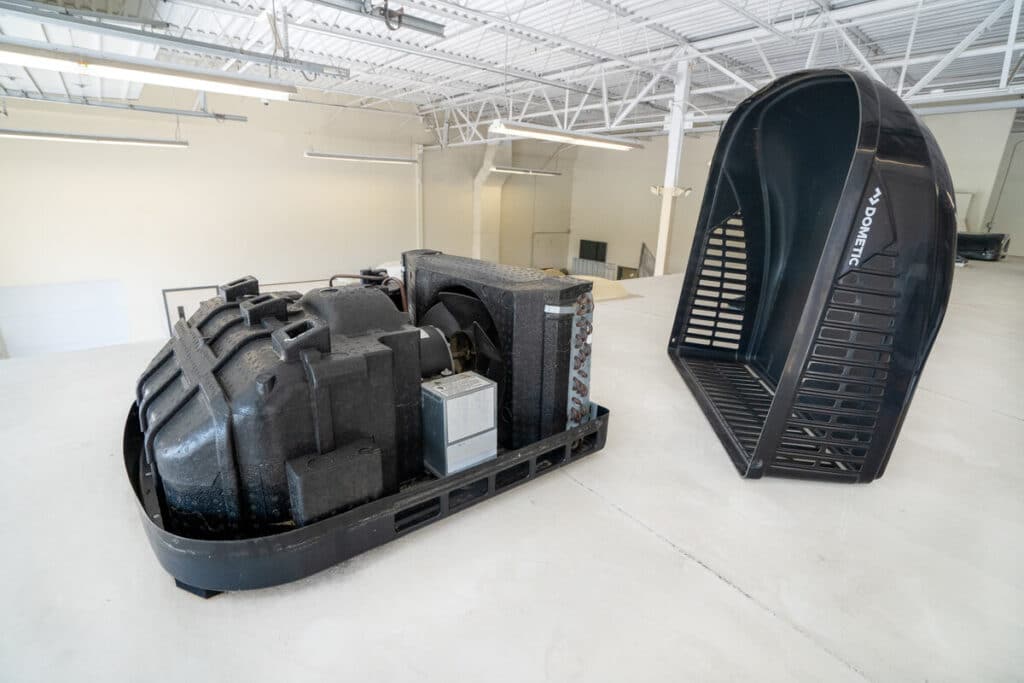
A buzzing or clicking sound usually points to an electrical component that’s struggling to do its job. This is especially true if you hear it when the AC first tries to start, or it repeats every few seconds. This differs from a mechanical rattle. It’s the sound of something trying (and often failing) to engage.
The most common cause of this symptom is a failing start capacitor. The capacitor provides the compressor with the initial jolt of power it needs to start. When it’s weakening, that start attempt can produce a buzz or click instead of a clean start.
If the buzzing or clicking is followed by the compressor successfully starting and the AC cooling normally, the capacitor may still be functional but nearing the end of its life. If the sound repeats without the compressor ever fully engaging, that’s a stronger sign the capacitor has failed.
Testing and replacing a capacitor involves working near a component that stores a dangerous electrical charge, even when your RV is unplugged. This isn’t a DIY diagnostic we recommend attempting without the right training and tools. If you’re hearing this symptom, schedule a technician diagnostic or learn more about how to tell a failing capacitor apart from a failing compressor in our RV AC capacitor replacement guide.
Grinding or Loud Hum: Compressor Warning Signs
A grinding noise usually indicates physical wear inside the compressor. A loud hum that persists even when the compressor never fully engages, or continues after the AC should have reached temperature and cycled down, suggests the compressor is struggling under load.
If this noise is also accompanied by warm air instead of cold, you’re likely dealing with a cooling issue as well as noise. Our guide to why your RV AC isn’t cooling walks through the full diagnostic process for that combined symptom.
Either way, grinding or persistent humming is not a noise to wait out. Running a struggling compressor increases the risk of complete failure, which is a significantly more expensive repair than catching the problem early.
High-Pitched Squeal: Fan Motor or Belt Issues
A high-pitched squeal is typically caused by dry motor bearings in the fan assembly and tends to get louder over time rather than appear suddenly. The fix is usually straightforward lubrication rather than a part replacement. The air conditioner’s manufacturer is the best resource for more information on the correct oil type, amount, and application method for your unit.
Heavy Vibration or Pronounced Shaking: Fan Out of Balance
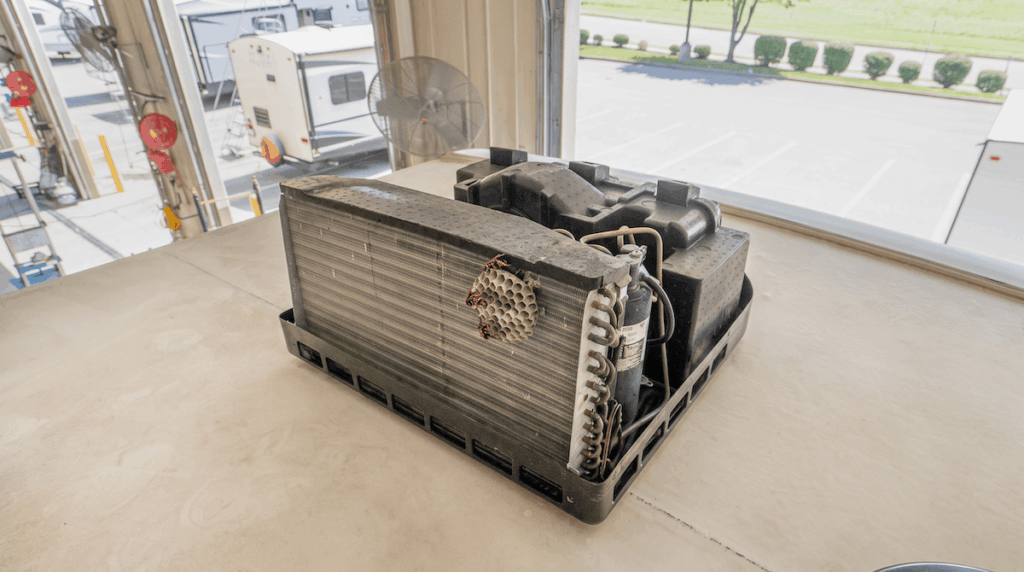
If your RV AC is shaking noticeably, the fan is very likely out of balance. An unbalanced fan spins unevenly, and that unevenness translates directly into vibration you can feel throughout the unit.
The two most common causes are insect nests in the fan’s hub or blades, and missing or damaged blades.
Wasps, mud daubers, and other insects often build nests in RV AC units during storage, and even a small amount of nesting material can throw the fan off balance. A cracked, chipped, or broken fan blade changes the fan’s weight distribution, causing it to wobble every time it spins. An unbalanced fan puts ongoing strain on the motor and its bearings, and what starts as a vibration issue can accelerate motor wear if left unresolved.
To check:
With the AC off and the RV unplugged from all power sources, remove the cover and visually inspect the fan blades and hub for nesting material, debris, or visible damage. Carefully clear away debris, and if a blade is cracked or missing, the fan will need to be replaced by a certified technician rather than repaired.
Will My RV AC Still Work With a Bad Compressor?
A compressor in the early stages of failure may continue to run, but typically at reduced cooling efficiency, with louder or more frequent noise, and with a shorter remaining lifespan.
Running an AC with a known compressor problem is a gamble. It may hold on for weeks, or it may fail completely on the next hot afternoon. Operating an RV air conditioner under strain also risks turning a repairable issue into a full unit replacement.
If you suspect a compressor issue, the safest move is to schedule a diagnostic before you find yourself shopping for a new camper AC.
When to Call a Technician
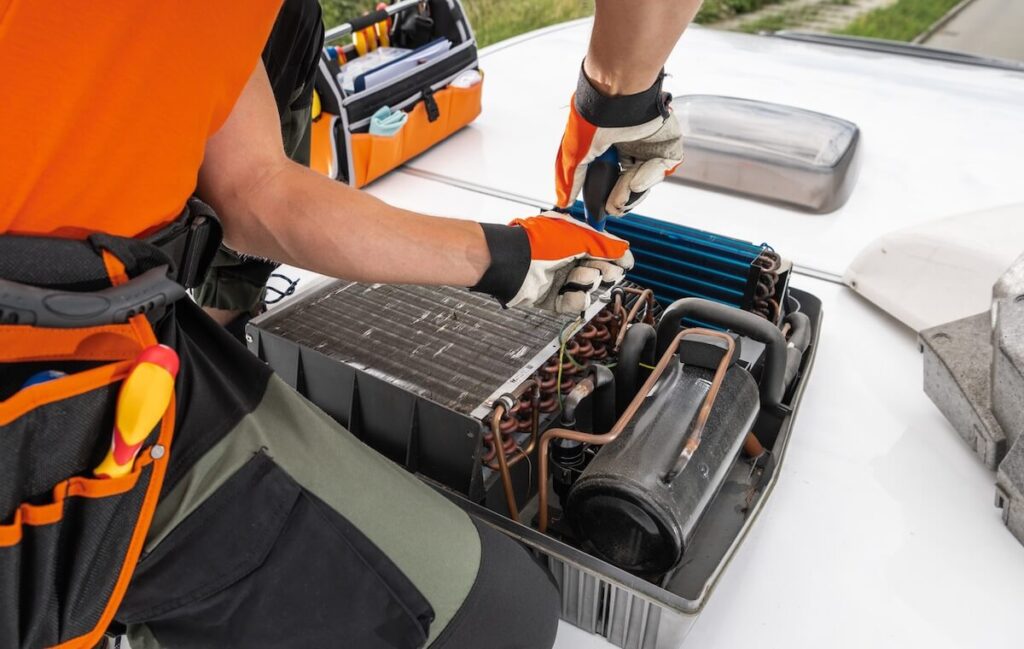
Schedule a professional diagnostic if you’re hearing:
- Grinding or metal-on-metal sounds.
- Loud, sustained humming that doesn’t resolve or is paired with reduced cooling.
- Buzzing or clicking that repeats without the compressor successfully starting.
- A damaged or missing fan blade.
- The compressor hums but never runs. Breaker or thermal protection may trip.
- Any noise accompanied by a burning smell. Shut the AC off immediately in this case.
Here’s a complete list of RV AC faults that require professional service. When you’re ready, contact a certified technician to diagnose the noise and get your AC running quietly again.
Having Other RV AC Issues? Read our full RV Air Conditioner Troubleshooting Guide for help with power issues, tripped breakers, water leaks, poor cooling, and more.
Did this guide help you identify your RV AC noise? Let us know in the comments below!