
WE BOUGHT OUR FIRST camper during the early 2020s RV boom, but we changed RVs three times during our first three years on the road. The first was a Forest River travel trailer that took us to the Grand Canyon from North Carolina, but it soon became too cramped for our full-time living and homeschooling needs. So, we sold it and upgraded to a spacious Sabre fifth wheel with a mid-bunk room and loft, giving our kids more space. Then we decided that was too big and downsized to our current Grand Design Reflection 28BH.
We’ve learned a few things about upgrading, downsizing, and everything in between. What I hadn’t experienced was trading in our RV.
Recently, my aunt traded in her small Class C RV for a larger model because she got a second dog. Because trading in our fifth wheel is a potential for us as our kids get older, I was curious to learn more about her experience.
As we talked, it brought up more questions. What is the best time of year to trade in an RV? What types of RVs are dealers most interested in acquiring? Are there tricks to getting the best possible RV trade in value?
This guide offers insight into the trade-in experience, with tips, advice, and industry research to help you (and me!) decide whether trading in is the right choice. And even if now isn’t the time, tuck this article away for future keeping, as you just might want to return to it down the road.
Is Now a Good Time to Trade In an RV?
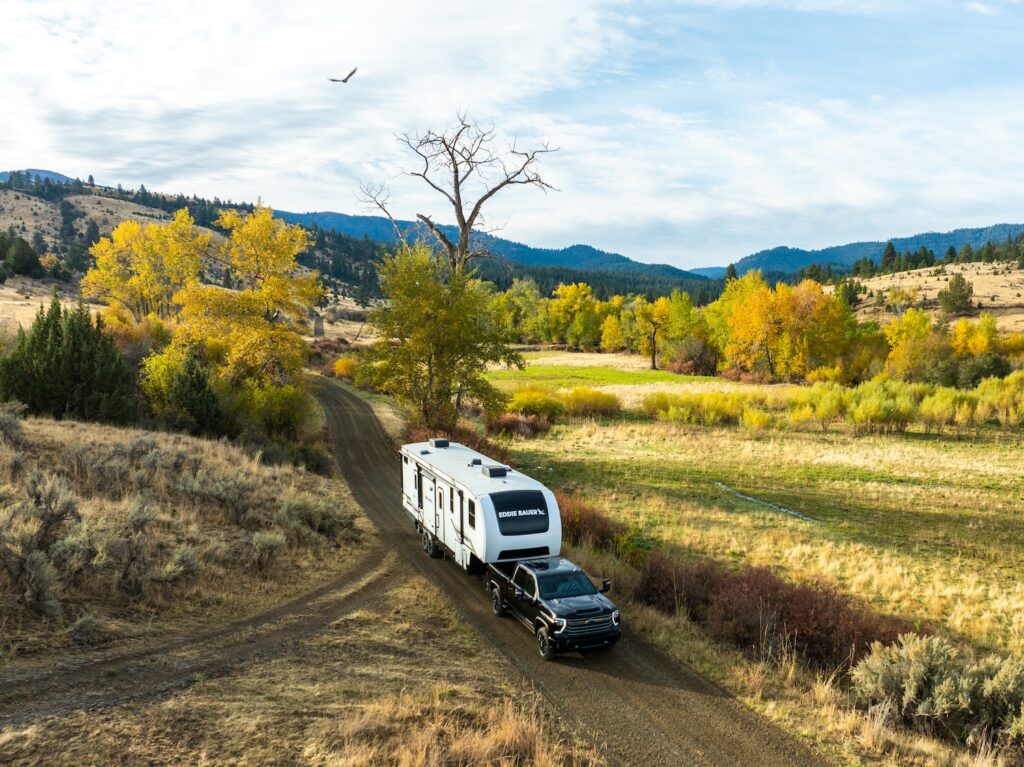
Spring is a natural time to ponder your RV future. As we take our RVs out of storage and start planning spring and summer trips, some of us may be thinking about downsizing, reducing our monthly payment, or maybe even upgrading. It makes sense to consider trading in.
The good news—for interested “traders”—is that the bulk of new model years are still arriving on dealership lots in the spring. Before they do, dealers want to move the previous year’s models to make room. When they do, dealers want to show immediate progress on the new model year—whether through new sales or trade-ins. This creates a sort of “Goldilocks” period for trade-ins, a window of opportunity for RVers looking to get a more generous trade-in value and purchase a new or late-model camper.
But it’s not just seasonal.
The industry has moved past what one might call “pandemic chaos” in the early 2020s. Reports suggest that inventory has stabilized for many RV dealers: they’re no longer overloaded with new models and are more motivated to acquire high-quality, late-model (2022 or newer) trades, including our 28BH.
In my aunt’s case, she had her eye on an RV upgrade at the Tampa RV show in January. While trading in meant a higher monthly payment, she thought it might be worth it because the RV had all the features she was looking for: a larger living space with two separate areas—one for dining and one for lounging, a residential fridge, two air conditioning units, and a slide-out.
My aunt knew this was a good time to trade in and didn’t want the hassle of selling her RV herself. She was aware that a trade-in offer would still be less than what she could possibly get if she did a private sale, but she also knew her Class C was in very good condition and only three years old. With timing and excellent maintenance on her side, she made the call.
So What Are Dealers Looking For?
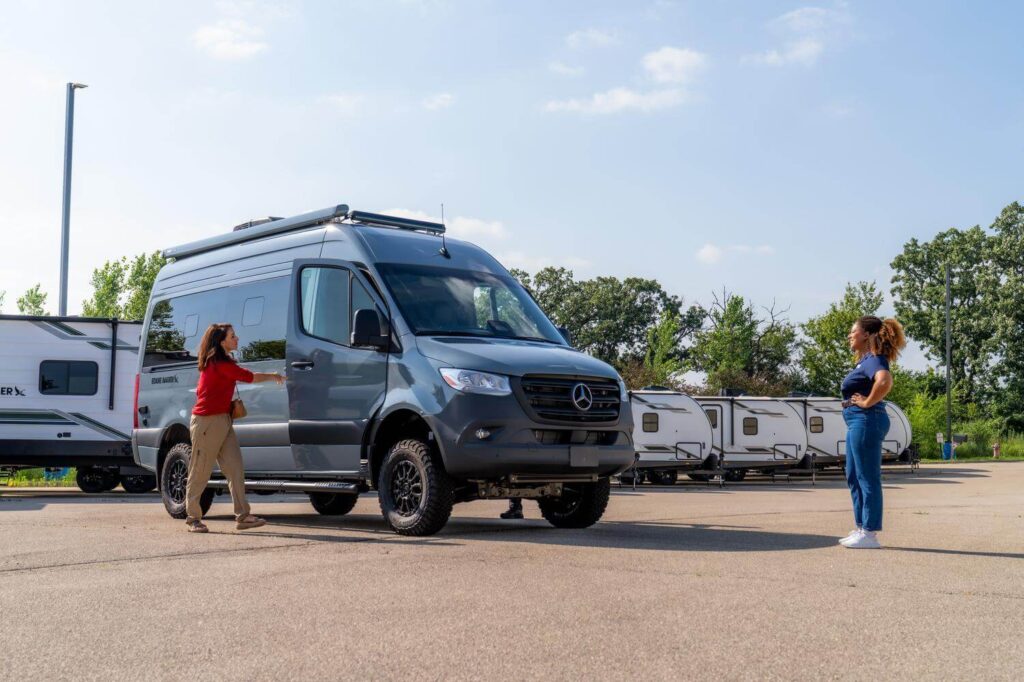
According to KOA’s 2025 Camping Report, the largest demographic of prospective RV buyers wants campers that are “remote work-friendly.” This may mean Wi-Fi prep, built-in desks, or flex spaces that can serve as a workstation and a dining table. For dealers, this makes RVs with these features much more appealing as potential trade-ins, since they know they are selling features to buyers.
It makes sense to me because our family is part of that growing population of younger RVers who need to work from the road. I would love to have more functional workspaces in our next RV for my kids and me.
But what does this mean for you? It means added leverage if you own a late-model RV from a manufacturer that was ahead of the curve in adding those types of “mobile office” features. Dealers may be willing to offer more for tech-forward, nomad-friendly RVs they know will sell in the current market.
This trend especially applies to Class B RVs, as the January NPA RV pre-owned report notes that Class B camper vans are currently commanding a massive premium due to high demand from younger, mobile-work-focused buyers. If you’re looking to trade in a smaller camper like this, you have a perfect opportunity in front of you.
Now, a question many potential “traders” ask is: Is my RV too old? The general guideline in the RV industry is that campers over ten years old are harder to sell. So, for example, RVs that are 7-8 years old and lack upgraded features that come standard in today’s market might be approaching their “last chance” moment before they hit the 10-year “valuation cliff.” According to a recent RV Industry Trends Report, RVs that have reached the 10-year mark—along with those lacking modern tech—are seeing steeper depreciation.
How To Increase Your Trade-In Value
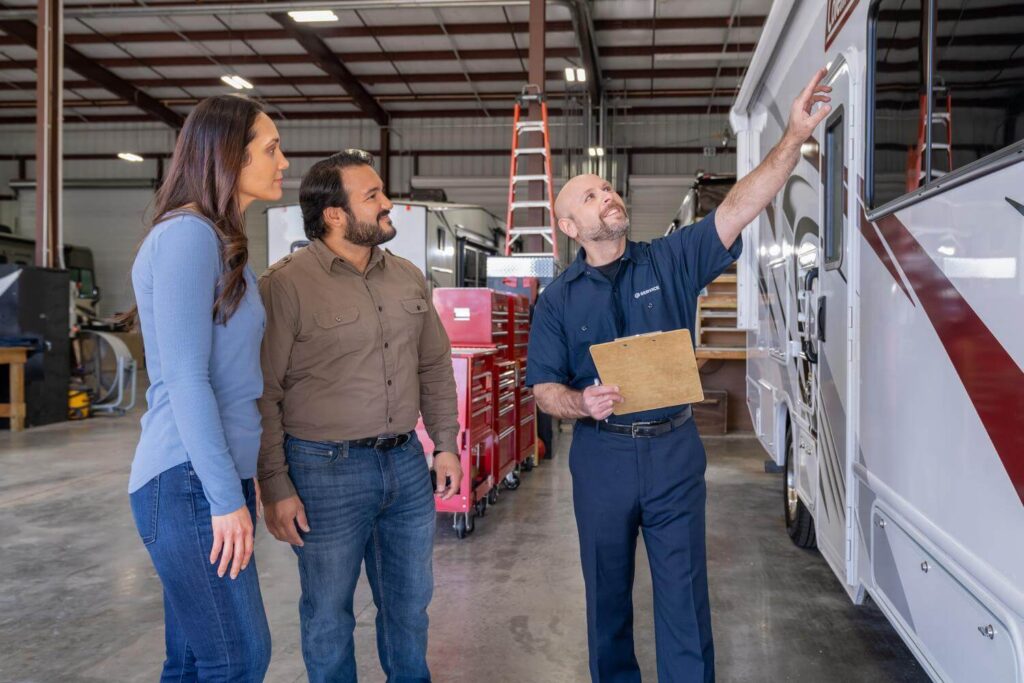
While my aunt didn’t have a remote-friendly RV, it was only three years old and had relatively low engine mileage. She kept up with routine maintenance, and the inside was well cared for, so it looked brand new. During her trade-in process, the inspection team found very few imperfections, clearly improving her trade-in offer compared to if she hadn’t taken such good care of it.
Her key piece of advice? Keep records of oil and fluid changes, regular engine maintenance, brake service, and other maintenance services. And do your due diligence to keep your RV in good shape. While your camper will depreciate, the better you maintain it, the better your trade-in offer will be.
Another tip? Do your homework. My aunt looked at interest rates from her local credit union and other banks and compared them to what the dealership can offer. She also liked the extra coverage programs offered by the dealership, even though these add-ons can increase monthly payments.
If you’re traveling full-time and looking to complete a trade-in out of state, ask the right questions to ensure the process goes smoothly. Here are some examples:
- What is the timeframe for receiving my new tags?
- How will we handle repairs or upgrades before I take ownership?
- How do you handle warranty service and repairs during the warranty period?
- Is there an additional cost to get the RV shipped to my location?
- Are there any additional charges (such as documentation fees or taxes) not included in the sale price?
As a case in point, my aunt has friends who also traded in at the Tampa RV show, with a salesman from New York. Everything went through that state rather than through their Florida residence. This has led to tags taking longer to receive and ordered parts being sent first to the New York dealer, rather than directly to Florida.
Is It Time For Us to Trade In?

After talking to my aunt, the trade-in experience seems pretty simple, and I love the idea much better than trying to sell our 5th wheel on RV Trader or Facebook Marketplace, or having to sit and wait on a consignment sale. While my aunt didn’t get as much as she could have if she sold her Class C privately, she was very happy to make her trade all at once—and quickly.
Alas, we don’t have time before we set out on our next adventure in Maine to clean up our RV, have it inspected to know our trade-in value, and visit a dealership to find another camper that would work for us in a trade. Right now, we aren’t sure what kind of RV we want or whether we are ready to move on just yet.
If you’re considering an RV trade-in this year, here are the pros in a nutshell:
- It’s the fastest and easiest option to sell your RV.
- It’s safe because you don’t have to show it to people you don’t know.
- After you get it detailed, there is little work on your end.
- You can buy another RV right away.
The biggest downside to trading in your RV is that you’ll likely get less money than if you sold it privately. But if you want to get out of your old RV and into a new one quickly, trading it in is an excellent option!
If that sounds like you, here are some resources to help you take the next steps:
- What’s the Value of My Camper?
- Where Can I Trade In My Camper?
- How To Maximize My Camping World RV Value
- How Much Does an RV Depreciate Per Year?
And here are some additional resources to help you explore new RVs that might better fit your current needs.
- The Dust Has Settled. The Best RVs of 2026
- 2026’s Best Mercedes Class C RVs
- Is 2026 the Year of RVs with Side Patios?
Have you traded in an RV before? We’d love to know about your experience and if you would do it again. Let us know in the comments below.


