The cost of a camper roof repair depends on the scope of the damage, your roof’s size and material, how many penetrations need resealing, labor rates in your area, and whether the problem extends beyond the surface. This guide breaks down RV roof repair costs by repair type and material, explains how insurance and warranty coverage typically work, and shows you how to get an accurate estimate.
What Affects RV Roof Repair Cost?
Diagnosis. Every certified repair is going to come with the cost of a complete diagnosis so the extent of the damage to be repaired can be accurately documented and quoted.
Repair size. The size of the area to be repaired determines how much material is needed and how long the job takes.
Roof material. EPDM, TPO, fiberglass, and aluminum roofs each require different compatible cleaners, primers, sealants, patches, and coatings.
Damage scope. A small puncture repair is very different from membrane failure, soft decking, delamination, or interior water damage. The visible problem doesn’t always tell you the full scope until a technician inspects it.
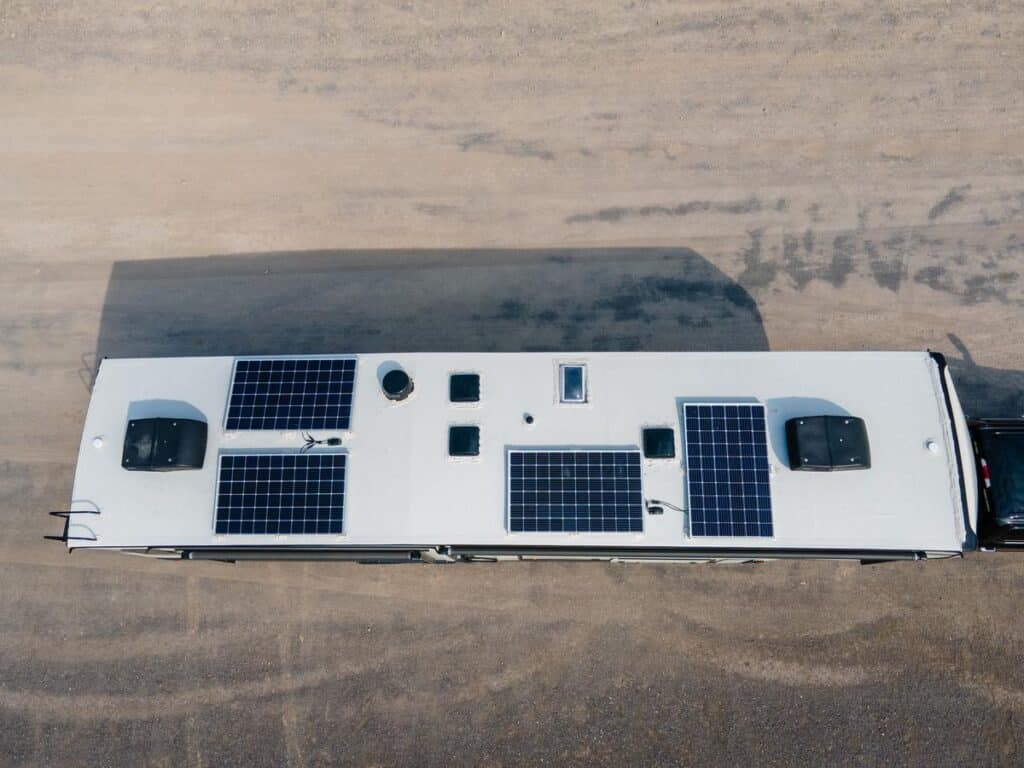
Number of roof-mounted accessories. For a full roof replacement or reseal, every vent, skylight, antenna, solar panel, ladder mount, and A/C unit adds prep and labor.
Preparation. Removing old failed sealant, cleaning and drying the surface, and repairing the substrate and roof supports are examples of additional prep and labor that may add hours to the repair.
Labor and access. Regional labor rates, whether you use a service center, dealer, or mobile technician, and travel fees (for mobile techs) factor into the final bill.
Repair history and roof age. A roof that has already had repeated repairs, or one that’s simply older, may impact the labor required to complete the repair.
A note on roof size calculators: Measuring your roof’s square footage can help estimate how much sealant or coating you’ll need, but it can’t predict labor costs, hidden damage, or whether the underlying substrate is sound. A roof inspection — completed by a certified technician — is still the only way to get an accurate number.
RV Roof Repair Cost by Type of Repair
| Repair Scope | Market Estimate* | Commonly Included | Key Caveat |
|---|---|---|---|
| Sealant/spot repair | $150 to $700 | Cleaning, sealant removal, and new sealant application | Cost rises quickly if the damage extends beyond the visible spot |
| Full reseal or coating | $400 to $1,500+ | Lower end: Full perimeter and penetration reseal, Higher end: a complete roof coating | The larger the RV, the higher the cost of a complete reseal or coating. |
| Leak repair (including structural) | $200 to $2,000+ | Diagnosis, sealant/patch work, and decking or framing repair, if needed | Jobs where water has entered and damaged the structure can drive the cost well past the higher end of the spectrum. |
*Estimates are drawn from third-party RV service providers and are not Camping World pricing. See the pricing disclaimer below.
Sealant and Spot Repair Cost: We’re talking about an isolated failed seam, a worn vent seal, or a small puncture where the underlying substrate is still sound. Costs for sealant and spot repair typically stay lower when the job is limited to one or two problem areas. If the scope expands to include multiple penetrations, membrane inspection, or any evidence of moisture beneath, the cost will rise accordingly.
Our guide to the best RV roof sealants covers which products are compatible with your roof type.
Full Resealing or Coating Cost: A full reseal means removing all old sealant, cleaning and prepping the entire roof, and resealing every seam, vent, and accessory. Costs scale with roof size and the amount of surface prep needed.
Planning to tackle it yourself? Our RV roof resealing guide covers prep, application, and cure time.
Leak Repair Cost (Including Structural): Leak repair costs are highly variable because tracing the source can be more involved than the visible damage suggests. Water often travels before it shows up as a stain. A straightforward sealant fix at a known entry point sits at the low end. If the leak has reached the decking, framing, or interior walls, the job moves into structural repair, and the cost climbs accordingly.
Our RV roof leak repair guide walks you through finding the source before you budget for the fix.
RV Roof Repair Cost by Material Type
EPDM and TPO Rubber Roof Repair Cost: Because these are the most common membrane types, compatible materials and experienced technicians are also the most widely available, which tends to keep EPDM and TPO repair costs on the lower end of the range compared to less common roof types. However, a sealant or cleaner formulated for one may not be compatible with the other. Using the wrong product doesn’t just risk a failed repair; it means paying for the job twice.
Fiberglass Roof Repair Cost: Manufacturer prep guidance for fiberglass surfaces calls for thorough cleaning and resealing of all protrusions before any coating is applied, and gelcoat work in particular requires more finish skill than a straightforward membrane patch, all of which adds labor time.
Aluminum Roof Repair Cost: Because aluminum roofs are less common than rubber roofs, technicians experienced with their specific repair needs may be more limited in your area, which can affect availability and price. Fewer qualified providers in a given region typically means less price competition, so aluminum roof repairs may carry a higher labor premium.
RV Roof Replacement Cost
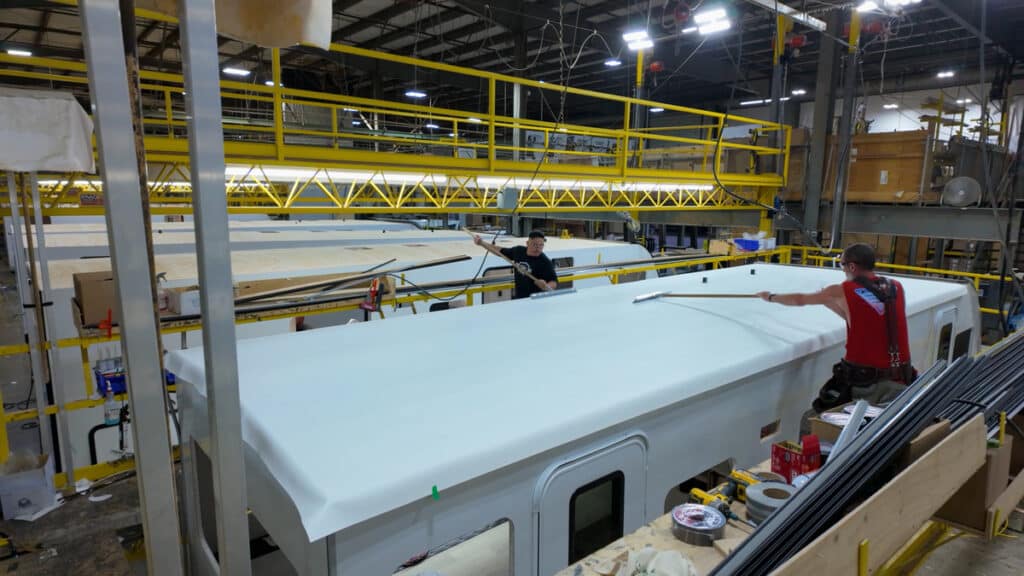
Full roof replacement is the most expensive scope of RV roof work, and it’s worth understanding both the pricing and the decision point before you get there.
Cost Per Linear Foot: There isn’t a consistent, industry-wide price per linear foot for RV roof replacement. Quotes can be structured by roof area, total linear footage, or overall project scope, and what’s included varies by shop. When you request an estimate, ask specifically what measurement the quote is based on and what it includes, so you can compare quotes accurately.
Typical Replacement Range: Full roof replacement costs vary with RV size, roof material, and the extent of underlying structural work required. Some full membrane replacements cost thousands of dollars and can run considerably higher when decking or framing repairs, interior restoration, or fixture removal and reinstallation are needed.
Repair vs Full Replacement — How to Decide
Repair or reseal is usually the right call when damage is localized, the membrane is still flexible and intact, the decking underneath is dry and firm, you can identify the leak source, and prior repairs in the area haven’t failed repeatedly.
Replacement — or at minimum a professional inspection to determine the full scope — becomes the better option when you’re seeing widespread membrane brittleness or tearing, soft or spongy areas, visible sagging, delamination, damaged decking or framing, a leak you can’t pin down, or a repair that keeps reopening.
The only way to get an accurate number for your specific situation is a hands-on inspection. Camping World Certified Technicians can assess your roof, identify the scope of the work needed, and provide a written estimate.
Disclaimer: RV roof repair prices vary by RV size, roof material, extent of damage, regional labor rates, access, and any hidden water damage. The ranges in this guide are general estimates drawn from third-party sources, not a quote or guaranteed Camping World price. A technician must inspect your RV and provide a written estimate. Taxes, travel, parts, decking or interior restoration, and insurance deductibles may be additional. Confirm current pricing and service availability with your local Camping World Service Center.
Does Insurance or Warranty Cover RV Roof Repair?

RV insurance may cover roof damage from a sudden, covered event, such as severe weather, hail, falling debris, or vandalism. This will be subject to your deductible, policy exclusions, and specific endorsements. What insurance typically does not cover is damage from wear and tear, deteriorated sealant, or lack of routine maintenance. Review your specific policy for terms and coverage conditions.
By comparison, RV manufacturer warranties cover defects and premature material failure, not routine maintenance, normal wear, poor installation, structural problems from misuse, or damage caused by incompatible products. Warranty terms vary significantly by manufacturer, so check your RV’s warranty documentation for the conditions that apply to you.
Technician Tip: Documentation matters either way. Keep photos from your roof inspections, service records, product receipts, and a written record of when you noticed and reported any water damage. If you ever need to file a claim or warranty request, this documentation is what supports it.
Frequently Asked Questions
Most full RV roof resealing jobs fall between $400 and $1,500+, depending on your roof size, material, the number of penetrations, and the amount of surface prep required. Estimates vary because “reseal” can mean anything from a spot repair to a full coating application.
Localized repair is almost always less expensive than a full camper roof replacement when the membrane and underlying substrate are still sound. Replacement offers better value when damage is widespread and structural, keeps recurring despite repairs, or the roof is old enough that further patching is likely to be a short-term fix. A professional inspection by a certified technician is the only reliable way to know which category your situation falls into.
Many manufacturer warranties include conditions around maintenance records, approved repair methods, or certified service work. DIY RV roof repairs may fall outside those conditions or could affect future coverage, depending on your specific warranty terms. This doesn’t mean DIY repair always voids your warranty, but it does mean you should read your warranty documentation and, when in doubt, get written confirmation from your manufacturer before starting any repair yourself.
Disclaimer: Getting on an RV roof or using a ladder is done at your own risk. Roofs can be slick, uneven, or structurally weak, and a fall can cause serious injury. Use proper fall protection, a stable ladder on level ground, and never work alone or in wet or windy conditions. If you are uncomfortable with heights, have mobility limits, or suspect soft decking, stay off the roof and hire a qualified technician.
For help with product selection, see our best RV roof sealant guide.
Have questions about roof repairs or maintenance? Good Sam Elite members can call the Technical Support hotline at 844-649-4700 for questions and maintenance tips.
Have you had RV roof repair or replacement work done? Share what it cost and what was involved in the comments below.