When your RV heater quits on a cold night, the cost of the fix weighs heavily on your mind, even if you’re distracted by the need to make it through until morning. For most single-part repairs, it’s a few hundred dollars once you add up diagnosis, labor, and parts. But that’ll depend on which part failed and how long it takes to access, diagnose, and repair or replace it.
Access is the biggest variable. Easy exterior panels vs units that must come out of a cabinet can produce very different quotes for the same failed part. For example: an igniter on an easy-to-access furnace will be less expensive than a control board or a blower motor on a furnace that must be removed from its cabinet; more on this below.
While some of the most common causes, such as a closed propane valve or low battery voltage, cost nothing to fix, others should only be diagnosed and repaired by a trained RV technician. This guide covers repair costs for forced-air propane furnaces found in most travel trailers, fifth wheels, and motorhomes. Hydronic RV heating systems, like Aqua-Hot® and Truma®, are priced differently.
How Much Does RV Furnace Repair Cost?
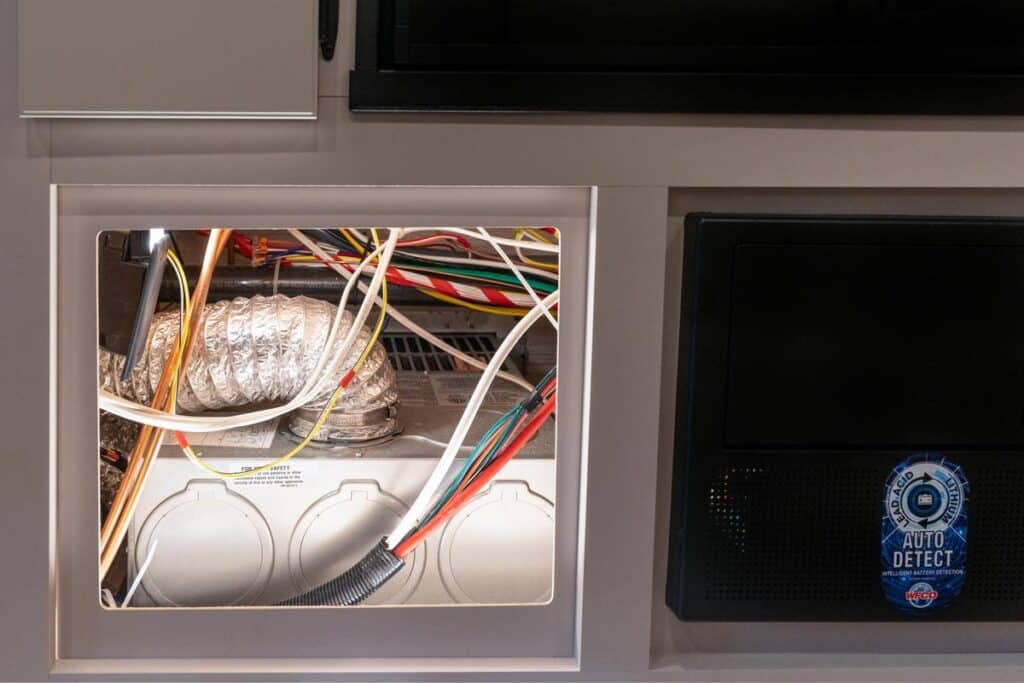
What does it cost to fix a furnace in an RV? Costs fall into three tiers: diagnosis, single-part repair, and replacement.
- Diagnosis only: usually about an hour of labor. Most shops bill diagnostic time at their regular labor rate, often with a minimum charge, so a straightforward furnace diagnosis typically costs about 1 hour of labor. Intermittent problems can take longer to track down. Ask whether the fee is credited toward the repair. Mobile service adds a trip fee in most cases; that can push the lower end of simple repairs higher than if repaired at a service center.
- Single-part repair: about $150 to $800. Most furnace failures come down to one component, such as the igniter, sail switch, or blower motor. Costs vary by the exact part, but this figure represents an average range.
- Replacement: a bigger investment. When a furnace can’t be repaired, or repairs no longer make sense, our guide to RV furnace replacement covers what a new furnace costs and how to choose one.
RV Furnace Repair Cost by Component
Here’s what some common RV furnace repairs typically cost, including diagnosis, labor, and parts. If you want to know what each part does, our guide to how an RV furnace works walks through the sail switch, limit switch, circuit board, and the rest of the ignition sequence.
| Repair | Typical Cost (All-In) | What Drives the Price |
|---|---|---|
| Igniter (electrode) replacement | $150 to $450 | Usually the quickest furnace repair |
| Sail switch or limit switch replacement | $150 to $400 | Inexpensive part; labor depends on access |
| Control board replacement | $250 to $800 | The board must match your furnace model exactly |
| Blower motor replacement | $300 to $800 | Some installations require removing the furnace |
| Gas valve replacement | $300 to $600 | Includes a propane leak check after installation |
These figures are estimates, not Camping World pricing. They assume typical RV service labor rates of roughly $150 to $200 per hour. Labor and diagnostic rates vary by location; some furnaces are much easier to reach than others, and parts prices vary by furnace model. So contact your nearest Camping World service center for an exact quote.
What Makes One Furnace Repair Cost More Than Another?
The part is often the smallest piece of the bill. Most of what you pay covers diagnosis and labor, and labor depends heavily on access. Some camper furnaces can be serviced through an exterior access panel. Others sit behind cabinetry and have to come out of their compartment for certain repairs, like a blower motor replacement.
For that reason, two RVs with the same failed part can end up with noticeably different quotes. Here are a few other reasons:
- The cost of the part that failed. Use the table above as your starting point.
- Your furnace’s age. Parts for older or discontinued models are harder to find and may cost more.
- Where you get service. Labor rates vary by region and between service centers and mobile technicians.
- Warranty or service contract coverage. If your RV is still under warranty, or you have an extended service contract, a furnace repair may be partly or fully covered. Check our RV warranty guide before you pay out of pocket.
If you’re interested in mobile service, learn more about mobile RV repair costs.
Is It Worth Repairing an Older RV Furnace?
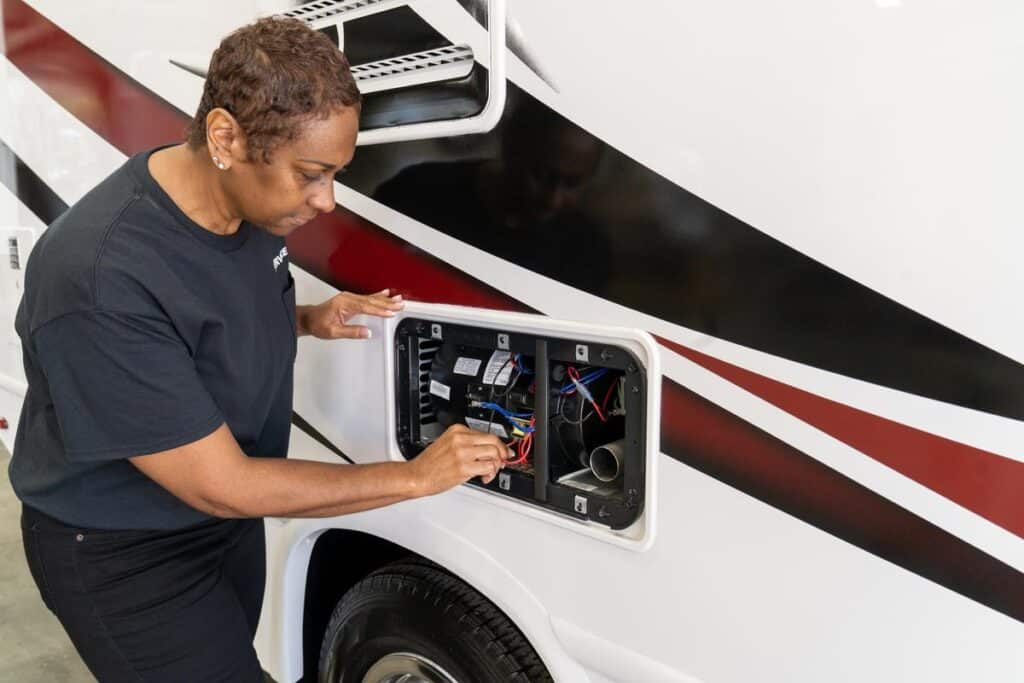
Usually, yes. Most furnace repairs cost far less than a replacement, but on an older furnace it’s worth comparing both options.
A common rule of thumb: if a repair would cost about half as much as a replacement, get a replacement quote too before you commit. After the diagnostic is complete, ask your tech or service advisor if any other components show signs of wear. If one repair is likely to be followed by another, replacement may be the better value.
The only way to know your actual cost is a diagnosis. Camping World’s certified technicians repair RV furnaces from all major brands, and mobile service is available at select locations.
If you suspect an issue with your thermostat, rather than the furnace itself, see our guide to replacing an RV thermostat.
Frequently Asked Questions
Most single-part furnace repairs take about 1-2 hours of hands-on time. Hard-to-reach furnaces and multiple failed parts take longer. How long your RV is at the shop depends more on scheduling and parts availability than on the repair itself, so ask about both when you book.
The blower motor is typically the most expensive repairable part because it requires the most labor to replace, especially on furnaces that must be removed from their compartment. Control boards and gas valves are close behind. These repairs typically run roughly $250 to $800, including diagnosis, labor, and parts. A cracked heat exchanger is a different story, since it often means replacing the furnace.
Usually, yes, if the furnace is otherwise in good shape. The typical cost of a control board or blower motor repair is less than the average RV furnace replacement cost. On an older furnace, get a replacement quote too, especially if the repair quote approaches half the cost of a new furnace, and ask the technician to check the heat exchanger before you commit.
Often, if your furnace is less than two years old. Major RV furnace manufacturers typically warranty their furnaces for 2 years for the original owner, covering parts and labor, and some extend heat exchanger coverage longer for parts only. Trip fees for mobile service usually aren’t covered. If you have an extended service contract, check whether furnace components are included.
Curious about DIY troubleshooting? Here’s our guide for when your RV furnace isn’t working.
Good Sam Elite members can call the Good Sam Technical Support hotline at 844-649-4700 for questions, guided troubleshooting, and maintenance tips.
What did your last RV furnace repair cost? Share what you paid in the comments below to help fellow RVers know what to expect.