A failing RV furnace isn’t just inconvenient; it’s a safety concern. Whether you’re dealing with no heat, weak airflow, constant cycling, or a heater that refuses to ignite, knowing when to repair and when to pursue an RV furnace replacement helps you avoid unnecessary downtime and expensive mistakes. This guide covers the top considerations for replacing a camper furnace, costs, and what you should leave to a certified RV technician.
When Should You Replace Your RV Furnace?
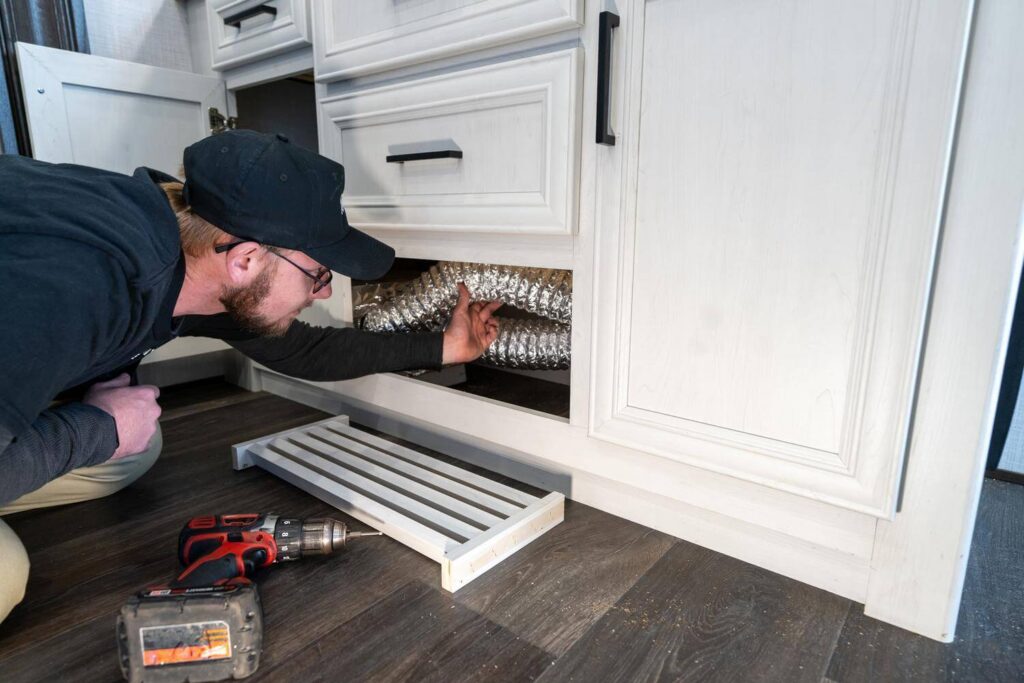
Most camper furnaces can be repaired, but age and wear eventually take their toll. You may need to replace an RV furnace when:
- The heat exchanger is cracked
- The blower motor or circuit board keeps failing, even after repairs
- The furnace keeps failing to ignite, even after repairs
- Parts are discontinued or repeatedly breaking
- If a repair costs roughly half as much as a new furnace, get replacement quotes before committing
If it’s more than 10-15 years old, a full camper furnace replacement often makes more sense than continuing to swap out worn components.
Technician Tip: Perform and keep up with annual maintenance (clean intake/exhaust, inspect for debris/soot/rust, test CO detectors, verify sail switch and high-limit function) to extend life and catch issues early. CO and smoke detectors are non-negotiable; test/replace them per manufacturer intervals.
Choosing the Right Replacement Furnace for Your RV
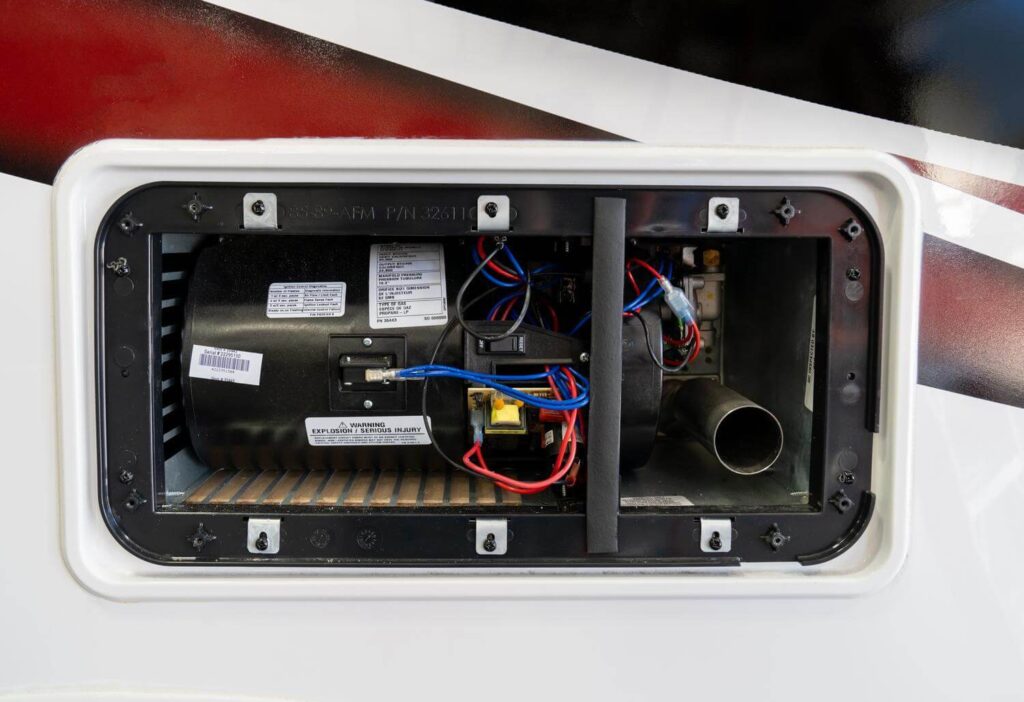
Shopping for a replacement RV furnace isn’t something most RVers do often, so it helps to know the key specs:
1. BTU Output. Match or slightly increase your furnace’s BTU rating to maintain proper heating. Most range from about 12,000 to 40,000 BTUs, with smaller units in compact trailers and vans.
2. Physical Dimensions. Measure carefully. RV furnaces fit into framed compartments, and even small differences in size matter. Also note whether your current furnace has an exterior access door or a doorless design, since door style and your RV’s sidewall thickness affect which replacements fit. Keep in mind your exhaust: if your new furnace has a different exhaust plate, you may need to modify it to ensure a safe, clean finish.
3. Ducted vs Non-Ducted. Ducted furnaces connect to interior ductwork and heat multiple zones. Non-ducted furnaces push air directly into the living space. Keep your existing setup unless you plan major modifications.
4. Electrical Requirements. Your furnace needs to match your RV’s electrical system and control wiring. Most RV furnaces run on 12V DC, but some larger models are built for 120V AC. This becomes especially important when considering an upgraded thermostat.
5. Brand Compatibility. Stick with brands built for RV applications, such as Dometic®, Suburban®, and Fogatti®. Going with a matching brand typically makes installation easier and parts sourcing simpler. Switching brands may require adapting the wall opening, gas line, ducting, or exterior vent, since cabinet sizes and connection locations vary across brands and models.
6. Complete Furnace vs Replacement Core. Some manufacturers sell a replacement core designed to slide into your existing furnace’s cabinet and reuse its connections, rather than replacing the whole installation. A core typically costs less than a complete furnace, but it only works if it matches your existing cabinet, duct layout, electrical supply, and gas connection. Confirm compatibility before you order.
Recommended RV Furnace Replacement Options
Before you shop, confirm which brand you have. RV manufacturers usually list a furnace’s BTU rating, but not its brand, in their specs. Check the data plate on the furnace itself; our Suburban® and Dometic® furnace guide shows where to find it and how to read the model number.
Technician Tip: Because RV furnace compartments, ductwork, and wiring vary widely, always match model numbers or consult a technician before ordering a replacement.
Suburban®
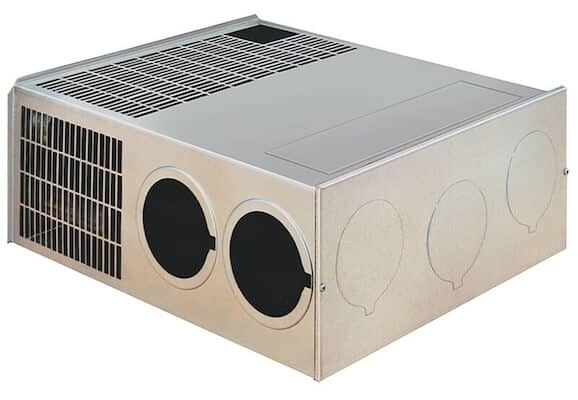
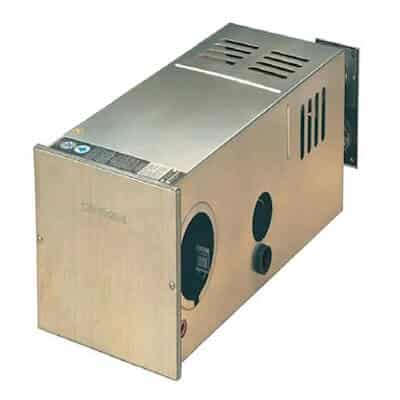
Images by Camping World
Suburban® builds two main lines of RV furnaces: the SF Series and the NT Series. SF Series furnaces are ducted, pushing heat through your RV’s ductwork to multiple rooms. The NT Series includes ducted models and smaller direct-discharge models that blow warm air straight into the living space through a grille on the furnace and suit smaller RVs. Both lines include quieter “Q” models for RVers who notice blower noise at night.
Dometic® (Formerly Atwood®)
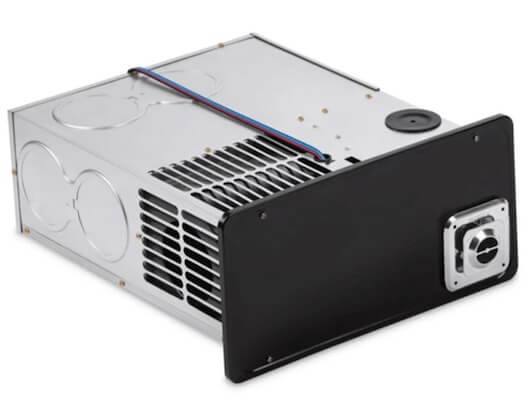
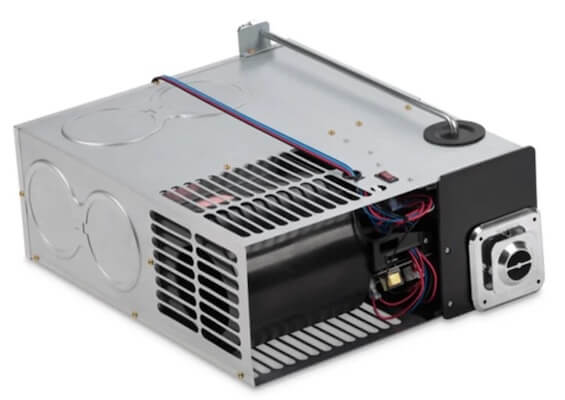
Images by Camping World
Dometic®’s DF Series covers small, medium, and large furnaces, including its DF Essential models. Many are available in doored versions, with an exterior access door, or doorless designs, which suit different RV sidewall constructions. Dometic® now sells and supports Atwood®’s former furnace line, so it’s the natural place to look if your RV has an older Atwood® or Hydro Flame™ furnace.
Fogatti®
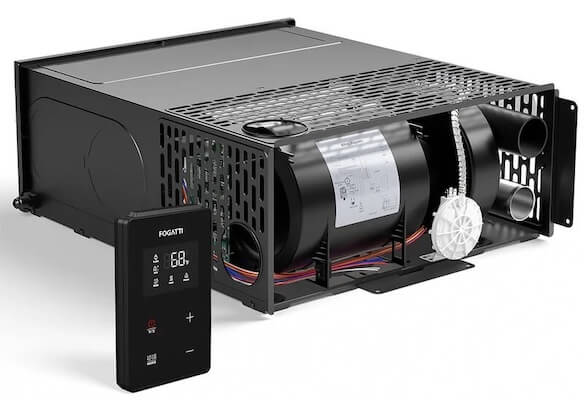
Fogatti®’s InstaHeat Ultra furnaces deliver multiple heat output levels rather than a single fixed BTU rating. Fogatti® also offers replacement cores designed to slide into an existing furnace cabinet. Check compatibility with your current furnace model before ordering.
How Much Does It Cost to Replace an RV Furnace?
Here’s what a replacement camper furnace typically costs, depending on the brand and BTU rating:
- Replacement cores: ~$650 to $800 for furnaces they’re designed to fit
- Complete furnaces: ~$600 to $1,550 for common 30,000 BTU RV heaters
- Larger or 120V AC models: ~$1,600 to $2,200+
Next, factor in labor costs. These always depend on the complexity of the replacement and the hourly labor rate at the location where you schedule service. Additional upgrades to the thermostat, ducting, or wiring will also increase the final RV furnace replacement price. Switching brands or modifying the furnace opening can add labor, too, so ask for an installed quote before you buy and compare the full cost of each option.
Some RVers start by replacing individual components before committing to a full camper furnace replacement. If a single part has failed, a repair usually costs far less.
See what common RV furnace repairs cost before you decide.
Why Furnace Replacement Is Best Left to a Certified RV Technician
Replacing an RV furnace is not a DIY-friendly job. Propane appliances should be installed and leak-tested by a trained and certified professional. Incorrect installation can lead to fire hazards, carbon monoxide exposure, or damage to your RV’s electrical system.
Even “simple” jobs, such as RV furnace igniter replacement, RV furnace blower motor replacement, or RV furnace circuit board replacement, involve gas lines, combustion chambers, or safety switches.
Your furnace is one of the most important safety appliances in your RV, and replacing it isn’t something to take lightly. Whether you’re comparing replacement RV furnace models, researching RV furnace replacement parts, or diagnosing why the blower won’t spin, the safest approach is to involve a certified RV technician.
You’ll end up with a properly installed system, lower risk, and a whole lot more comfort on chilly mornings.
Frequently Asked Questions
Commonly replaced parts include the igniter, sail switch, control board, blower motor, blower wheel, limit switch, gas valve, and wiring connections.
Usually, yes. Dometic® acquired Atwood®, and its current DF Series is the successor to Atwood®’s furnace line. Many DF models closely match the dimensions of the Atwood® furnaces they replace, but it isn’t always a drop-in: the gas connection location can differ and may require a short adapter line. Match the BTU rating, dimensions, door style, and ducting before you order.
Often, yes, but expect more work. Cabinet sizes, gas connection locations, and duct outlets vary by brand and model, so a different brand may require a modified opening, an adapter plate, or a rerouted gas line or ducting, which adds installation labor. Staying with your current brand, or choosing a model designed as a direct replacement, usually keeps the job simpler.
You can, but it’s rarely worth it. The swap involves running a fuel line, cutting intake and exhaust ports, and rewiring controls. For most RVs, the safer route is sticking to a purpose-built RV propane furnace replacement.
Not sure your furnace needs replacing yet? Our RV furnace troubleshooting guide walks through the most common furnace problems and fixes, so you can rule out a simpler repair before investing in a camper furnace replacement.
Do you need help finding an RV furnace replacement? Let us know in the comments below!