
THERE’S ONE critical feature that many overlook when shopping for RVs: the warranty coverage. RV warranty plans can be complex, but taking the time to understand what a manufacturer covers and for how long helps you make a smarter buying decision. In this RV warranty guide, we’ll define the different types of RV warranties, highlight some gold standards among today’s manufacturers, and answer a highly debated question: Are RV extended warranties worth it?
So, what’s the real deal with RV warranties? Let’s explain.
Key Takeaways
- Multiple Policies: Your RV isn’t covered by a single “catch-all” policy; it’s a collection of separate warranties. The manufacturer handles the structural “bones” and basic fit-and-finish, while third-party vendors cover individual appliances and components.
- The “Paper Trail” Requirement: Warranty claims are frequently denied due to insufficient documentation of maintenance. If you don’t keep up with service dates and records, you’re more likely to pay out of pocket.
- Strategic Claims Management: Create a Warranty Cheat Sheet with serial numbers for every appliance. Calling component manufacturers directly can shave weeks off repair timelines, especially when your base warranty has expired, but your appliance or component warranty is still active.
What Is an RV Warranty?
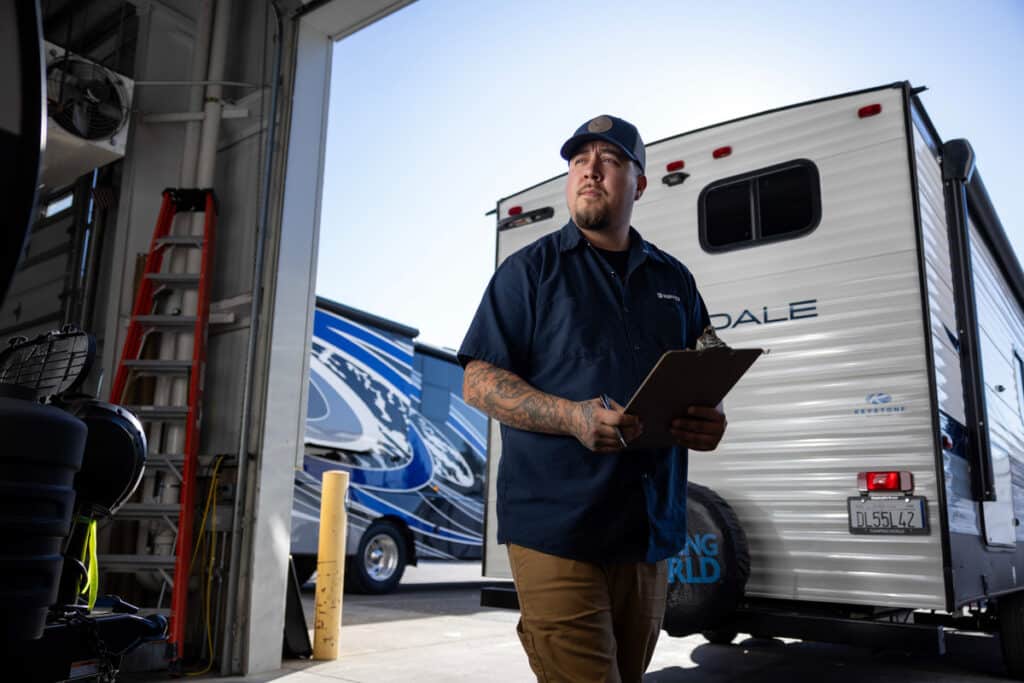
An RV warranty is a contractual promise to fix or replace certain structural, electrical, or mechanical components for a set period after the original purchase date. This contract is a safety net, of sorts, designed to protect you from costly, out-of-pocket expenses to repair things the factory should’ve gotten right in the first place.
With most manufacturer warranties, coverage typically includes unexpected failures that occur during normal use. It doesn’t protect you from regular wear and tear or issues directly attributable to poor camper maintenance.
But many first-time RV buyers don’t realize that their RV doesn’t come with just one warranty; it actually carries a collection.
Types of Camper Warranty Coverage
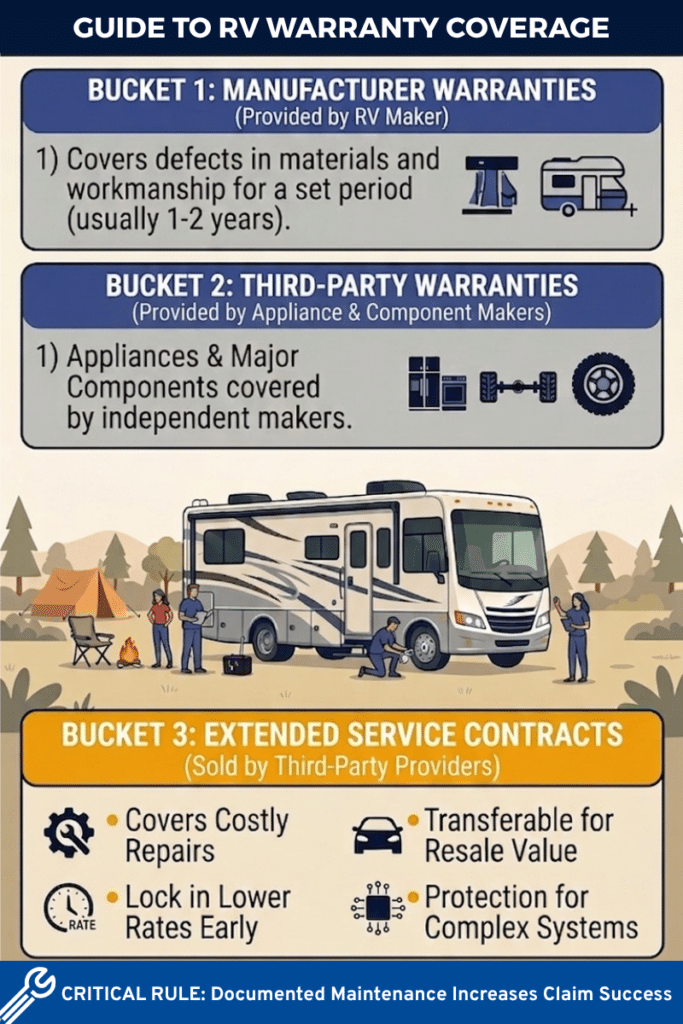
Think of all the components that go into RV construction: chassis, axles, roof, refrigerator, air conditioner, water heater; you get the idea. Each one may be covered by a different original equipment manufacturer (OEM), with different terms, claims processes, and support phone numbers. In many cases, the RV manufacturer is just the middleman.
If you’re dealing with RV fridge problems, for example, the appliance company is likely your best resource for warranty information, not the RV maker. And that’s where many owners run into delays. They’ve essentially reached out to the wrong manufacturer, often waiting weeks to hear back or realize there’s another stone to turn over.
Here’s how to keep different camper warranty coverages straight:
Bucket 1: Manufacturer & Structural Warranties
These cover defects in materials and workmanship — the RV itself. Usually labeled “limited” or “structural.” Duration and depth vary a lot by manufacturer.
These RV warranty plans cover defects in materials and workmanship. This coverage is provided by the RV manufacturer (i.e., Jayco, Forest River, Winnebago, etc.) Duration and terms vary by manufacturer. It is rarely a single, all-encompassing policy. It is typically split into two distinct tiers:
- Bumper-to-Bumper (Limited): Usually lasting one year, this covers almost all components—electronics, appliances, plumbing, and electrical systems—from defects in materials or workmanship.
- Structural: This often lasts longer (2 to 5 years) and covers the “bones” of the unit, such as the chassis frame, roof assembly, and laminated sidewalls.
It’s important to know that the manufacturer often acts as a coordinator for these repairs, but they won’t cover the components. If your roof leaks, call the manufacturer; if your microwave stops heating, see Bucket 2.
Bucket 2: Third-Party Warranties
This is the most misunderstood area of RV ownership. Your camper is essentially a collection of independent appliances living under one roof. Appliance and component manufacturers (e.g., Dometic®, Furrion®, Lippert®, etc.) provide their own warranties for the gear they supply.
These warranties often vary wildly in length. While your RV’s main warranty might expire in 12 months, your roof membrane or air conditioner might have a 3- to 12-year manufacturer’s warranty.
Pro Tip: To avoid the “wrong manufacturer” delay, create a “Warranty Cheat Sheet” the day you buy your rig. List every appliance’s serial number and the direct support line for that specific vendor. Bypassing the RV dealer and calling the appliance maker directly can often shave weeks off your repair timeline.
Bucket 3: Extended Warranties
Technically, these aren’t “warranties” in the legal sense—they are Service Contracts. Usually sold by third-party providers through the dealership’s Finance and Insurance (F&I) office, RV extended service plans are designed to protect your wallet once the manufacturer’s warranty expires.
Exclusionary vs Inclusionary: This is the most important factor that separates the best RV extended warranties from their peers. Exclusionary plans are generally superior, as they cover everything except a short list of items. Inclusionary plans only cover exactly what is written on the page—if it’s not listed, you’re paying out of pocket.
Unlike most manufacturer warranties (with a few exceptions), many extended RV warranty plans are transferable to a new owner, which can increase your camper’s resale value down the road.
What Manufacturers Have the Best RV Warranty Examples?
When it comes to manufacturer warranties, not all are created equal. Here’s how some of the current leaders compare.
| Make | Limited Base Warranty | Structural Warranty | Frame Warranty | Transfer Terms | Notes |
|---|---|---|---|---|---|
| Jayco | 2 Years | 3 Years (Additional) | Part of Structural | Limited Transfer (2nd Owner, Terms apply) | Transfer terms have specific limitations. Check specific component (appliances) coverages. |
| Keystone Montana & MHC (post-Jan 2026) | 1 Year | 5 Years | Part of Structural | No (Check Exceptions) | Enhanced structural coverage for premium lines. Non-transferable policy. |
| Keystone (Standard) | 1 Year | 3 Years | Part of Structural | No (Check Exceptions) | Closer to the industry standard 1+3 program. Non-transferable policy. |
| Grand Design | 1 Year | 3 Years | 5 Years (Limited) | Yes (All) | Dedicated frame warranty. Also includes a 12-year limited roof warranty. All warranties are transferable. |
| Airstream | 2 Years | 5 Years | Part of Structural | Yes (Check Terms) | Two-year base + Excellent structural. Balance of terms transferable. |
| Forest River | 1 Year | Covers materials and labor to repair structural defects in roofs, floors, and wall framing. | Part of Structural | No (Check Terms) | Varies by brand (e.g., Rockwood). Specific manuals tied to VIN. Check terms by division. |
| Thor Motor Coach | 1 Year | 12 Years | Part of Structural | No (Check Terms) | Also includes a 6-year lamination warranty. Check specific component (appliances) coverages. |
| Winnebago | 1 Year | 3 Years | Part of Structural | No (Check Terms) | Extensive owner manuals and resources. Manuals specific to chassis/coach. |
| Heartland | 1 Year | 3 Years | Part of Structural | No (Check Terms) | Multiple lines. Check specific division terms. |
| Dutchmen | 1 Year | 3 Years | Part of Structural | No (Check Terms) | Multiple lines. Check specific division terms. |
| *Warranty details current as of early 2026. | |||||
What About Appliance & Component Warranties?
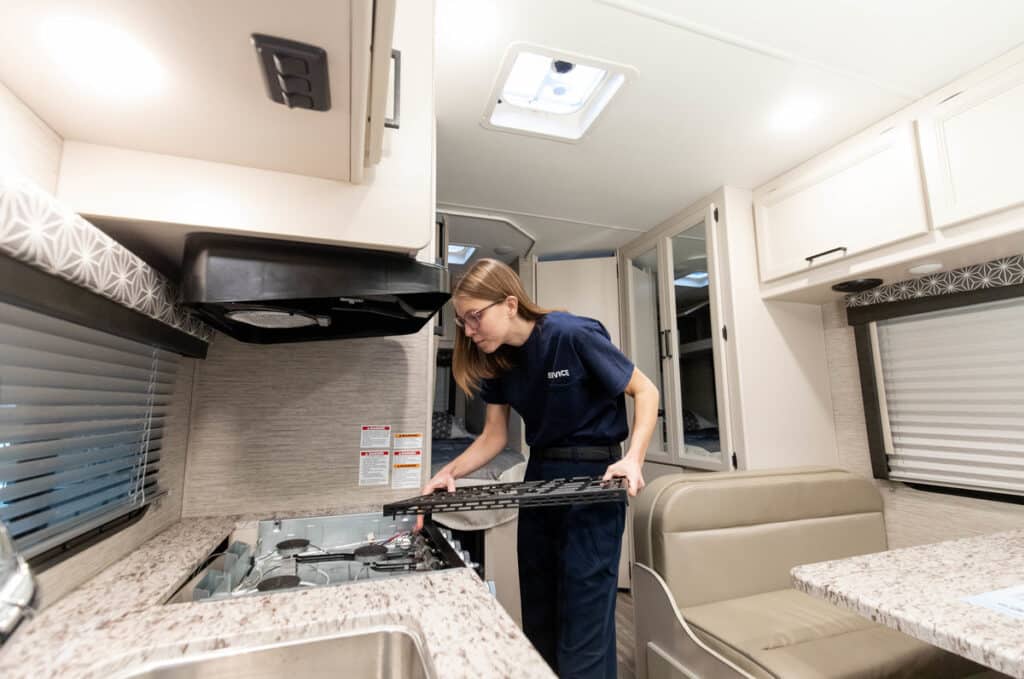
Some vendor partners go even further, offering longer warranties regardless of the RV manufacturer they’re working with. Here are some examples:
- Most MORryde® rubber pin box assemblies and Onan® generators carry a 3-year warranty.
- Most Dexter® axles and Winegard® antenna parts carry a 5-year warranty.
- Goodyear® Endurance® tires carry a six-year warranty.
- Select Dicor™ roofing materials carry a 20-year warranty.
Select vendors even offer limited lifetime warranty coverage, with examples including select aluminum wheels and roofing materials. But the takeaway is simple:
Before you fall in love with a floor plan, check the warranty terms from both the RV and appliance manufacturers. Spend time comparing exactly what is covered and for how long. The difference between a 1-year and a 2-year limited warranty is often that extra 12 months when problems actually occur.
Of course, understanding the paperwork is only half the picture. What happens when something actually goes wrong?
Interview with a Camping World Warranty Expert
To provide some additional perspective, spoke with Ed Turner, the National Warranty & Parts Assistant Director here at Camping World.
What are the most common reasons a warranty claim gets denied?
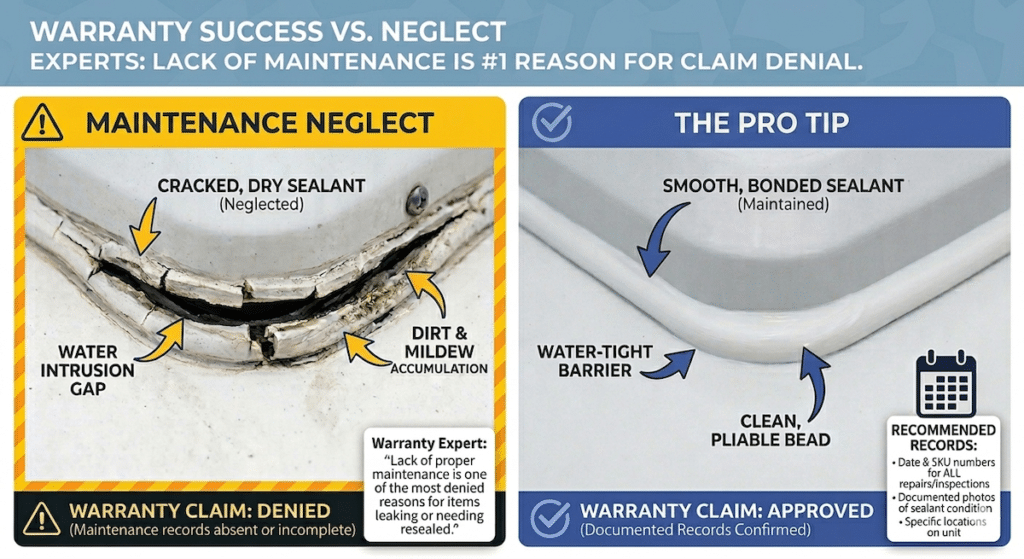
Lack of proper maintenance is one of the most denied reasons for items leaking or needing resealed. Most manufacturers require the roof to be inspected at least once a year, and the maintenance of those sealants must be documented.
Or if something wasn’t used as designed or was neglected. If the customer is using their RV for non-recreational purposes, such as business use, that will, in many cases, void their warranty.
Water intrusion is a common gray area. If seepage isn’t visible during inspection, it’s hard to prove — which is why catching and documenting issues early matters.
To be clear, most factory warranties don’t cover what they call ‘adjustments’ after a 90-day period. Like a door that starts rubbing after 90 days. But other cosmetics are covered within the first year.
Anymore, we don’t really see too many aftermarket modifications that void warranty because Lippert® probably has a majority of the aftermarket accessories, and they’re also the ones installing many of the things already on units.
How often do you see claims fail because someone didn’t keep records?
If a customer performs their own maintenance, they just need to have a record of it. That includes the time, date, and engine mileage (if applicable). They should also record what exact maintenance they performed and where on the unit.
This is one of the benefits of trusting regular maintenance to a service center with certified technicians. That service center maintains those records and can easily share them with the manufacturer, making it easier to start a warranty claim by showing that the RV was properly maintained.
We obviously keep timestamps, dates, and product SKUs in our records. So even if, for instance, a product is recalled. Our records show that, unlike maybe a customer keeping their own record, they might not note the SKU number or be aware of a recall at that level.
What’s the one thing you wish every buyer understood before they drove off the lot?
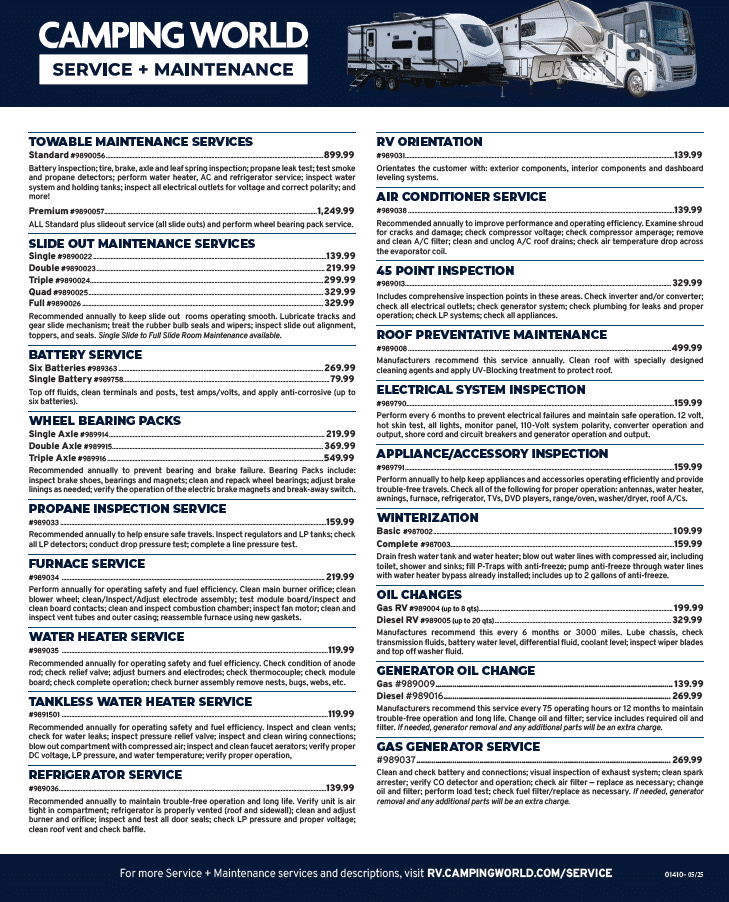
Maintenance is a requirement. Our ProCare menus are designed to assist the customer with when and what that looks like. They are simple flyers that cover most of the maintenance items required by the manufacturers. Some are even specialized for seasonal maintenance, whether the owner intends to store their RV indoors or outside, and for other use cases.
Use these resources to guide your RV maintenance routine:
If someone is being offered an extended warranty, what should they understand about this coverage?
An extended warranty typically only covers component failures; there has to be a failure for coverage to happen. While I can’t speak for all, and there are plans with specific provisions or packages, they typically do not cover seals or sealant. Seepage or leaks on the roof or around a slide room are also typically not covered.
But if a motor, a track, a wheel, or something else fails, it’s most likely covered. Now, components that are bent or misaligned are usually not considered failures either.
What other advice would you offer about warranty coverage and/or claims?
Don’t wait to start a claim. Many customers think it’s okay to address it later, and that’s typically where we might see a denial. Not waiting definitely increases the chances of getting covered.
Is An RV Extended Warranty Worth It?

Some argue that an extended warranty isn’t necessary when buying a new RV. Because the factory warranty generally covers components for an initial period, purchasing an extended warranty plan for a new RV essentially duplicates that coverage. This is why many recommend waiting until the manufacturer’s warranty is about to expire to buy an extended policy.
However, purchasing an extended warranty contract for your RV early can lock in a lower rate. Plus, a year of RV ownership goes by fast. Do you really want to dive into warranty coverage research less than 12 months after buying your new camper?
If you aren’t handy or you’re purchasing an RV with complex systems like electronic control panels and hydraulic slides, a single repair can cost $4,000—easily covering the cost of an extended service contract. Plus, RV extended warranties are usually transferable, which is a massive boost to your resale value.
If you’re weighing whether to pay out of pocket, it helps to know is mobile RV repair worth it compared to shop pricing before deciding on a warranty plan.
How To Find RV Warranty Info By Manufacturer
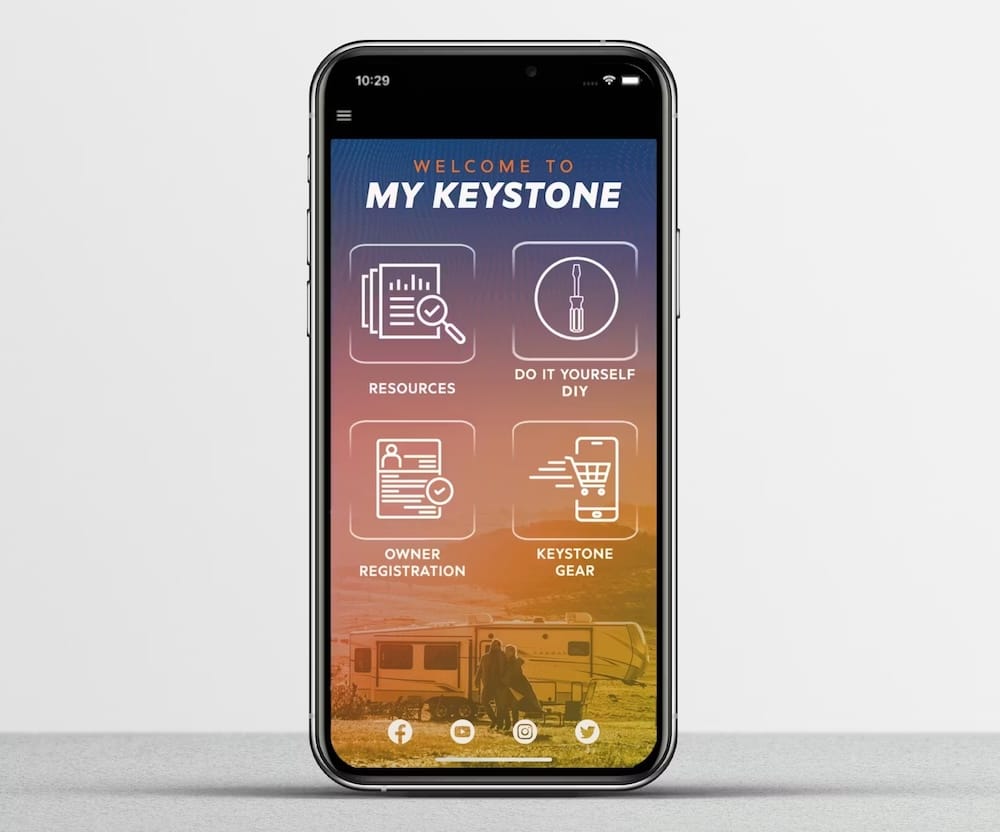
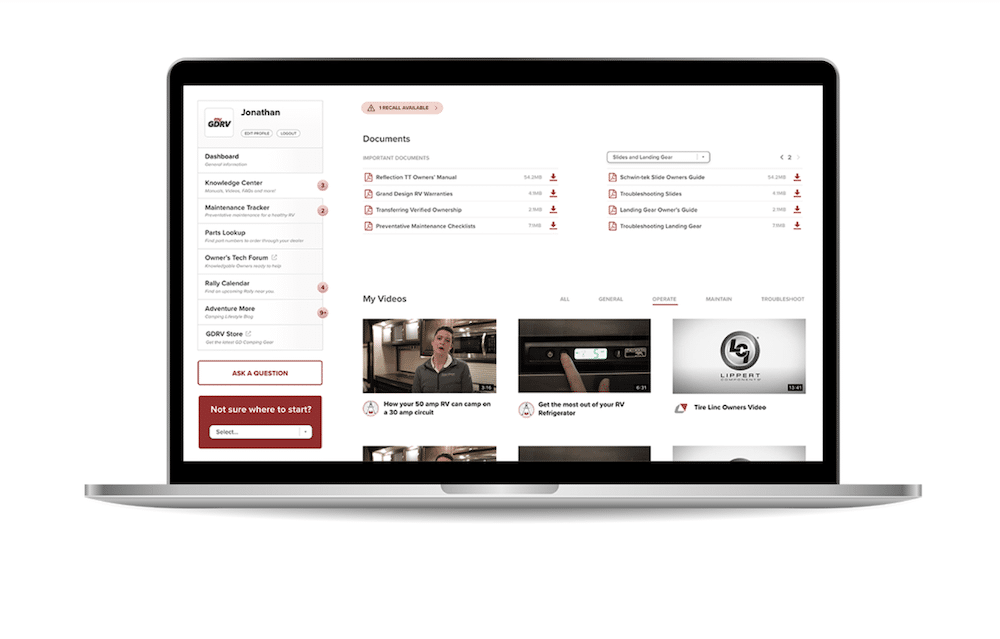
Images by Keystone and Grand Design
The good news is that each RV manufacturer has their warranty information online, and there are plenty of forums where you can find more advice from experienced RV owners. Here’s where you can find warranty information from five of the major RV manufacturers in the US:
Jayco is highly transparent about the terms of their 2+3 Year Warranty coverage.
Keystone offers a downloadable MyKeystone Mobile app that can help you track your warranty dates and find authorized service centers. You can also find Keystone RV warranty coverage published online.
Grand Design outlines its 1-3-5 warranty coverage online. They also offer the myGDRV portal, which is a one-stop shop for manuals, maintenance schedules, and direct support.
Thor Motor Coach’s warranty coverage is published on their site’s Owners Resource section. Select your RV’s year to find the applicable warranty guides. They also offer an Owner’s Resource portal.
Forest River warranty coverage PDFs are available for towable, motorized, tent, and truck campers based on the date of retail purchase.
Final Tips on RV Warranties
Warranties aren’t the enemy; they’re your backup plan. Like most backup plans, they only work if you’ve actually read them. Here are a few tips in summary:
- Read the warranty before signing the purchase agreement.
- Know the difference between a 1-year and a 2-year limited warranty.
- Know what “structural” means in your specific contract.
- Keep your maintenance log.
- If someone offers you an extended warranty, ask questions before you sign.
Use these additional resources to guide your RV buying journey:
- What Does Dry Weight Mean on a Camper?
- Are Fiberglass Campers Better Than Aluminum?
- What Is a Four Season RV?
- Buying a Used RV Checklist
Do you have any questions about RV warranty plans? Let us know in the comments below!



Extended warranties are not worth the paper they’re written on! There are so many exclusions they always figure out a way to get out of paying a claim. I purchased a motorhome from Blue Compass RV and their service contract they call RV Complete administered by a third party and as soon as you have a claim you have to deal with the third party and Blue Compass has nothing to do with it anymore so they leave you hanging high and dry. They are all crooks!!! Including Blue Compass!!
Hi Brian! I’m sorry to hear about the frustrating you’ve had with your motorhome claim.
While we can’t speak for Blue Compass or their specific RV Complete contracts, experiences like yours are why we published this Warranty Guide. Our goal is to help owners understand the ‘fine print’—like the difference between manufacturer warranties and third-party service contracts—before they’re in a tough spot.
Safe travels, and we hope your claim gets resolved soon.