Most RVs are built with one of a handful of roof types: a flexible membrane such as EPDM rubber, TPO, or PVC, or a rigid shell of fiberglass or aluminum. Knowing which one is on your rig matters more than most owners realize. Your roof type determines which sealants, cleaners, and coatings are safe to use, how the roof ages, and what a repair involves when something goes wrong. This guide covers how to identify your RV’s roof, how each type is built, and what to expect from each material.
What Type of Roof Does My RV Have?
The most reliable answer comes from your paperwork, not from the roof itself. Roof materials are easy to misidentify by sight.
Check your documentation first. Your owner’s manual or spec sheet may list the roof material. If it doesn’t, contact your RV manufacturer with your VIN to request the membrane manufacturer and material. Most membrane makers specify which sealants can be used on their roofs.
Membrane or rigid shell? A membrane roof is flexible and runs from edge to edge under molding strips along the roof’s perimeter. Most fiberglass roofs are hard and rigid, often with a glossy gelcoat finish, though some thinner, duller versions may be mistaken for a membrane at first glance. Aluminum roofs are metal panels joined at riveted or fastened seams.
Telling EPDM from TPO
These two membranes look similar, and the RV manufacturer will always be your most reliable source for confirming roof type. That said, these clues can help:
- The underside. Look at a cut edge under a vent trim ring. Alpha describes EPDM as a white top over a black base, so a black underside points to EPDM. Alpha TPO is textured like an orange peel and white throughout the sheet. Do not rely on fleece backing. Dicor’s DiFlex™ II TPO is non-fleece-backed.
- Chalking. EPDM oxidizes, which leaves a chalky white residue when you rub the surface. TPO membranes are made not to chalk. Our guide on inspecting your RV roof covers how to perform a chalk test.
- Texture. Some TPO membranes have a lightly textured surface for traction.
If your clues don’t line up, your roof may be PVC or another membrane. Once again, it’s essential that you confirm with the manufacturer before you buy any product for it.
Disclaimer: Getting on an RV roof or using a ladder is done at your own risk. Roofs can be slick, uneven, or structurally weak, and a fall can cause serious injury. Use proper fall protection, a stable ladder on level ground, and never work alone or in wet or windy conditions. If you are uncomfortable with heights, have mobility limits, or suspect soft decking, stay off the roof and hire a qualified technician.
How RV Roofs Are Built
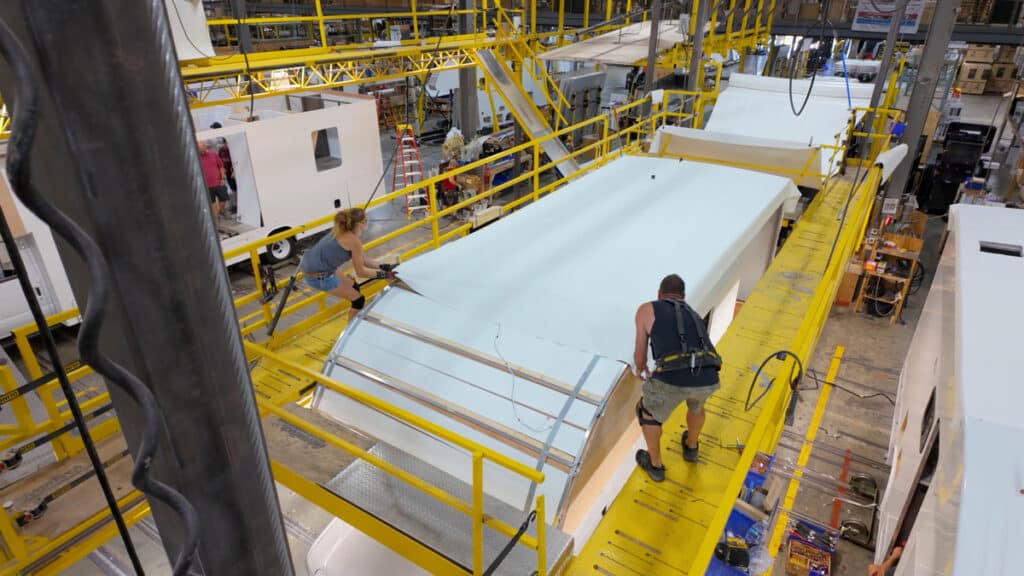
Most RVs with a membrane roof are built with a single-piece membrane glued over wood decking that sits on the roof framing. Dicor’s installation guide, for example, calls for decking of at least ⅛” and notes that ⅜” material is more common. The membrane runs to the roof edges, where it’s secured under molding strips. Butyl tape under those moldings forms the primary seal, and lap sealant covers the molding edges, screw heads, and every vent, antenna, solar mount, etc.
Fiberglass roofs are built with panels bonded to the roof structure, and aluminum roofs have metal panels joined at sealed, riveted seams.
On any roof type, water that penetrates past the top layer can damage the decking and framing underneath, which is why a soft spot on a membrane roof signals a structural problem, not a surface one.
Learn more about RV construction in our manufacturer facility tours.
RV Roof Types Compared
How long does an RV roof last? Dicor says a properly maintained roof should last at least 20 years, and manufacturer membrane warranties range from 12 years to a limited lifetime. What each material needs to get there differs.
| Roof type | What it is | How it ages | Coating options | Example manufacturer warranty |
|---|---|---|---|---|
| EPDM | Flexible synthetic rubber membrane, white over black | Oxidizes, leaving a chalky residue | Rubber roof coatings that require a cleaner, activator, or primer | Dicor EPDM: 12 years, original owner only |
| TPO | Flexible thermoplastic single-ply membrane | Made not to chalk or fade | Varies — Alpha says TPO doesn’t need a coating; Dicor offers a TPO primer for its silicone coating | Dicor DiFlex II TPO: 20-year limited material warranty on aftermarket installs; original owner only. Alpha SuperFlex™: 15-year limited |
| PVC | Flexible thermoplastic single-ply membrane | Varies by manufacturer | Dicor’s acrylic coating is rated for EPDM and PVC | Dicor Tufflex™ PVC: limited lifetime |
| Fiberglass | Rigid panel with a gelcoat or thin fiberglass sheet | Gelcoat can dull and oxidize over time | Fiberglass-specific coatings with dedicated prep | Set by the RV manufacturer |
| Aluminum | Rigid metal panels with riveted, sealed seams | Durable metal; seams and fasteners need watching | Elastomeric metal-roof coatings with seam cover tape | Set by the RV manufacturer |
Dicor’s membrane warranties cover the membrane itself against premature weathering — not sealants or installation — and apply only to the original owner. Check the coach’s paperwork for terms on the membrane’s OEM warranty.
Technician Tip: Dicor’s EPDM 12-year warranty is prorated: parts and labor for the first 5 years; material only for years 6-12; sheeting only. Glue, lap sealant, and butyl tape are excluded.
EPDM Rubber RV Roofs
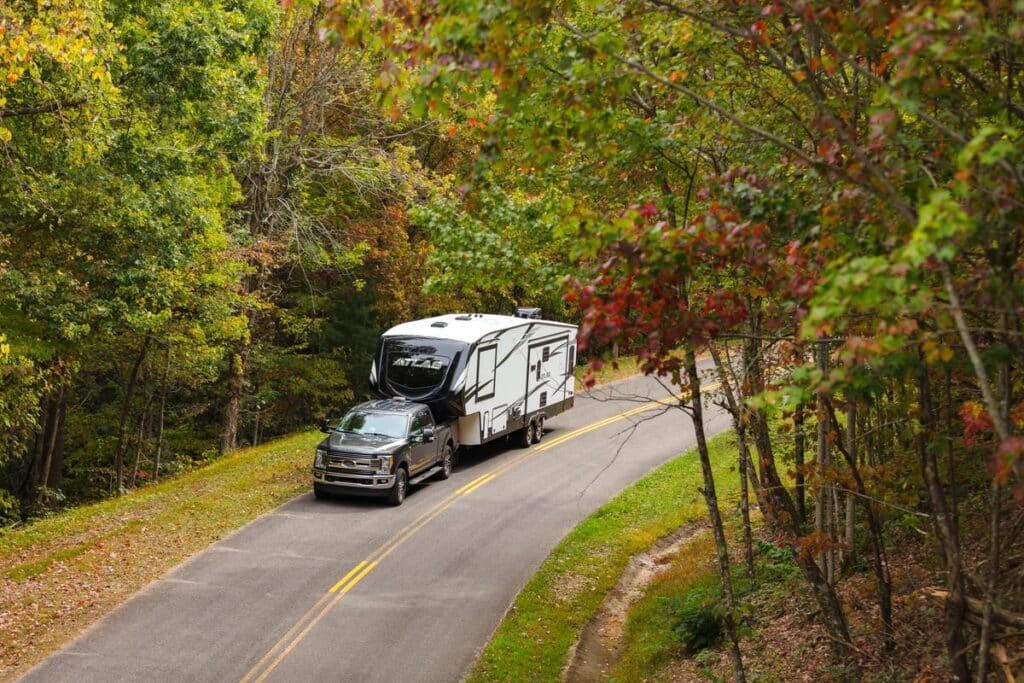
EPDM (ethylene propylene diene monomer) is a flexible synthetic rubber membrane. It’s built in two layers, with a white top layer over a black base.
Pros
- Flexible and forgiving. The rubber membrane flexes with the expansion, contraction, and road vibration every RV roof goes through.
- Wide product compatibility. Dicor’s standard self-leveling and non-leveling lap sealants are rated for EPDM, so compatible sealants are easy to find.
- Repairable. Dicor says any tear in an EPDM membrane can be repaired. It also says a properly applied patch should last as long as the membrane itself.
- Renewable with a coating. When an aging EPDM roof is still structurally sound, a rubber roof coating system can restore its surface instead of a full replacement.
- Long service life. Dicor backs its EPDM membrane with a 12-year warranty and says a properly maintained roof should last at least 20 years.
Cons
- It oxidizes. Dicor says EPDM may oxidize about 10% of its thickness over a dozen years. That shows up as chalky white residue that can streak down your sidewalls. As the white top layer wears thin, the black base can begin to show through.
- It’s heavier than TPO. Alpha Systems says its TPO membrane weighs about half as much as EPDM, which can matter on lighter towables.
- Fewer safe product choices. Dicor warns against cleaners and conditioners containing petroleum distillates, harsh abrasives, or citrus-based ingredients. Standard silicone won’t adhere to the membrane, and even some popular exterior sealants, including standard Geocel ProFlex RV, aren’t rated for EPDM.
- A softer surface. Like any membrane roof, EPDM can be punctured or torn by branches and debris.
What It Means for Maintenance
Because EPDM oxidizes by design, regular cleaning matters more than on other roof types. Dicor recommends cleaning an EPDM roof at least 4 times a year with a medium-bristle brush and products labeled safe for EPDM. Small air bubbles that come and go with the weather are normal, and Dicor says not to puncture them.
TPO RV Roofs
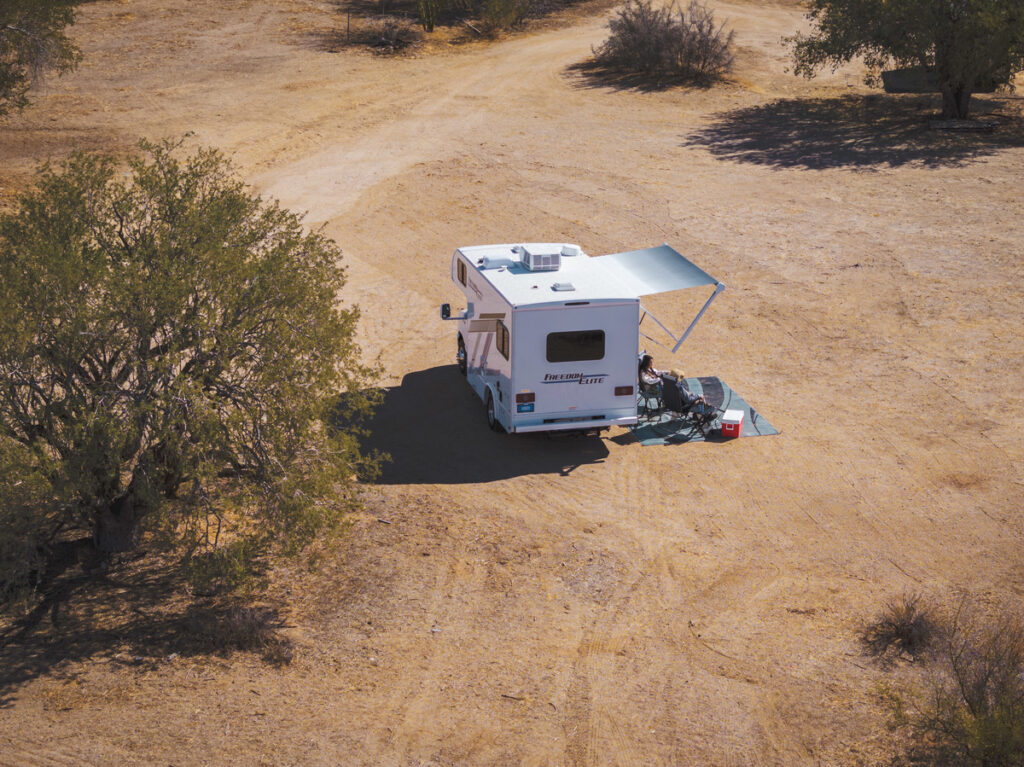
TPO (thermoplastic polyolefin) is a single-ply membrane that’s usually grouped with “rubber” roofs, but Alpha Systems describes it as a plastic rather than a rubber. That difference is why products that work on EPDM don’t always work on TPO.
Pros
- Lightweight. Alpha says its TPO membrane weighs about half as much as EPDM, which helps keep towables lighter.
- Won’t chalk or fade. Alpha says its TPO is made not to chalk or fade, so you avoid the chalky residue and sidewall streaking that come with EPDM’s oxidation.
- Resists mold, algae, and fungus. That’s useful for RVs parked under trees or stored in humid climates.
- Textured for traction. Some TPO membranes, including Alpha’s SuperFlex™, have a lightly textured surface for better footing on the roof.
- Strong warranty coverage. Alpha offers a 15-year limited warranty on SuperFlex™, and Dicor offers a 12-year warranty on DiFlex™ II TPO.
Cons
- Stricter sealant rules. Alpha Systems states that only Alpha-brand sealants may come into contact with its roof membrane. Standard silicone won’t adhere properly to TPO and isn’t rated for it, including the standard Geocel ProFlex RV. Standard lap sealants can cause cosmetic wrinkling on the membrane. Dicor says that wrinkling doesn’t affect performance.
- Limited coating options. Alpha says rubber roof coatings won’t adhere well to TPO and that its TPO doesn’t need a coating at all. Dicor offers a TPO-specific primer for its silicone coating, so whether a TPO roof can be coated depends on the membrane brand.
- Guidance varies by brand. “TPO” isn’t one product. Membrane makers give different directions on sealants, cleaners, and coatings, so advice that’s right for one TPO roof may be wrong for another.
What It Means for Maintenance
Confirm your membrane manufacturer before buying any sealant, cleaner, or coating, and follow its guidance over general advice. Alpha recommends cleaning and inspecting its roofs 3-4 times a year with plain soap and water, and warns that solvents can damage existing sealant and weaken plastic roof parts. Because TPO is made not to chalk, the chalk test used on EPDM won’t tell you much about its condition. Focus your inspections on seams, sealant, and the membrane surface instead.
Fiberglass RV Roofs
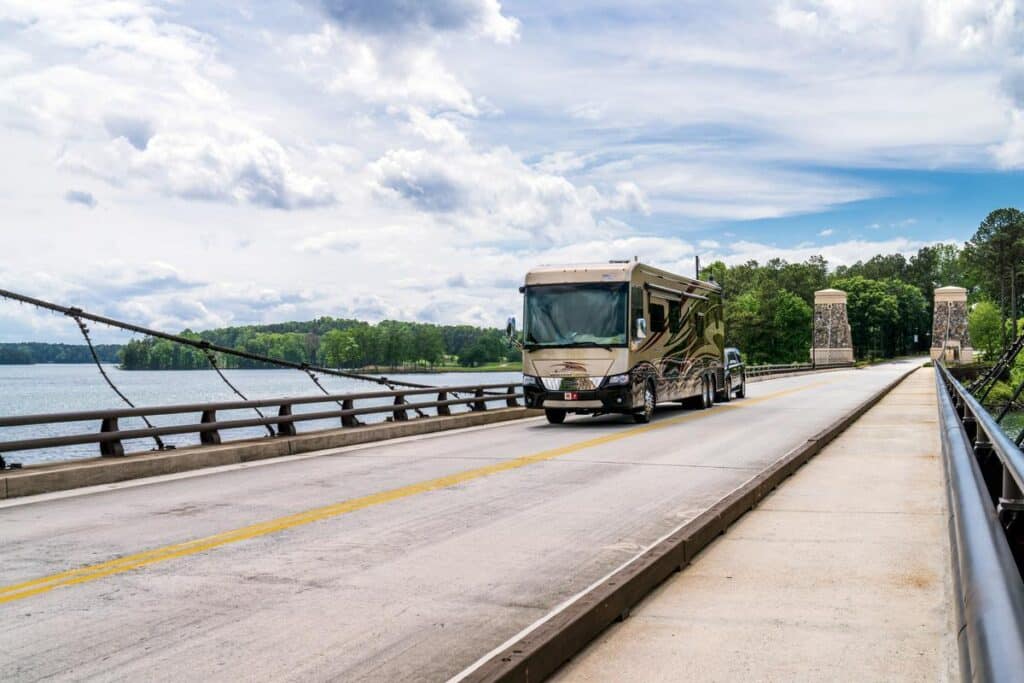
A fiberglass roof is rigid, typically built with either a thick, gel-coated fiberglass surface or a thinner one-piece fiberglass sheet bonded to the roof structure. It’s found on many motorhomes and some towables.
Pros
- Few or no seams. Many fiberglass roofs are one-piece, which means they have far fewer seams across the roof surface than other roof types.
- Strong and puncture-resistant. RV manufacturers that use fiberglass, including Winnebago, promote it for its strength and its resistance to punctures and tears compared with rubber roofs.
- Sheds water without a membrane coating. The fiberglass itself is waterproof, so the roof surface doesn’t depend on a coating to keep water out.
- Renewable when the finish wears. When the gelcoat dulls with age, a fiberglass-specific roof coating can restore the surface.
Cons
- Heavier and more expensive. Fiberglass roofs are generally heavier and more expensive to build and replace than membrane roofs.
- The finish ages, too. Over time, gelcoat can dull, oxidize, and develop fine surface cracks called crazing. On thinner fiberglass sheets, fibers can eventually show through the finish.
- Oxidation can cause mix-ups. An oxidized fiberglass roof can leave a chalky residue, like EPDM, making it easy to misidentify. Confirm your roof type before buying products for it.
- Cracks need specialized repair. Repairing cracked fiberglass involves gelcoat and finish work rather than a simple peel-and-stick patch.
What It Means For Maintenance
Do fiberglass RV roofs need to be sealed? Yes. The fiberglass sheds water on its own, but every seam, edge, and penetration still depends on sealant, just like any other roof. That includes vents, antennas, and screw heads. Use sealants and coatings made for fiberglass. Dicor’s fiberglass roof coating, for example, calls for its own Fiberglass Clean & Prep before application.
Aluminum RV Roofs
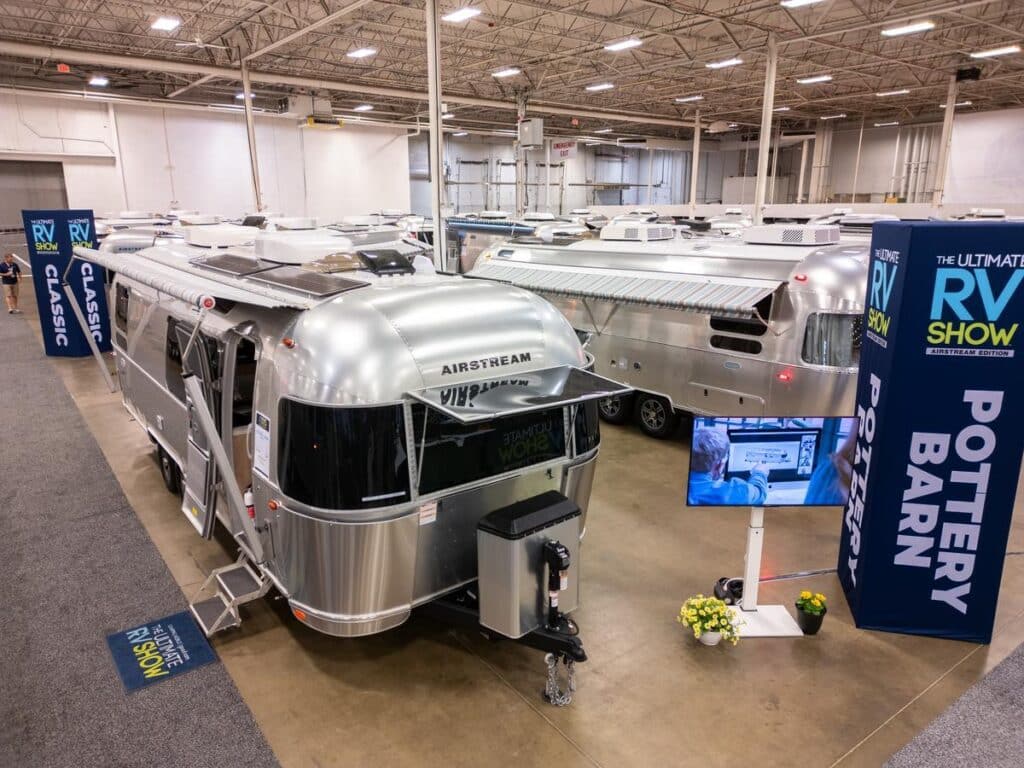
An aluminum roof is made of metal panels joined at riveted, sealed seams. It’s most closely associated with Airstream and Bowlus, and it appears on some older RVs from other brands.
Pros
- Won’t tear or chalk. Aluminum doesn’t tear like a membrane, and it doesn’t leave the chalky residue that oxidizing EPDM does.
- Durable seams. Riveted seams generally shouldn’t need resealing unless the body has been damaged.
- Less sealant to maintain. With seams that rarely need attention, maintenance focuses on roof penetrations rather than the entire roof.
Cons
- Vulnerable to dents. Hail and branches can dent aluminum panels, and a dent can disturb nearby seams and fasteners enough to let water in.
- Fasteners and seams need watching. Rivets, screws, and seam edges are where sealant failures and corrosion typically start.
- Specific sealant requirements. Aluminum requires metal-specific sealants, and manufacturers specify which ones. Products designed for rubber membranes aren’t a substitute.
- Less common. Because aluminum roofs are mostly found on Airstreams and older RVs, there’s less general guidance available than for membrane roofs. Your RV manufacturer is the best source.
What It Means for Maintenance
Focus your attention on roof penetrations: vents, skylights, solar panel mounts, and antennas. For example, Airstream recommends inspecting the sealant around roof features and replacing any that has dried out, cracked, or fallen out. Use the sealants your RV manufacturer recommends for aluminum; here’s Airstream’s recommended sealants. After a hailstorm or a branch strike, check the seams and fasteners around any dents. For a full-roof refresh, elastomeric metal-roof coatings are applied over the joints with seam cover tape.
What Your Roof Type Means for Sealing, Repair, and Cost
Nearly every roof maintenance decision starts with knowing your roof type.
Sealant choice: Sealant chemistry must match your roof material and, on some membranes, the membrane brand. Our guide to the best RV roof sealants covers compatible products by roof type.
Resealing and coating: Prep products and coatings are also specific to the roof material and sometimes the brand. Some roofs shouldn’t be coated at all. Our guide to how to reseal an RV roof walks through the process.
Leak repair: The repair process is similar across roof types, but patch and repair materials aren’t. See our RV roof leak repair guide to learn more.
Repair cost: Roof material affects product choice, labor time, and the availability of technicians in your area who can work on that roof type. Our RV roof repair cost guide breaks down pricing by material.
No matter what type of roof your RV has, Camping World’s certified technicians can inspect, reseal, and repair it.
Frequently Asked Questions
The right RV roof material replacement choice depends on your RV’s roof structure design, how much weight it can carry, how much maintenance you want to take on, and the available warranty terms. A replacement also involves more than a new membrane. For example, Dicor says the decking must be replaced whenever a roof is replaced. Because those factors vary by RV, have a technician assess your roof before you choose.
There is no clear-cut winner in the TPO vs EPDM debate for every RV. TPO is lighter and doesn’t chalk, which are real advantages if you’re replacing a roof. EPDM is more forgiving about which maintenance products you can use, which makes DIY upkeep simpler. For most owners, the more useful question is how to maintain the roof they already have.
For product recommendations matched to your roof type, see our best RV roof sealant guide.
Having trouble figuring out your RV roof type? Good Sam Elite members can call the Technical Support hotline at 844-649-4700 for questions and maintenance tips.
What type of roof does your RV have, and how has it held up? Tell us in the comments below.