LONG DAYS, warm nights, and open roads make summer the perfect time to hit the campground. But once the mercury climbs past 90°F, your RV can turn into a rolling oven faster than you might expect. Knowing how to keep your RV cool in summer isn’t just about comfort. On the hottest days, it’s about safety for you, your family, and your pets.
The good news: with the right combination of A/C strategy, smart campsite selection, and passive cooling techniques, you can stay comfortable in virtually any summer heat. This guide gives you everything you need to know — whether you’re parked at a full-hookup site or rolling down the highway.
Key Takeaways
- Start your air conditioner early in the day and combine it with shade, window coverings, and ventilation to keep your RV cool — even in extreme heat.
- A properly functioning RV A/C can only lower the interior temperature 16 to 22 degrees below the ambient air temperature, so passive cooling strategies are essential on the hottest days.
- Never leave pets alone in your RV without a reliable A/C power source and a temperature monitor, as interior temperatures can become dangerous within minutes of an A/C failure.
Get the Most Out of Your A/C
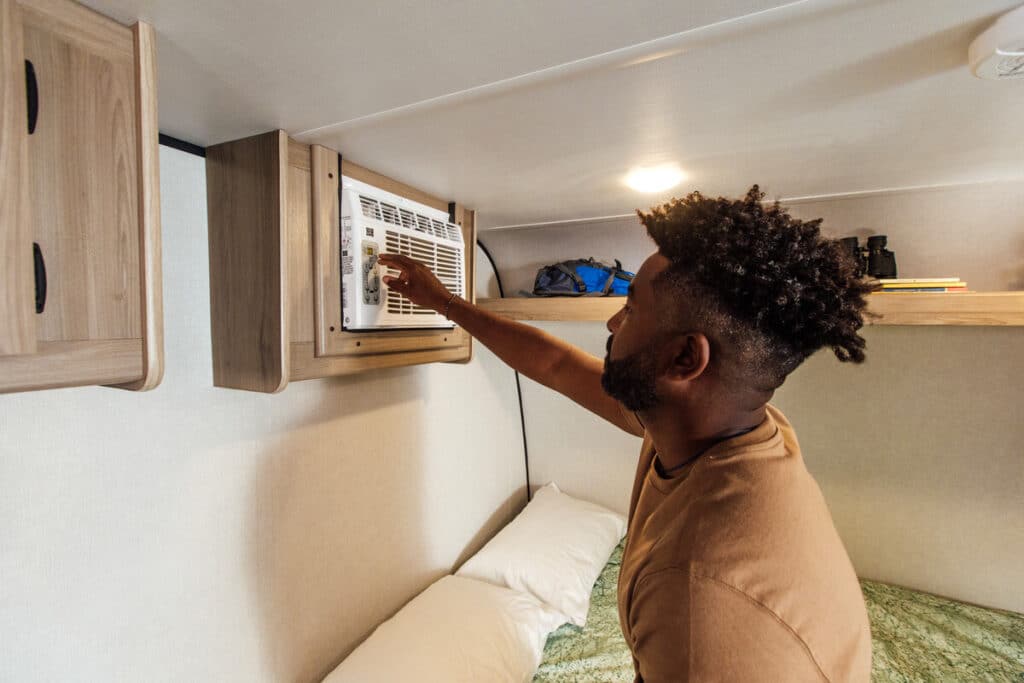
The most common mistake new RVers make in the summer heat is treating their air conditioner as an afterthought. Your A/C is your first and most powerful line of defense — but it needs your help to work at its best.
Start Cooling Early
It’s far easier to maintain a cool RV than to cool one that’s been baking in the sun for hours. On hot days, turn on your A/C before temperatures peak — ideally before 10 a.m. This pre-cools the walls, floor, and other surfaces. The earlier you start, the less your air conditioner has to fight accumulated heat.
Understand Your A/C’s Capabilities and Limitations
A properly functioning RV air conditioner can drop the ambient temperature inside your camper by approximately 16 to 22 degrees. However, this is under optimal conditions. The hotter it is, and the more your RV is subject to intense, direct sunlight, the more it will strain. On a 110°F day in the desert, 88 to 94°F inside might be the best a single A/C unit can achieve. That’s why other passive cooling strategies matter so much.
For a deeper understanding, visit our guide to the basics of RV air conditioning systems.
Set a Smart Thermostat Temperature
A temperature setting in the mid-70s is generally the sweet spot for comfort and efficiency. Setting it lower than needed strains the A/C compressor unnecessarily and increases the risk of the evaporator coil freezing up, which can actually stop the cold air from flowing. If you have a programmable or smart RV thermostat, use it to let the temperature rise a degree or two when you’re outside and cool back down before you return.
Keep Doors and Windows Closed
Every time you open the door on a hot day, you invite a wave of hot air. It sounds simple, but managing door traffic — especially with kids — is one of the highest-impact things you can do when the heat is on.
Learn how an RV screen door cross bar can help with this issue.
Don’t Skip Preseason Maintenance
Your A/C filter is the single most important component to keep clean. A clogged filter starves the unit of airflow, reduces cooling efficiency, and can cause the evaporator coil to freeze. Clean or inspect it every three to four months. Before summer, it’s also worth checking the shroud, seals, and coils.
Our guide to camper air conditioner maintenance walks you through the full process step by step. And if your unit just isn’t keeping up despite clean filters, learn how to troubleshoot RV air conditioner issues before calling a technician.
Choose Shaded Sites and Set Up to Minimize UV Exposure
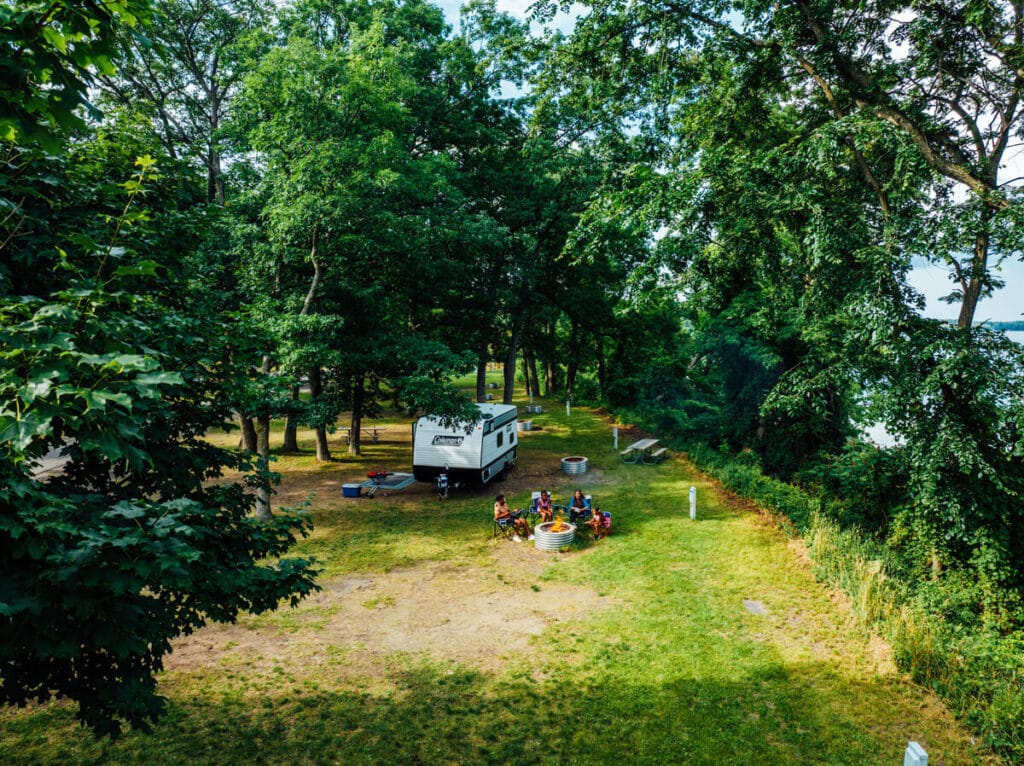
Smart campsite selection is the single best free tool you have for keeping your RV cool.
When booking in advance, prioritize shaded sites with tree coverage — especially on the west side, where afternoon sun hits hardest. A shaded RV can stay 10 to 20 degrees cooler than one parked in full sun. Fortunately, many booking tools and apps include site photos, making it easier to scout before you arrive. If you show up without a reservation, it never hurts to request a shady site at the check-in desk.
When parking on your site, position your RV so the smallest possible surface area faces the afternoon sun. In most locations, the sun is most intense from the south and west in the afternoon. Point the nose of your camper slightly north or northwest and keep the refrigerator side away from the afternoon sun, as direct sun on the exterior vents can dramatically reduce its efficiency.
Whenever possible, avoid parking on blacktop when making stops along the way. Asphalt absorbs heat all day and radiates it upward directly into the underside of your RV. Parking on grass or gravel can keep your floor and plumbing systems substantially cooler.
Deploy your awning and use it well. Your camper’s awning can shade a large section of the camp-side wall, which is one of its largest heat-absorbing surfaces. If wind isn’t an issue, keep your awning extended during the hottest hours. You can also rig tarps between trees to expand your shade footprint if permitted by the campground.
Block the Sun From Getting Inside
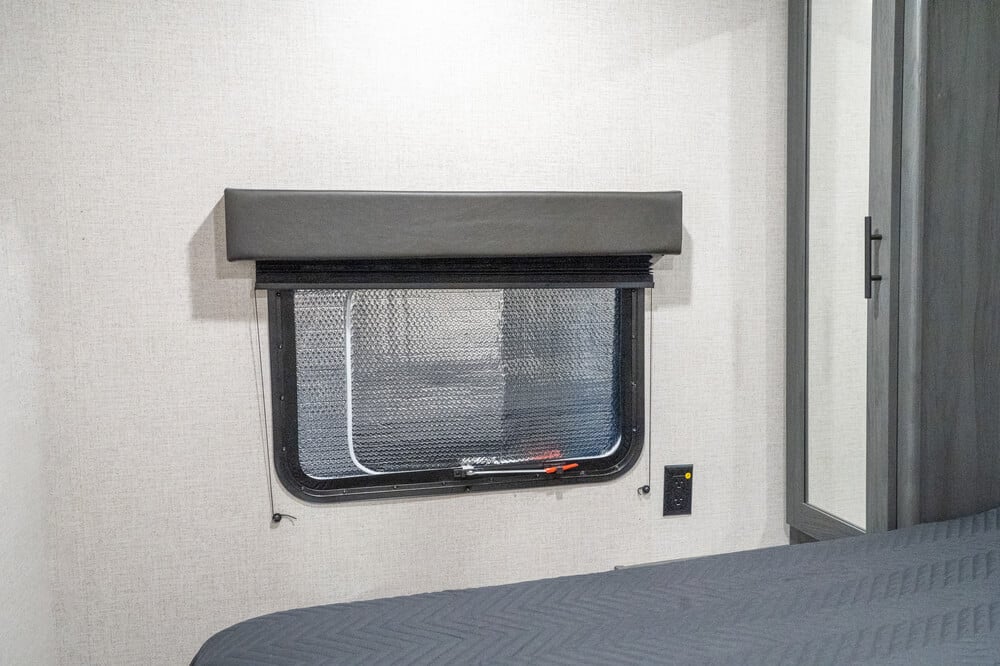
Once you’ve minimized the sun hitting the outside of your RV, the next goal is stopping what does get through from heating up your interior.
Close your blinds and shades during the day. This seems obvious, but many new RVers love natural light. On a summer afternoon, direct sunlight through an RV window can significantly raise interior temperatures. Draw the blinds or shades (especially for sun-facing windows) by mid-morning and keep them closed until the sun shifts.
Add reflective window coverings. Standard blinds help, but reflective window covers — think cut-to-fit foil insulation — are dramatically more effective because they reflect solar radiation before it converts to heat inside the RV. Our guide to RV window insulation for summer covers your best options, from DIY reflective panels to upgraded window treatments.
Cover skylights. Skylights are notoriously overlooked. Insulated vent cushions pushed into the skylight frame can significantly reduce solar heat gain.
Eliminate interior heat sources. Every RV appliance generates heat when it’s running. That’s added heat that strains your A/C. On hot days, cook outside whenever possible—grill or use a camp stove. Switch to LED lighting if you haven’t already: incandescent and halogen bulbs produce much more heat. And try to minimize TV, laptop, and gaming device use during the hottest hours of the day.
Maximize Airflow and Ventilation
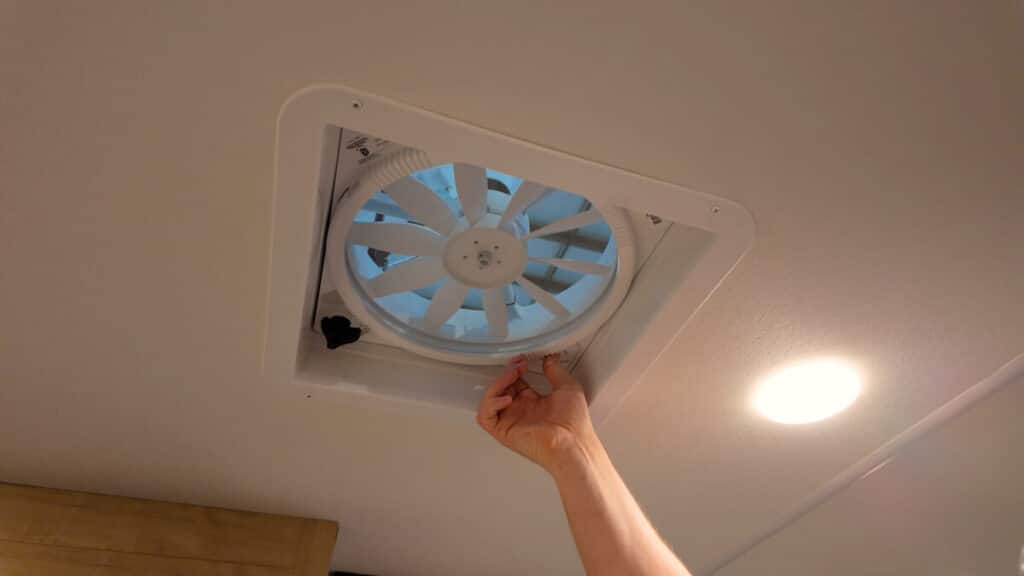
Proper ventilation is your air conditioner’s best friend — especially during the cooler parts of the day when it makes sense to give the compressor a rest.
If your RV has a powered roof vent fan, use it to exhaust hot air that pools at the ceiling. Pair it with an open window on the opposite side of the RV to create a cross-breeze that flushes the whole living space. When the outside air is cooler — usually in the mornings and evenings — this technique can cool your RV without the A/C.
At your comfort level, continue opening more windows and roof vents as evening temperatures drop. This allows cooler night air to flush out the heat stored in your walls and floor. Then, close everything in the early morning to trap that cool air inside. This can keep your RV comfortable later into the morning before you fire up your air conditioning system.
Positioning a portable camping fan near an open window pulls outside air in on the windward side or pushes hot air out on the leeward side. Even with the A/C running, sitting in front of a fan creates an evaporative cooling effect that makes a room feel several degrees cooler than the thermostat reading.
For boondockers or those with an A/C that’s struggling to keep up, learn how to keep an RV cool without A/C.
Keeping Your RV Cool While Driving
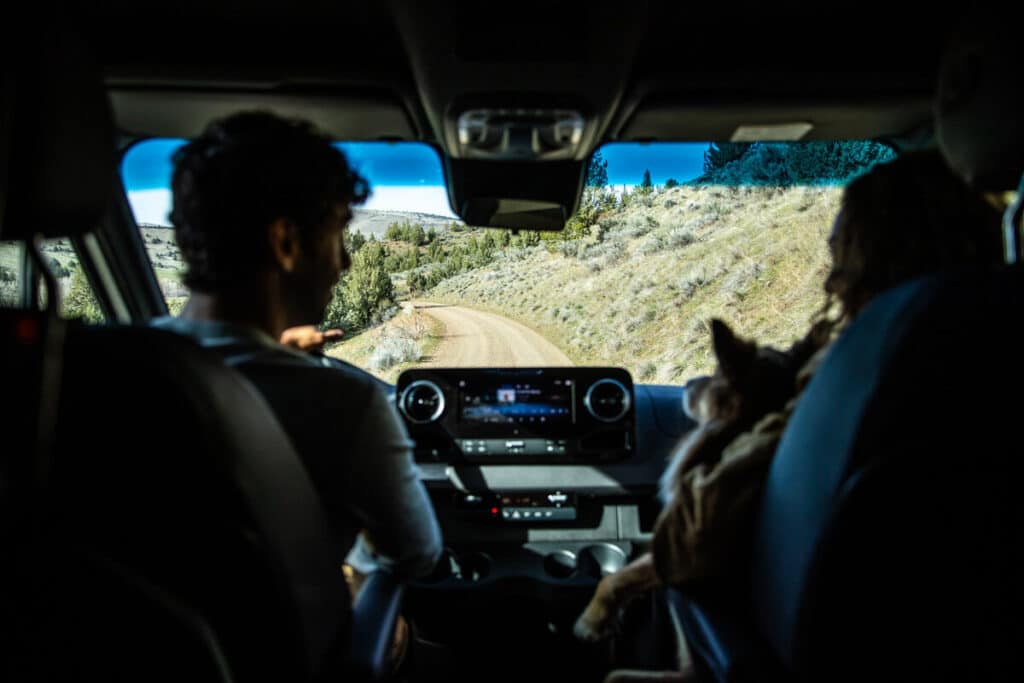
Managing heat while driving is different than managing it at camp. The strategies depend significantly on whether you have a motorhome or a towable.
In motorhomes, you can run the dash A/C while driving. Some even turn on their generator to power a rooftop air conditioner. This is the most effective way to keep the entire coach comfortable on the road. However, you will burn through gas (or LP, depending on generator type) more quickly. Some drivers will close a privacy divider or curtain separating the cockpit from the rest of the coach, keeping the cool air concentrated where you need it most.
When towing an RV, your vehicle’s A/C keeps you comfortable, but your trailer inevitably heats up. To minimize heat gain in transit, crack a vent fan to create some airflow and keep window coverings drawn to block direct sun. When you stop for fuel or a break, open the trailer up briefly to let heat escape. On especially hot days, it may take 30 to 45 minutes with the A/C running and windows briefly open before the inside temperature feels comfortable.
Front window management is also important. Motorhome windshields, in particular, are enormous and act like greenhouse glass. Windshield sun shades, stored and deployed whenever you park, are among the highest-ROI cooling accessories you can own.
Time drive days strategically, too: early-morning departures can help you drive during the cooler parts of the day and arrive well before the worst heat, giving you plenty of time to set up camp as your A/C cools your inside living area.
Keeping Pets Cool in Your RV in Summer
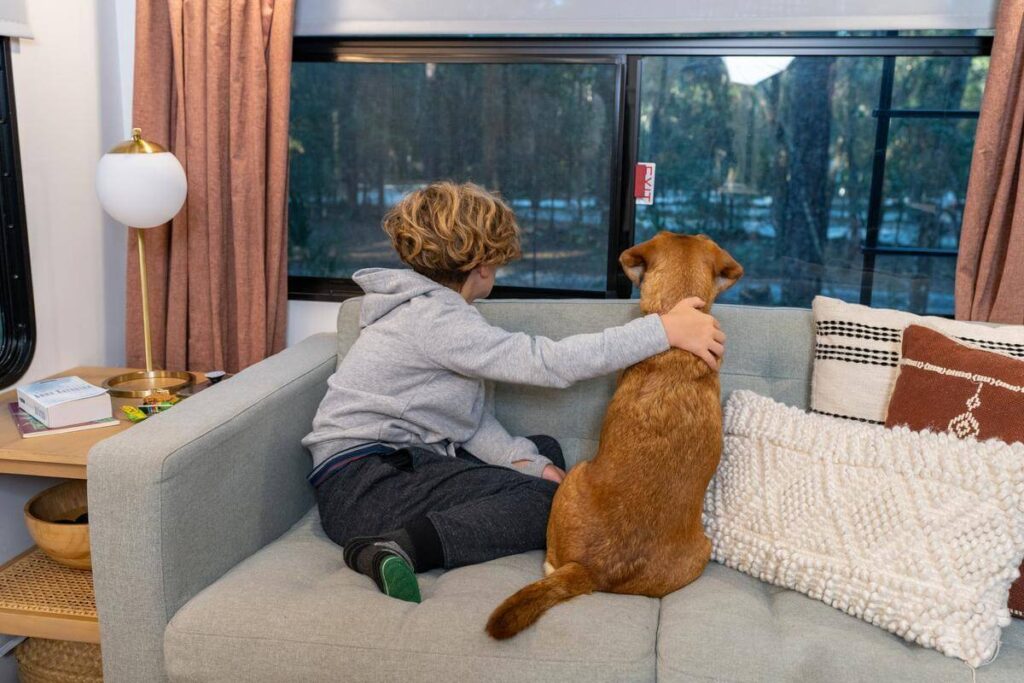
If you travel with pets, summer heat requires extra planning. Pets are particularly vulnerable to heat stress, and an RV interior can reach dangerous temperatures much faster than you might expect.
Never Leave Pets Unattended Without a Guaranteed Power Source
Running your A/C while you’re away is the right call, but shore power can go out. A generator can run out of fuel. If your A/C fails while your pet is inside on a hot day, the interior temperature will spike to life-threatening levels within minutes.
The most important investment you can make for pet travel safety is a cellular-connected temperature monitor—a device that sends alerts to your phone if the interior temperature exceeds a threshold you set.
Discover our RV pet temp monitor buying guide.
Help Your Pets Stay Cool Physically
Placing cooling mats in your pet’s favorite rest spots makes a significant difference. Some owners even chill these mats in the refrigerator for an extra boost. A battery-powered or 12V fan positioned near your pet’s sleeping area also provides cooling airflow.
Fresh cold water, shaded outdoor time during cooler morning and evening hours, and limiting exercise to non-peak-heat times are also smart summer pet care tips.
Know the Signs of Overheating
In dogs, these include excessive panting, drooling, lethargy, and stumbling. Cats may show open-mouth breathing or urgently seek out cool tile surfaces. If you suspect heat stress, move your pet to a cool space immediately, offer water, and apply cool (not cold) wet towels to their paws and neck. Contact a vet if symptoms don’t improve quickly.
Bonus Summer Camping Tips
These general camping comfort strategies pair well with the RV-specific techniques above.
- Stay hydrated consistently throughout the day, not just when you feel thirsty
- Schedule hikes, fishing, and other outdoor activities in the early morning or evening
- Use the campground pool or a nearby waterfront to cool down during peak afternoon hours
- Eat lighter, cooler meals during the hottest part of the day
- Rinse off with a cool (not ice cold) shower before bed to help your body temperature drop for sleep
For more on personal heat management, learn how to keep cool while camping in the heat.
Frequently Asked Questions
In extreme heat, layer multiple RV cooling strategies simultaneously: pre-cool your RV early in the morning, park in the deepest shade available, orient your rig to minimize afternoon sun exposure, cover all sun-facing windows with reflective coverings, strategically use your roof vent fans alongside the A/C, and eliminate interior heat sources like cooking indoors. Remember that your A/C can only lower ambient temperatures so much. The goal is to reduce the amount of heat the interior absorbs in the first place.
As temperatures drop in the evening, open windows and vent fans to flush out heat, then close everything up in the early morning to trap cool air inside. Run a roof vent fan to pull the day’s residual heat up and out. If temperatures stay warm through the night, run the A/C at a modest setting that allows the compressor to cycle rather than run continuously.
What some RV experts call “passive cooling strategies” can significantly reduce A/C usage. Selecting shaded campsites, using reflective window coverings, strategic ventilation, and eliminating interior heat sources all reduce the strain on your air conditioner. Many experienced RVers run the A/C only during peak afternoon hours (roughly 11 a.m. to 5 p.m.) and rely on ventilation and insulation the rest of the time.
Most veterinarians recommend keeping pet environments between 68 and 75°F, with 80°F being the maximum. Because RV interiors can climb past 120°F in direct summer sun — even with windows cracked — leaving pets unattended without a functioning, power-backed A/C system is extremely dangerous. Using a cellular temperature monitor when leaving pets inside allows you to receive an alert the moment something goes wrong with your cooling system.
Ideally, schedule or perform your A/C maintenance in the spring before temperatures climb — cleaning or inspecting the filter, checking the shroud and roof seal, and having the coils inspected at least every other year.
If you haven’t had an air conditioner service in over a year, booking a service appointment before your first summer trip is worthwhile.
Use these additional resources to stay comfortable camping in the summer heat:
- How to Keep an RV Cool Without A/C
- 50 RV Hacks and Tips You Haven’t Tried
- Best Insulated RVs for Hot Weather
- Can the RV Airflow System Improve AC Efficiency?
What’s your go-to strategy for keeping your RV cool in the summer heat? Share your best tip in the comments below.