EXPLORING the great outdoors comes with the responsibility of protecting the environments we enjoy. Whether you are a full-time RVer or a weekend warrior, adopting sustainable camping practices helps keep these natural spaces vibrant for future generations. In this guide, we’ll define “green” camping and provide real-life, eco-friendly tips to help lessen your impact on the places you camp.
Key Takeaways
- Green camping shifts from a “visitor” mindset to an active protection mindset by reducing waste, conserving energy, and using sustainable gear.
- Tips include using biodegradable soaps, staying on established campsites to prevent soil erosion, and transitioning to solar power to eliminate noise and chemical fumes.
- Campers should choose botanical pest repellents, patio mats made from recycled plastics, and non-toxic, low-VOC sealants for RV maintenance.
What Is Green Camping?
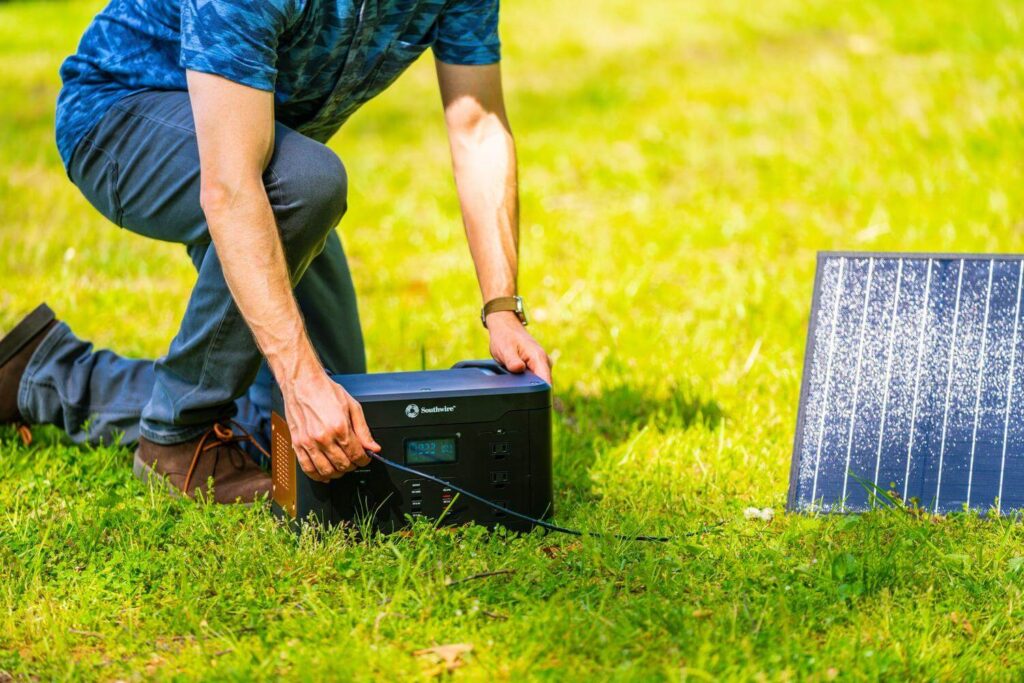
Green camping (also known as sustainable camping) prioritizes environmental health. You shift from simply visiting a site to actively preserving it.
A green camp philosophy goes beyond the traditional Leave No Trace principles. It extends to the products you buy, the energy you use, and the maintenance of your equipment.
Being a sustainable camper means:
- Minimizing waste through reusable gear.
- Protecting local wildlife and vegetation.
- Reducing chemical runoff into soil and water.
- Conserving energy and utilizing renewable power sources.
By focusing on more sustainable camping, you can enjoy the serenity of nature while knowing you are contributing to its long-term health.
Best Eco-Friendly Camping Tips for Low-Impact Trips
Transitioning to a sustainable camping trip doesn’t have to happen all at once. Start with these foundational sustainable camping tips:
Use Eco-Friendly Soap for Camping: Traditional dish and body soaps contain phosphates and surfactants that are toxic to aquatic life. Switch to biodegradable soaps and always dispose of gray water in designated drains or at least 200 feet from water sources.
Invest in Quality Eco-Friendly Camping Equipment: Choose durable, high-quality gear that lasts for years rather than cheap, single-use items that end up in landfills.
Stick to Established Sites: To prevent soil erosion and protect native plants, always set up camp on hardened surfaces or designated pads.
Practice Smart Energy Use: Switch to LED lighting and use solar power whenever possible to reduce reliance on non-renewable energy sources.
Eco-Friendly Camping Products to Reduce Your Impact
To support your journey toward sustainable camping, eco-friendly camping equipment prioritizes safety, efficiency, and environmental protection.
Natural Rodent & Insect Repellents

Traditional pest control often relies on harsh poisons and traps that can harm non-target wildlife. For a truly green camping experience, try these botanical alternatives:
Fresh Cab Botanical Rodent Repellent: A safe, cruelty-free alternative to poisons. It uses essential oils to keep rodents away without traps or toxins.
Grandpa Gus’s Mouse Repellent Pouches: An all-natural formula that protects your RV using peppermint and cinnamon oils.
Shubug Natural 360 Insect Repellent: A 100% natural oil repellent that provides effective protection without the environmental harm associated with synthetic chemical sprays.
Sustainable Solar Products

Harnessing the sun is one of the most effective sustainable camping gear tips. Solar power offers several environmental and practical benefits:
- Silent and Sustainable: Unlike gas-powered generators, solar kits produce no noise and zero fumes, preserving the peace of the wilderness.
- Battery Longevity: Solar systems provide a constant, low-level charge that prevents battery degradation, reducing the frequency of battery replacements and hazardous waste.
- Freedom to Boondock: Solar lets you camp in remote locations without needing to plug into the grid, further reducing your overall energy footprint.
Some of our favorite RV solar options include the Go Power Overlander 200-Watt Kit or the Nature Power 110-Watt Kit. Both offer an excellent way to transition to more renewable energy.
Eco-Friendly Patio Mats
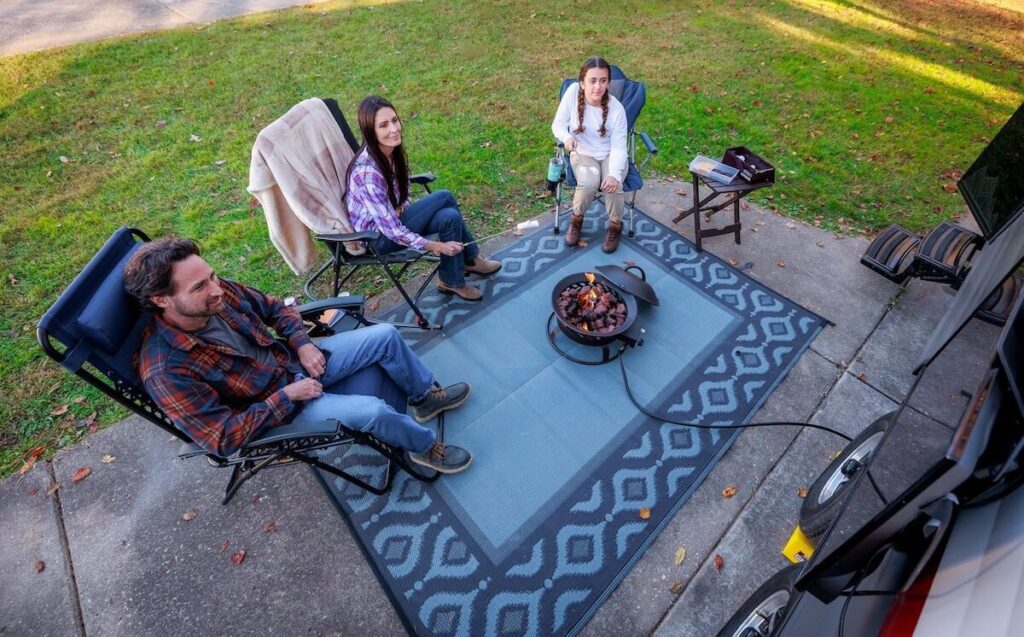
Most RVers use a patio mat. But you might as well use one that doesn’t add more plastic to the world. Venture Forward’s mats are made from recycled bottles — each 9′ by 12′ mat keeps about 80 bottles out of a landfill. They’re tough, reversible, and easy to clean.
Green RV Repair & Maintenance Products
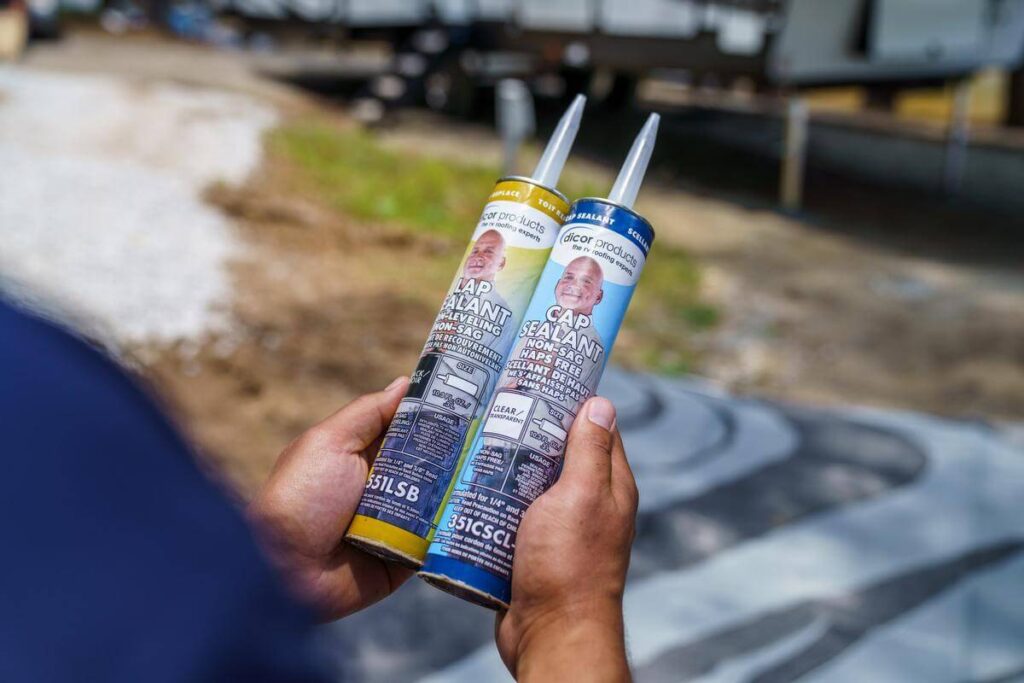
Proper maintenance is a cornerstone of sustainability because it extends your RV’s lifespan. However, the chemicals used in repairs matter. These sealants offer more environmentally-friendly solutions than their peers.
Dicor HAPS-Free Sealants: Unlike traditional sealants, these are “Hazardous Air Pollutants-free,” meaning they don’t release toxic chemicals into the atmosphere during or after application.
Alpha Systems Low VOC Sealants: “Low VOC” stands for Low Volatile Organic Compounds. These sealants have a lower toxicity level, making them safer for both the user and the surrounding ecosystem.
Ready to make your next trip a sustainable camping trip? Explore these additional resources:
- How To Clean an RV
- Go Power Solar Kits
- How To Add Solar to RV Systems
- Guide to Zero Waste Camping
Do you have any sustainable camping tips or questions? Let us know in the comments below!