
HAVING ACCESS to power sets RVing apart from other types of camping. Whether you’re in a travel trailer, motorhome, or 5th wheel, an RV surge protector is one of the most important investments you can make. This essential piece of safety equipment protects your camper’s electrical system so you can enjoy the lights, appliances, outlets, and other amenities that you just don’t get when tent camping.
While regular electrical maintenance is essential to keep your system healthy, you should protect it with an RV surge protector whenever you plug into a power pedestal or a portable generator. If you don’t, you run the risk of a power surge damaging your RV’s electrical system and the items connected to it.
Key Takeaways
- A basic surge protector guards against high voltage only; an EMS (electrical management system) also protects against low voltage, open neutral, open ground, and reverse polarity
- For most campers, a full EMS is the better investment. It costs more upfront, but protects your RV more completely.
- Choose a 30-amp or 50-amp model to match your RV’s electrical system.
- Look for a locking bracket feature to prevent theft at the campground pedestal.
Do You Need a Surge Protector for Your RV?
Every RV that plugs into shore power should use an RV surge protector or electrical management system (EMS). Campground pedestals can deliver miswired power, voltage spikes, or dangerously low voltage, all of which can damage your RV’s electrical system and appliances. A camper surge protector costs far less than a repair bill in the thousands.
Think of it like car insurance: you hope you never need it, but you’d never drive without it. The same logic applies to surge protection for your fifth wheel, motorhome, or travel trailer.
Why Do You Need an RV Surge Protector?
When you connect an RV to power – like shore power at an RV park – you expect the right amount of electrical power to come out of the outlet and for it to be wired correctly. The acceptable range for AC power in an RV is 108-132 volts, with 120 volts preferred.
But some outlets aren’t wired correctly and could be prone to power surges, or the voltage could be too low. These errors can wreak havoc on your RV’s electrical system and even fry your electronics.
Using a surge protector can eliminate major electrical issues. Not all RV parks are wired by certified electricians, and miswired pedestals are more common than you might think.
Technician Story: While traveling along the East Coast, I saw park voltages as low as 82 volts AC, but I rarely saw them exceed 130 volts AC. Usually, this happened on hot summer evenings when everyone returned to their RV from daily outings, cranked up the A/C, and ran a shower. This would cause the voltage throughout the park to plummet.
A surge protector protects your RV’s electronics from the power outlet you plug into. An outlet that seems fine could suddenly deliver a large surge of electricity, as in the event of a lightning strike.
Would you rather buy a surge protector or replace all your electronics after a surge? The cost savings can be huge!
What Does an RV Surge Protector Do?
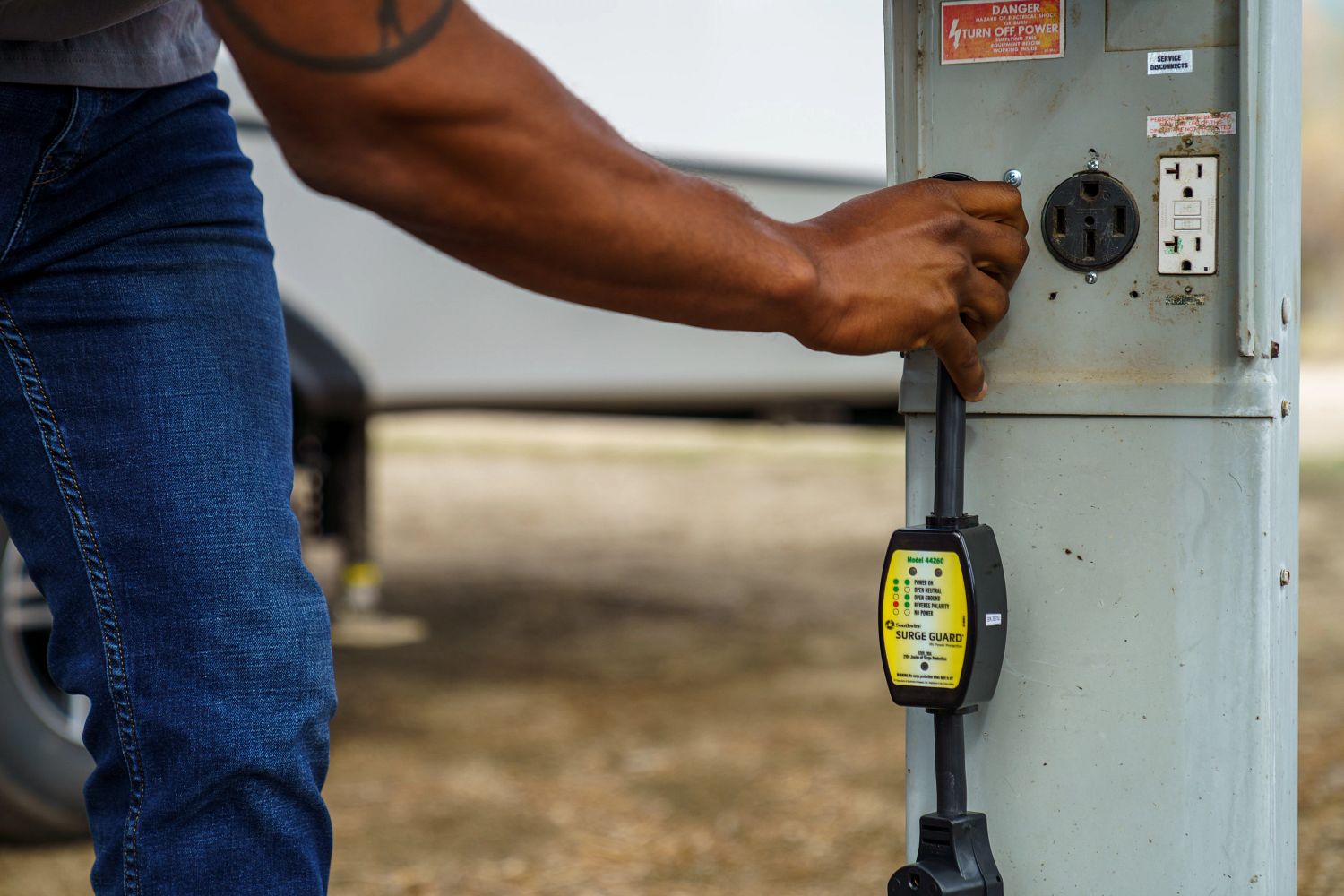
Surge protectors plug into the outlet where you would plug in your RV. Then, you plug your RV power cord into the surge protector. It is a buffer between your RV and the power of the electrical outlet.
This intermediary device monitors the power from the outlet and prevents power spikes from reaching your RV.
Technician Tip: Generators may not work well with some surge protectors. Generators do not have an earth ground unless the user provides one (by attaching the generator chassis to a known good ground) or fakes it with a floating neutral (by installing a jumper wire between the ground and neutral on the generator). It can be removed if the user has an issue with a portable surge protector. But with a built-in model, it cannot be bypassed.
Not all surge protectors are created equal. They are available at multiple price points, and you generally get what you pay for.
The less expensive models are a one-and-done design, like a fuse. They must be replaced with a new surge protector after experiencing a protection event. At best, some may come with a coupon for a small discount on the replacement.
The best models can be reset manually or will self-reset once the danger has been corrected. There’s also the option to purchase a product protection plan. Protecting your investment is vital, whether you do that or practice caution in the field.
What Kind of RV Surge Protectors Are Out There?
There are two types of surge protectors: a basic surge protector and an electrical management system (EMS). While they do different things, they have the same purpose—to keep your RV’s electronics safe.
Surge Protectors vs Electrical Management Systems (EMS)
The main difference between a typical surge protector and an electrical management system is its breadth of protection. A surge protector offers protection only against high-voltage surges. An RV electrical management system (EMS) is a more robust solution that protects your RV from high-voltage, low-voltage, reverse polarity, open neutral, open ground, and other issues.
Use this comparison table to understand the difference at a glance:
| Feature | Basic Surge Protector | EMS (Electrical Management System) |
|---|---|---|
| High-voltage protection | ✓ | ✓ |
| Low-voltage protection | ✕ | ✓ |
| Open neutral/open ground | ✕ | ✓ |
| Reverse polarity protection | ✕ | ✓ |
| Voltage regulation | ✕ | Some models |
| Best for | Budget-conscious campers | All RV types — best value long-term |
An electrical management system is a more robust solution that protects your RV from high and low voltages, reverse polarity, open neutral, open ground, and other issues.
EMS surge protectors regulate voltage by not allowing power into your RV if it’s out of the acceptable range. High-end RV power surge protector systems can even provide voltage regulation, keeping power steady at all times. These systems are more expensive, but they’re worth it for most RV owners.
Technician Tip: Low voltage caused by more demand on a campground’s system than it can provide can be just as damaging to your RV as electrical surges – potentially causing circuit board damage or heating an already poor connection and increasing the risk of fire. Loose connections or damaged outlets in the campground’s system can cause arcing, surging, or voltage drops, as well as open grounds or open neutrals that damage your RV.Heat building in a loose connection can result in fire.
What Surge Protection Equipment Should You Get?
Many electronic management systems are sold with the word “surge protector” in their names. Below are a few recommendations. These are energy management systems, though they’re called surge protectors. They will protect your RV against various problems.
Technician Tip: Some models, especially EMS designs, may have a time delay that allows the system to confirm a no-fault condition before allowing power to pass to your RV. It’s critical to read your product’s owner’s manual to understand all its features before using your device.
1. Hughes Autoformer Watchdog 30 and 50 Amp Surge Protectors
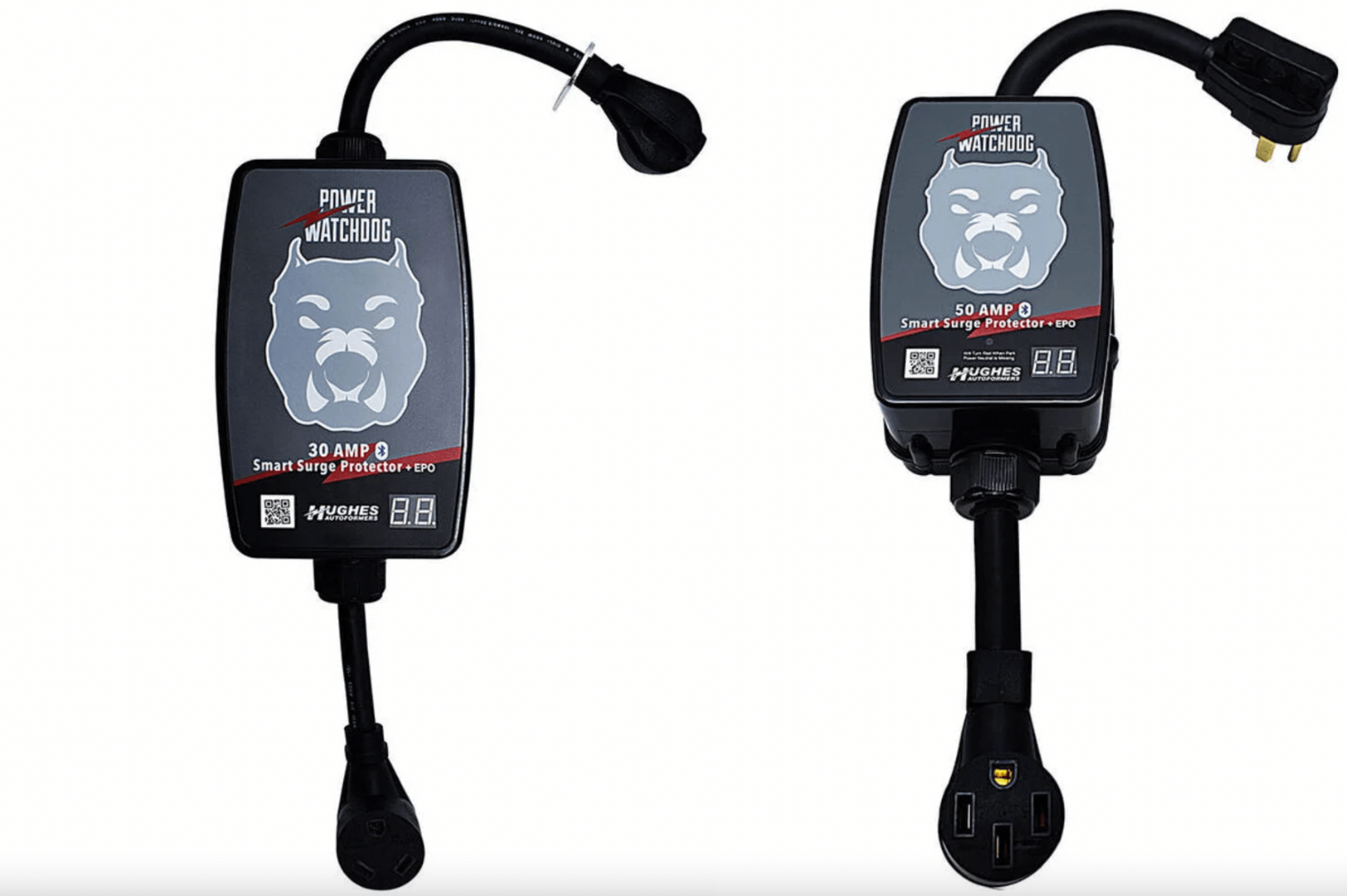
The Hughes Autoformer Watchdog is available in 30-amp and 50-amp models. These surge protectors have gained popularity largely because of their emergency power-off feature. They’re also heavy-duty, weather-resistant designs with Bluetooth® capability to track power levels from your smartphone.
Technician Tip: These might be the best things out there today. They protect extremely well against all conceivable faults and automatically reset when the danger has passed. If components are permanently damaged, they are also user-serviceable in the field.
2. Southwire Surge Guard Portable 30-Amp and 50-Amp Surge Protectors
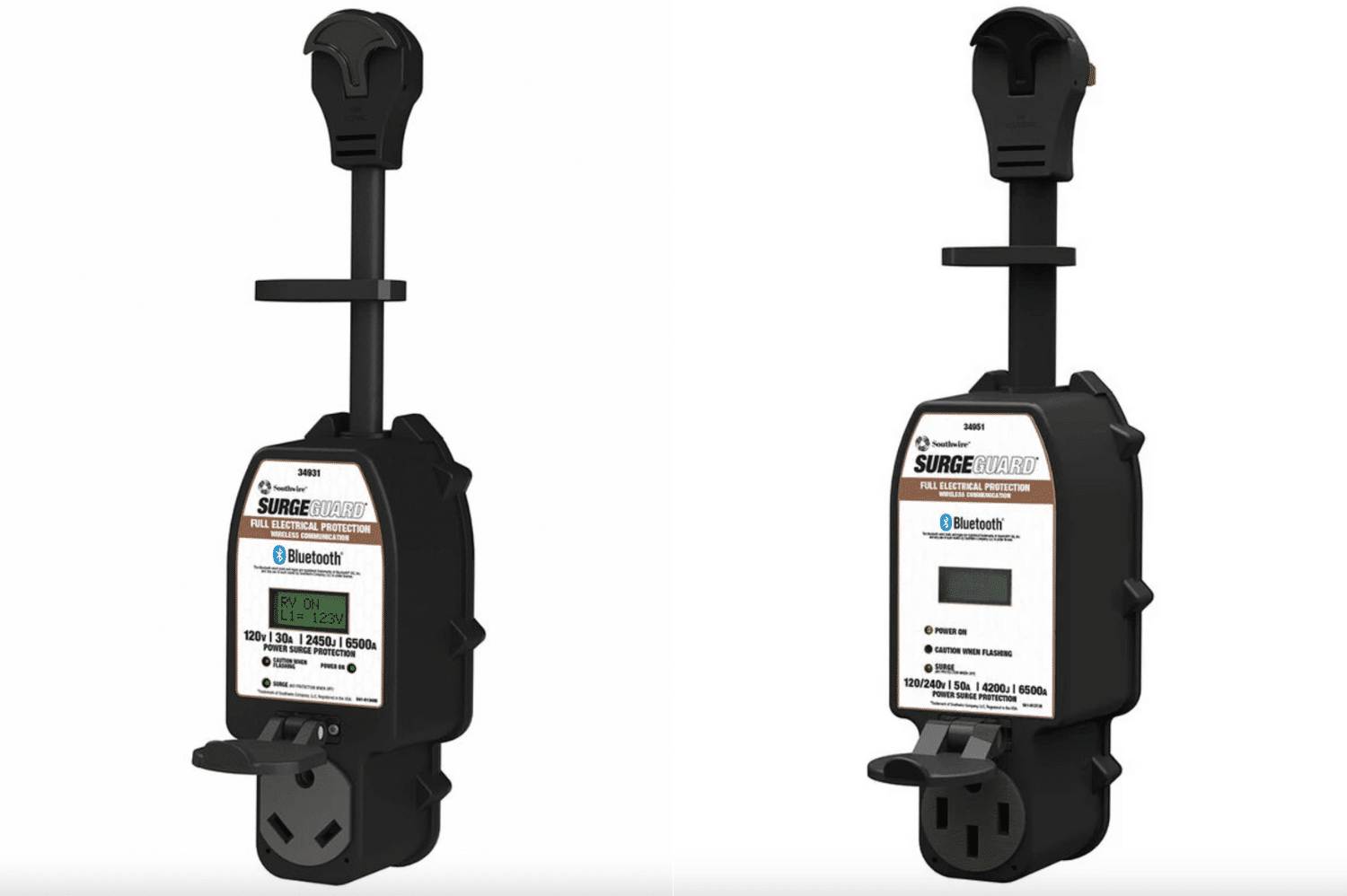
This Southwire Surge Guard also offers models for 30-amp RVs and 50-amp coaches. It protects against various wiring issues, including reverse polarity, open neutral, and open ground. The units feature a locking bracket — making this a great locking RV surge protector option — to prevent theft once they’re in place.
The Southwire Wireless LCD Display complements the wireless capabilities of these surge guards. It provides total visibility for easy monitoring of your surge protector and the status of the connected power source.
3. Progressive Industries EMS-PT30X and EMS-PT50X Surge Guards

Progressive Industries’ EMS-PT30X and EMS-PT50X surge protectors are excellent electronic management systems for RVs. They protect against various electrical issues, including high and low voltages, open ground, open neutral, and reverse polarity.
Here’s our complete guide on how to choose an RV surge protector.
Portable vs Hard-Wired RV Surge Protectors
RV surge protectors come in two main form factors: portable RV surge protectors and hard-wired (built-in) units.
A portable surge protector for your RV plugs directly into the campground pedestal before you connect the power cord. These are the most common because they are easy to use, require no installation, and can be transferred between RVs.
A hard-wired surge protector is installed directly into your RV’s electrical system, usually housed in an underneath storage compartment. These are a great option if you’re looking to avoid theft or want a more permanent solution. Some luxury RVs include standard voltage management systems from the factory.
You’ll need to completely understand your RV’s electrical system to choose and install a hard-wired surge protector. If you’re interested in installing one, we highly recommend scheduling an appointment with an RV Performance and Improvement Specialist at your local Camping World.
How To Keep Your Surge Protector From Getting Stolen
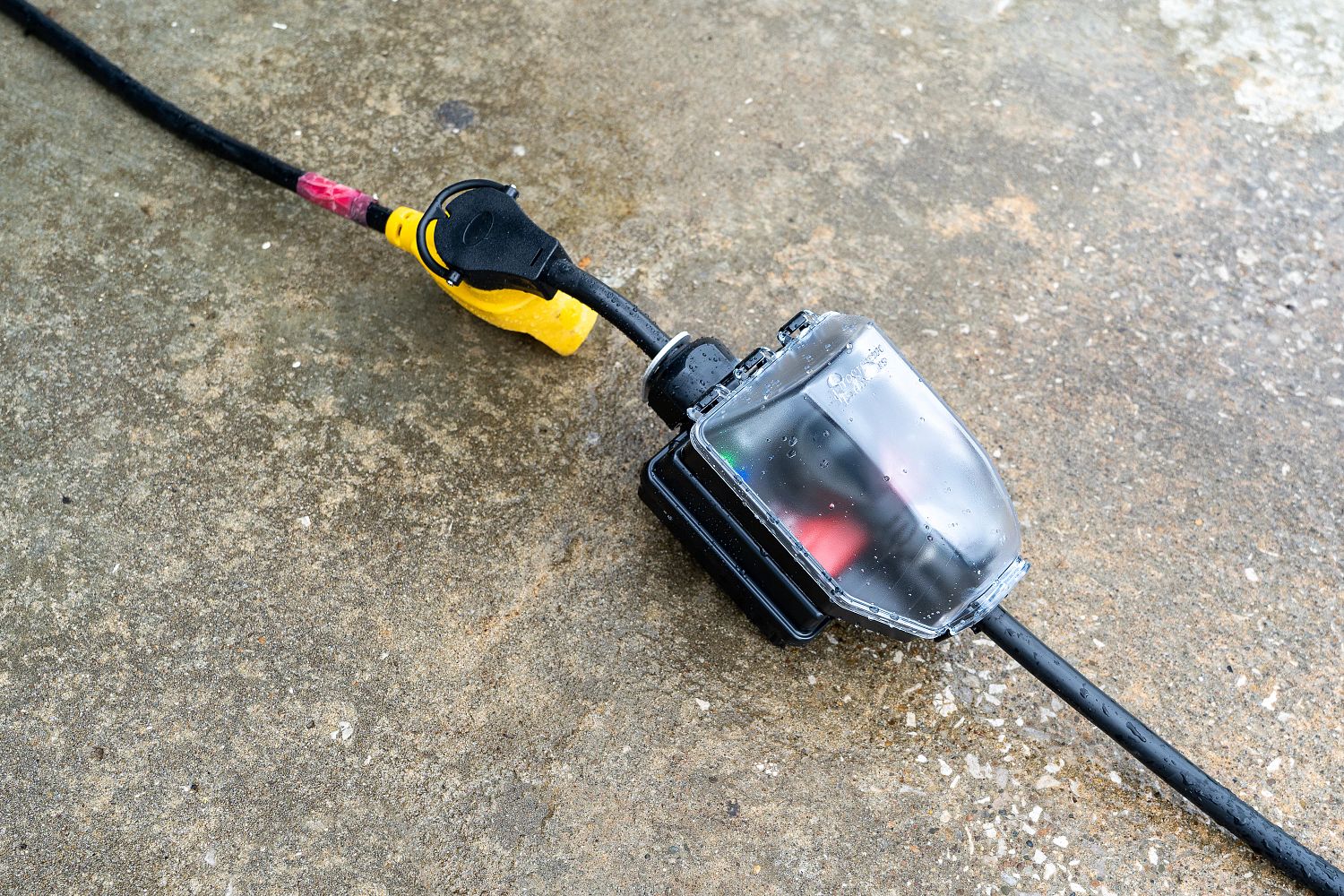
The best way to avoid someone stealing your surge protector is to choose a locking RV surge protector, such as the Progressive Industries EMS-PT50X. A surge protector with a locking bracket lets you secure it to the power pedestal with a combination or cable lock.
Using a lock for your RV surge protector is the single most effective deterrent against theft. Zip-tie-style cable locks tightened all the way or a quality padlock through the locking bracket make your surge protector a much harder target.
Some RVers recommend locks that simply go around the power pedestal and surge protector once they’re plugged in. The problem with that solution is that the surge protector can still be freed if unplugged. The locking bracket is really the best method.\
Disclaimer: A determined thief may still manage to steal a surge protector, but the most common thefts are crimes of opportunity where there’s a clear chance for a quick, easy score. Most thieves are not typically trained or equipped to defeat a high-quality bracket-and-cable lock system.
Frequently Asked Questions About RV Surge Protectors
RV insurance may cover power surge damage in some cases, but coverage depends on your policy and the cause of the damage. Comprehensive RV insurance policies sometimes cover surge damage caused by external events, such as lightning strikes. However, policies vary widely, and many standard policies exclude damage caused by faulty campground wiring or gradual electrical damage. The most reliable protection is prevention: a quality RV surge protector or EMS unit costs $50–$400 and can save you thousands in repairs, making them far more reliable than depending on an insurance claim.
A basic surge protector only guards against high-voltage spikes. An electrical management system (EMS) is a more comprehensive solution that also protects against low voltage, open neutral, open ground, and reverse polarity, all of which can be equally damaging. For most RV owners, an EMS is the better investment.
Choose the amperage that matches your RV’s electrical system. Most travel trailers and smaller campers use 30-amp service; most fifth wheels and Class A motorhomes use 50-amp service. Check your RV’s owner manual or look at the power cord plug. A 3-prong plug is 30-amp, a 4-prong is 50-amp.
With the equipment listed above, you should be able to keep your electronics issue-free, whether you’re in a travel trailer, motorhome, fifth wheel, or another type of camper. A quality surge protector or EMS is one of the smartest investments any owner can make.
Do you have any questions about RV surge protectors? Leave a comment below.



So do you need a surge protector with a generator being used on a camper
Hi Hoyt,
I use a surge protector with my portable generator. There are many conflicting opinions out there on this one, but my take is it’s better to be safe than sorry.
Rand, you do not need separate 30-50 amp surge or ems units. Your purchase should be a 50 amp unit that will protect your whole trailer. Think of it like a fuse, only good to the amperage it’s rated for.
Does it work in reverse? I have a 30 and sometimes we need to plug into a 50. Do i place the protector on the 30 line after the adapter?
I have a 50 amp 5th wheel. When the unit is not in use, it is plugged in to 30 amp service using a 30-50 adapter. I never use both a/c units at the storage space, so it works well. Do I need a 30 amp power management device for when on the 30 amp service and a separate power management device when plugged into 50 amp service, or will the 50 amp protect for both amperage?
The geek in me appreciates the wireless display of the Southwire units. The practical side of me says that with a good EMS in place, power is either on or it isn’t.
I have a Progressive Industries EMS-PT30X for my toy hauler. I’m rarely in a formal campground, but I’ve heard enough horror stories about the electrical systems in older campgrounds that I keep the EMS in the trailer. I’ve used the EMS once so far. I didn’t unbox it for several months after purchasing, only to find that the weather shield was missing. One email to Progressive Industries and a replacement was sent. Great customer service!