
THE PAST FEW YEARS have been fairly dynamic for those interested in motorhomes. Longtime owners and new buyers have faced questions about a mainstay RV category that seems to be shifting in a couple exciting ways. The good news? Transition often sparks innovation, and the changes we’re seeing today are paving the way for smarter, more efficient motorhomes.
Motorized remains one of the most energetic segments in RV manufacturing. There’s a greater push to design and build motorhomes that are more affordable, reliable, and customer-focused than ever before. As the 2026 model year rolls out, we’re seeing growth in emerging segments such as Super C RVs, steady exploration of electric RVs, and an influx of smaller yet still-capable motorhomes that better fit today’s budgets. In a word, the motorhome market is wriggling to find just the right balance customers want, and we’re exploring what those changes look like.
So in the spirit of Charles Dickens, we’re looking at the Spirits of Motorized’s Past, Present, and Future to give you some helpful context, considerations, and exciting developments you’ll want to keep your eye on.
Motorized in Recent Past
Motorhomes represent a smaller slice of the overall number of RVs on the road. They’re a more specialized category and a more significant investment. That’s why it’s worth exploring how the past few years have shaped current trends. So let’s start with the Spirit of Motorhomes’ Past—our Dickens-inspired first chapter.
Pandemic Popularity, New Legislation, Chassis Innovation
The pandemic brought an unprecedented surge in RV interest. In 2021, nearly every motorhome type — A, B, and C — grew in ownership. Class B models led the charge (#VanLife), Class C RVs remained the most common choice among new families, and even Class A motorhomes saw notable year-over-year gains. Motorhomes were and remain excellent choices for remote work, full-time RVing, and more independent travel — all key ingredients during the pandemic that led to a spike in demand. Though the boom eventually tempered, that spike in popularity broadened today’s selection of used motorhomes and has pushed some new ermodels to focus on value.
Around the same time, the Advanced Clean Trucks (ACT) rule, designed to push the trucking industry toward cleaner technology, began to influence motorhome planning and raised additional questions. The ACT’s phased adoption added complexity for RV manufacturers, particularly in the Class A segment, which relies heavily on commercial-grade chassis platforms.
This is an important note: as we’ll see later, chassis innovation is something to watch for in the motorhome segment as manufacturers dial-in what makes the most sense for their customers. Some manufacturers have even transitioned gas Class A lines into Super C offerings, where commercial truck chassis remain more plentiful. This doesn’t mean Class A gas motorhomes are going away — just that manufacturers are offering more alternatives.
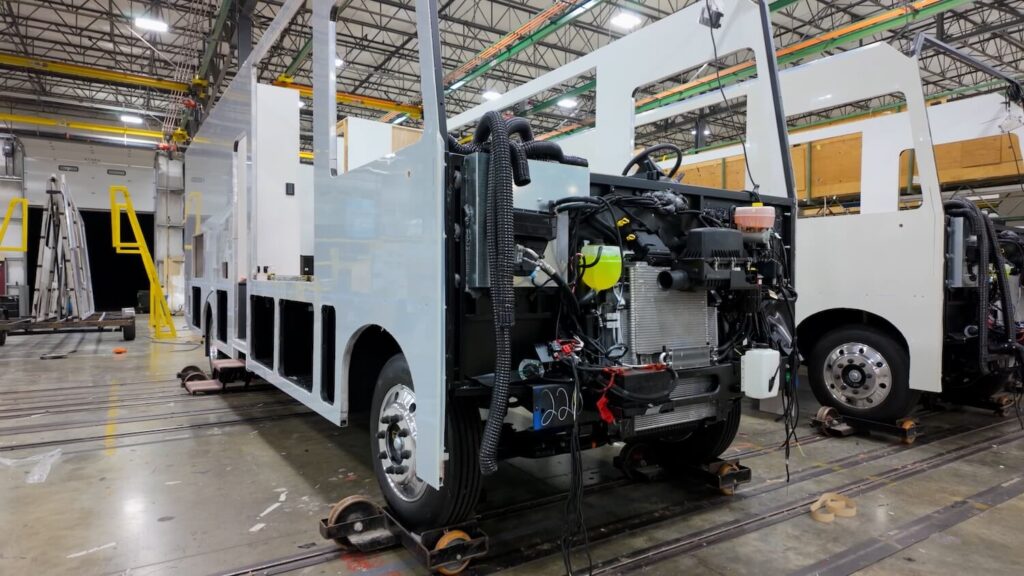
While not all of these factors are directly related, booming demand, evolving legislation, and chassis overlap have all impacted the motorhome market over the past several years. Prices were already trending upward even before the pandemic, due to supply-chain tightness and limited chassis options, so there has been an elevated need to find ways to bring prices down. And there are clear signs of positive movement: manufacturers are embracing lighter materials, alternative chassis, modular builds, and smaller units to deliver better value within this new landscape.
The Present: What’s Happening Now In Motorhomes?

There are challenges, yes—but we’re also seeing exciting activity in the motorhome segment. After all, motorized RVing remains one of the most independent forms of travel, sustained by a devoted core of owners, and it appeals especially to new RVers who have reservations about towing. According to RVIA, motorized shipments were up over 21% as recently as a month ago, potentially marking a modest recovery.
Let’s take a look at a few trends across various motorized segments, starting with smaller RVs.
Goldilocks Motorhomes
In some cases, motorhomes are trending smaller, and they’re also shedding some of their more costly features while identifying the core conveniences campers want. Manufacturers have shifted to meet new expectations of affordability, drivability, and low maintenance. Consider examples from Thor Motor Coach, where they clearly see an opportunity to meet their customers’ needs with new products.
In 2025, they introduced new “ESpec” models, short for Essential Specifications, which boast more compact campers with core amenities like a 4,000-watt generator, backup camera, auto-gen start, a 12V refrigerator, and more.
Another example is Thor Motor Coach’s Freedom lines, which position motorhomes at accessible price points, often utilizing efficient floorplans and streamlined feature sets. Models like the Class C Freedom Elite 19HE are easier to drive, park, and store, offering a simplified overall experience for new owners. Their Class B van— the Freedom Elite 17D—has proven to be somewhat of a game-changer, with an attractive MSRP and a nimble length just shy of 18′.
Thor has even extended this philosophy to their Class A Freedom Traveler lineup, which begin around $165,600. Its most compact ES models are built on a commercial truck chassis (Ford E-Series) instead of the traditional F-53. This somewhat subtle change reflects Thor’s shrugging of traditional Class A conventions to provide a similar experience at a price point that’s more in line with consumers’ needs.
In this way, the Freedom lines complement Thor’s ESpec “Goldilocks” builds—models that sit between maximum luxury and minimal cost—offering a lower barrier of entry for new buyers.
By focusing on functional layouts and simpler features, Thor has created a motorhome that’s easier to drive, own, and, most importantly, afford. The company describes this as “bringing motorized RVing back within reach,” aligning with buyers who seek practical rigs under $150,000.
In many ways, Thor’s ESpec launch and Freedom line changes capture where certain motorized manufacturers are heading: attainable units focused on real-world use rather than excess luxury.
But that’s not where the conversation stops. Even the high-end luxury segments and manufacturers seem to be pivoting.
The Dawn of the Super C
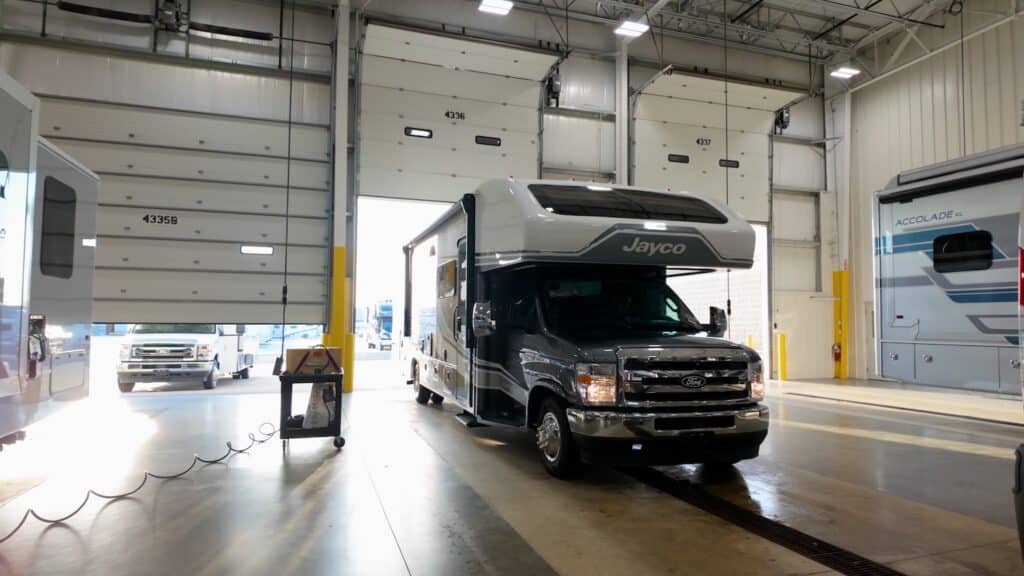
Unlike gas Class A RVs, Super Cs are built on a commercial-grade truck chassis—often the Ford F-600/F-750, Freightliner SD, or International CV Series—giving them higher towing capacities, diesel power, and a more familiar driving experience for truck owners.
Historically, the Super C has been a niche market for those with greater towing needs. In recent years, it’s marked a unique opportunity for manufacturers to offer a Class A experience on a more accessible (and slightly more affordable) chassis. This platform independence has made Super Cs an appealing alternative for manufacturers seeking to reduce their reliance on the F-53.
The result is a burst of innovation: new 2025 models like the Grand Design Lineage Series F, the East to West Bravado, and Thor Magnitude Grand showcase 4×4 options, integrated smart-tech systems, and residential interiors traditionally found in luxury Class A RVs.
And the list goes on…
- Newmar, new to the Super C segment in 2020, has launched several Super C trim levels in the past few years, including a more price-conscious, accessible option in the 2025 Grand Star, as well as their luxurious Summit Aire, signaling a deliberate move to broaden its footprint in a category once dominated by niche, high-end builds.
- Tiffin is placing a clear bet on Super C with its Allegro Bay flagship line. For 2025–2026, Tiffin has expanded this lineup with a new 34DB floor plan and refined the coach with upgrades like matte-finish tile flooring, a lower entry step, new décor options, and expanded amenities such as a stacked washer/dryer and optional Starlink® prep—subtle but meaningful enhancements that elevate comfort and convenience.
- Jayco is a longtime manufacturer of Super C RVs, leading with Seneca and Seneca XL, which together illustrate the brand’s dual-track approach to the segment: luxury and adventure. For the 2026 model year, its newer Seneca XT marks a clear step change, built on a Ford F-550/F-600 4×4 chassis and featuring heavy-duty running gear, plus upgraded insulation and construction.
- Entegra Coach, Jayco’s luxury counterpart under the same corporate umbrella, mirrors that dual-track evolution at the premium end of the market. Its Accolade and Accolade XL lines build on the same heavy-duty Freightliner S2RV Plus chassis but elevate the experience with Entegra’s E-Z Drive Premier ride-and-handling system.
- Fleetwood RV and Holiday Rambler, both under the REV Group umbrella, are entering the Super C space with purpose. Their 2026 Altitude (Fleetwood) and Incline (Holiday Rambler) models ride on new Ford F-Series chassis and bring the brands’ signature residential styling and technology into a more compact, diesel-powered platform—an intentional move to capture buyers seeking Class A amenities in a more capable, truck-based motorhome.
- Dynamax remains the segment leader, continuing to set the benchmark for luxury Super C models with the DX3 and Europa. For 2025–2026, Dynamax emphasizes even greater refinement, adding advanced safety systems, upgraded multiplex controls, and high-output lithium power options—all built on commercial-grade Freightliner Cascadia and M2 chassis that define the brand’s blend of durability and high-end craftsmanship.
As production stabilizes, the Super C has evolved from a niche choice into a proving ground where builders can experiment with performance, design, and durability without being tied to the limitations of traditional motorhome platforms.
The Future of Motorhomes
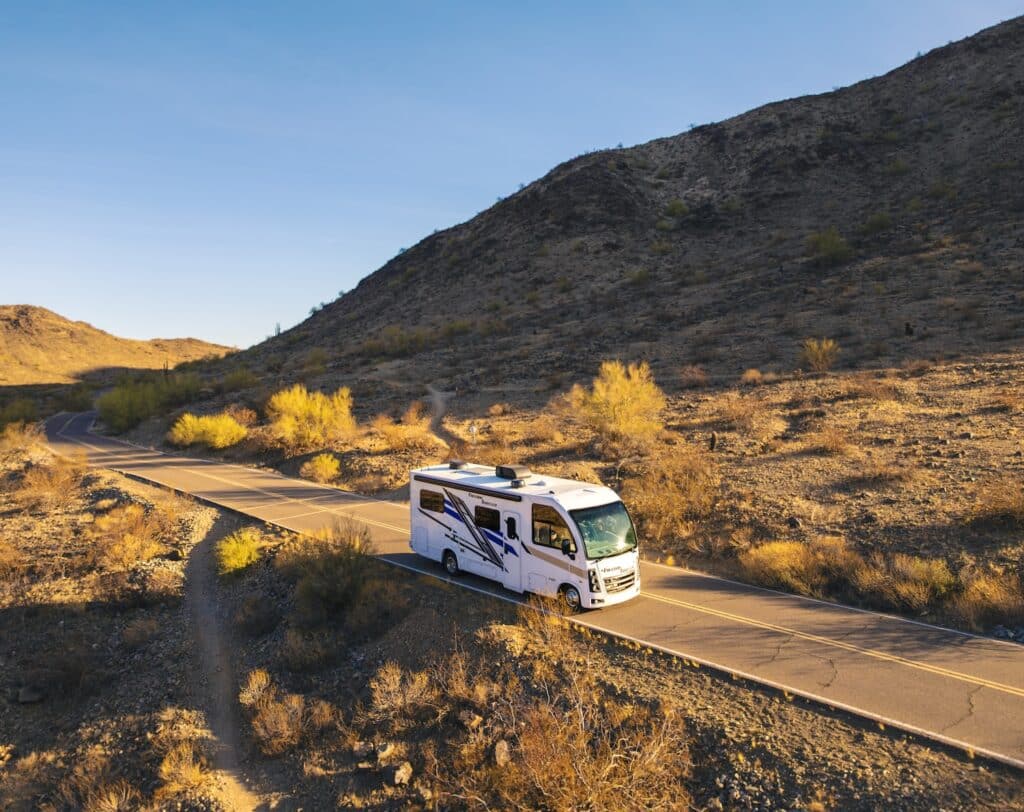
With our Spirits of Motorhomes Past and Present in our periphery, the future is arguably already here. Notably, several manufacturers have begun to explore electric motorhomes. With Jayco’s Embark EV, Winnebago’s eRV2, and more boutique brands like Grounded RV, there is enough promise in these early iterations to believe that we aren’t that far away from a future of electric motorhomes.
BrightDrop
In late September 2025, Forest River’s Coachmen brand debuted a highly intriguing electric motorhome built on GM’s BrightDrop EV platform: the Coachmen RVEX. Unlike earlier electric RV prototypes that relied on modest van chassis or limited range, the RVEX promised up to 250–270 miles of driving distance on a full charge, with a fully electrified living system and residential amenities powered by its high-capacity lithium battery pack. It represented one of the first serious attempts to pair a purpose-built commercial EV platform with a full-scale motorhome design.
However, GM’s decision to wind down the BrightDrop platform created an unexpected false start just as momentum was building. Even so, Coachmen says it’s exploring alternative chassis options and remains committed to bringing the RVEX to market.
Jayco EV
Jayco’s Embark EV is one of the most advanced electric-forward motorhome prototypes to date—a Class A coach that integrates four lithium batteries into its chassis and drives exclusively on an electric motor. The system delivers about 110 miles of electric-only range, while a 50-gallon gasoline range extender powers a 45 kWh generator that recharges the batteries on the move. The engine never drives the wheels; instead, its sole purpose is to create electricity, enabling a total driving range of 470–500 miles in real-world conditions.
The Embark EV retains the space, finish, and systems integration of a traditional motorhome, including induction cooking, heat-pump HVAC, and smart-energy management through Jayco’s JAYCOMMAND® interface. It remains a prototype, but it shows a legacy manufacturer seriously exploring what a production-scale, electrified motorhome could become and signals an exciting direction for future RV design.
If you’re interested in exploring some of the RV types we’ve listed here, check out the following resources:
- Is a Small Class A RV Right for You?
- The Best Super C RVs
- Want a Motorhome with Solar Panels Installed?
Are you thinking about purchasing a motorhome or trading yours in? Let us know your reasons in the comments.


