
Learn how Manny and Hope of Beer Run Bus built one of the most followed RV tour and review channels on the internet.
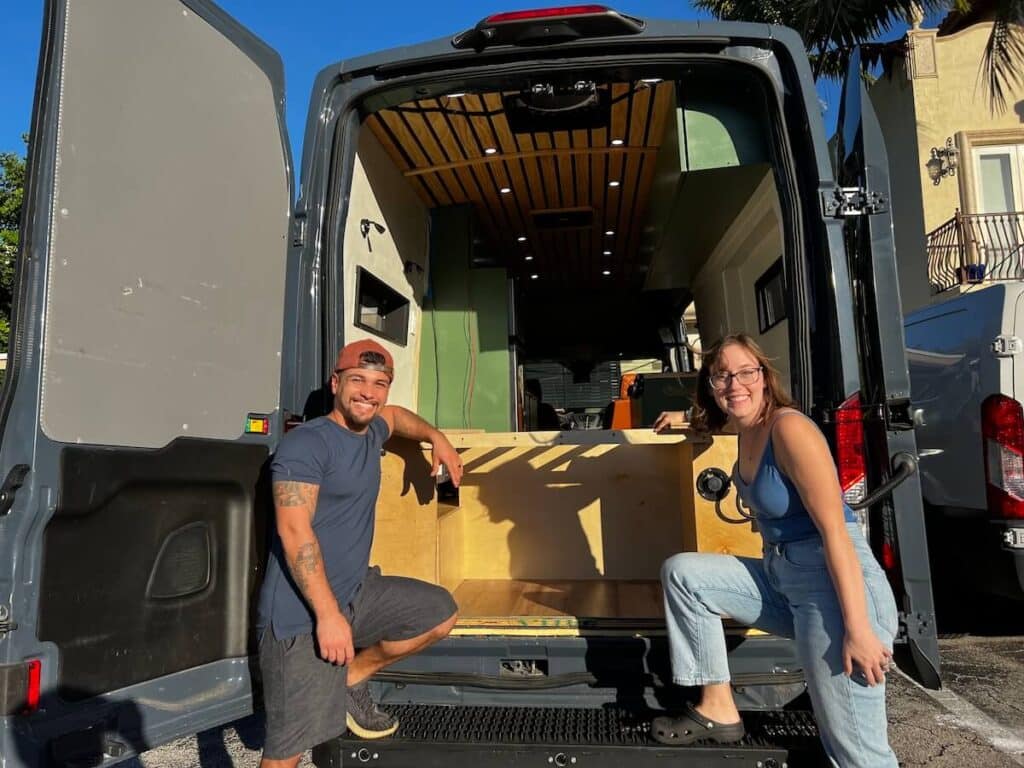
Before the Bus
Before luxury RV reviews and DIY building projects became their focus, Manny ran a detailing business, polishing Ferraris and Bentleys. Then he began filming his work. People liked his videos, and he loved making them. “I had a dream to become a content creator,” he says. “[So] I sold my business and started going full-on into the social media world without looking back.”
Manny and Hope are the couple behind Beer Run Bus, one of the most-followed RV tour channels online, and their build-focused channel, Builders Blueprint. Based outside Charleston, South Carolina, they got their start in 2020 converting a $15,000 shuttle bus with no construction experience and no roadmap — just a camera, a dream, and a willingness to work.
Hope had just graduated from college and was working in insurance sales when she and Manny met. She’d had a bit of photography experience, but nothing that would lead to a life behind a camera in a converted shuttle bus.
The plan was almost too simple: convert an old shuttle bus, travel the country, drink beer, review it, and film everything. The name “Beer Run Bus” actually came from Hope’s grandfather, who had sung the “beer run” song to her for years as a running joke. It clicked immediately. The name went on the back of the bus, and at rest stops across America, strangers would knock on the door asking if they sold beer.
“The older people in our family were saying we were crazy,” she laughs. “But the younger people were like, yeah, that’s awesome — can you build me one?”
At A Glance
| Home Base | Charleston, South Carolina area |
| The Build | Custom van conversions + Airstream trailer (in partnership with Camping World, coming soon) |
| Travel Crew | Manny, Hope, 2 kids (ages 13 & 9), 2 dogs |
| Following | 760K+ (@BeerRunBus Instagram) 1.7M (@BeerRunBus TikTok)430K+ (Builders Blueprint YouTube)97K+ (BeerRunBus YouTube)525K (BeerRunBus Facebook) |
| Contact | be********@***il.com |
The Learning Curve
Images by Manny and Hope
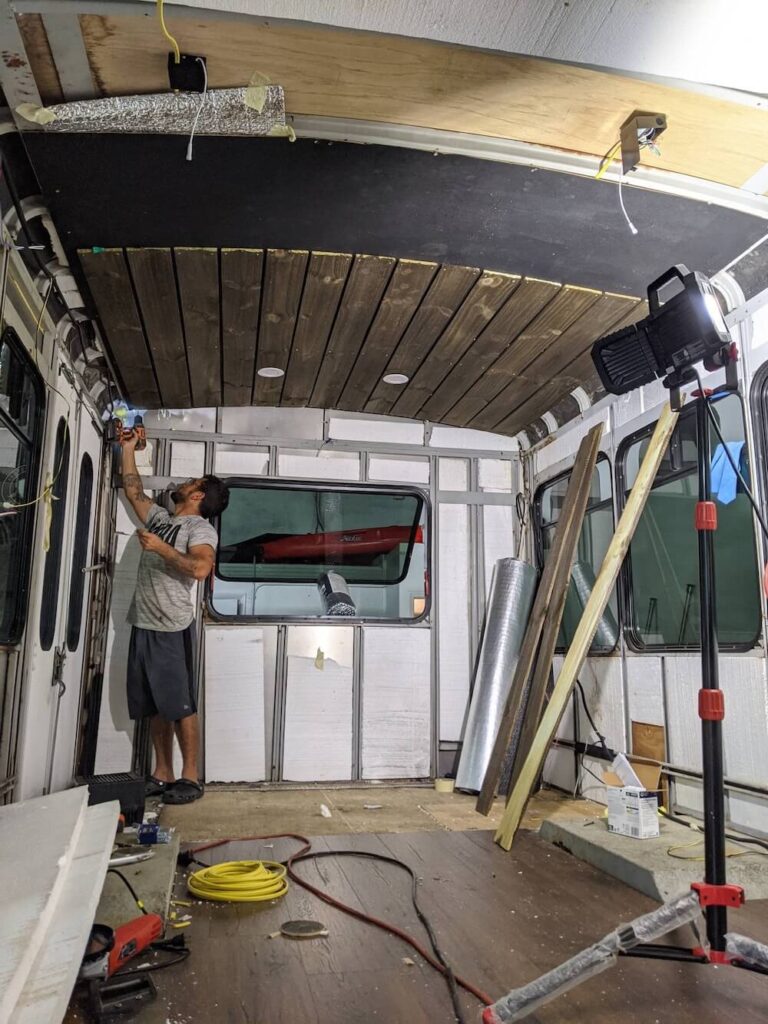
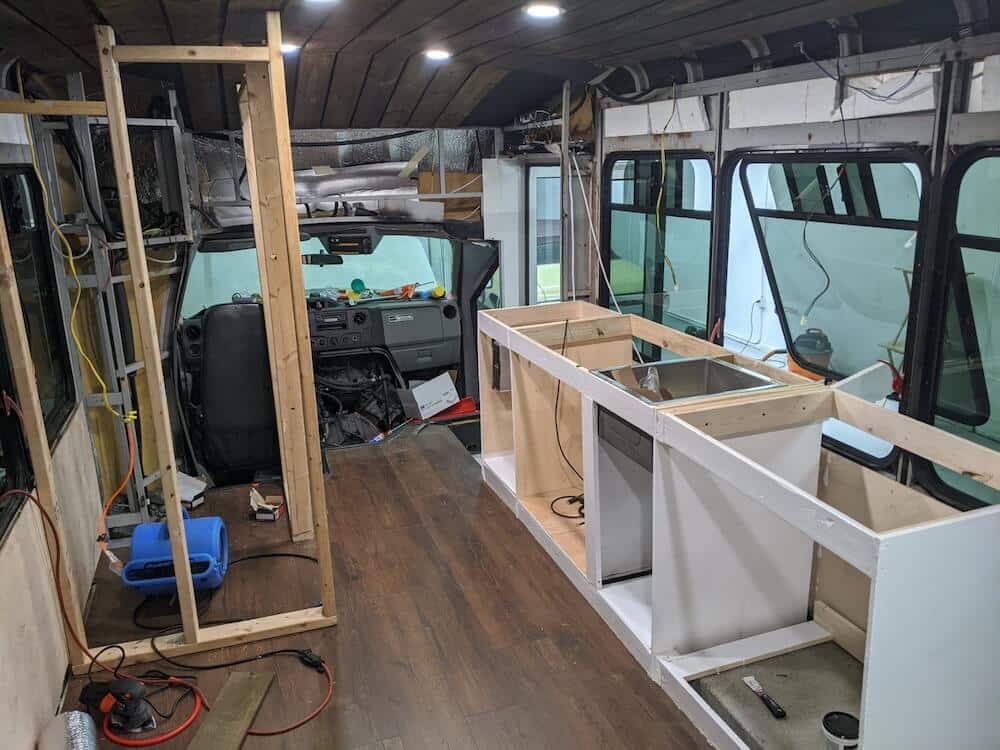
By their own admission, their first build was a beautiful disaster. “It looked nice,” Manny says. “But… it was put together like crap.” The shower tiles went soft, the cabinets were wrong, they were cutting wood balanced on top of Home Depot buckets.
They got their start filming on TikTok when the platform was relatively new, and van life content was nearly non-existent. The only references they could find were Vanlife Sagas and Sarah and Alex — two channels that served as their entire playbook.
In their first year on the road, their content focused on breweries, travel, and lifestyle. But nothing went viral. It wasn’t until they filmed a motorhome review on a whim that things turned around. The video got somewhere between 10 and 20 million views in its first month. “From one day to the next, we were like, holy crap,” Manny recalls. Every video that followed went into the millions. He told Hope, “This is what we’re doing.”
Their success wasn’t all by chance.
Manny had spent two years staying up until two or three in the morning studying video content, watching educators like Sean Cannell, dissecting what made channels successful.
“I obsessed over trying to make something that’s going to catch somebody’s attention,” he says. The RV review format they landed on was fast-paced, high-energy, and unlike anything else in the space at the time. Nobody else was showing a camper in 60 seconds.
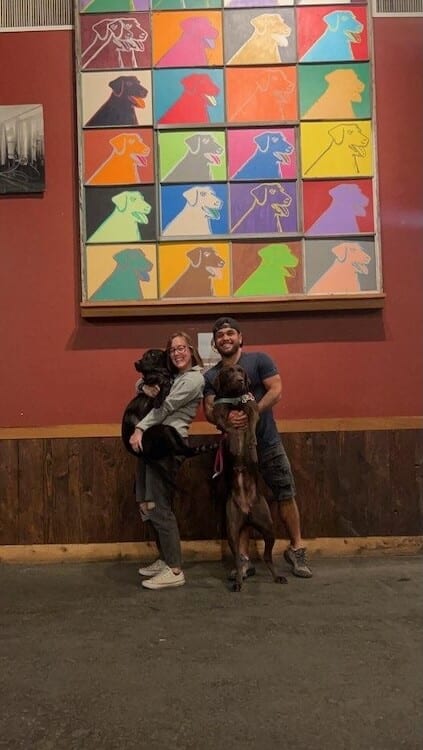
Images by Manny and Hope
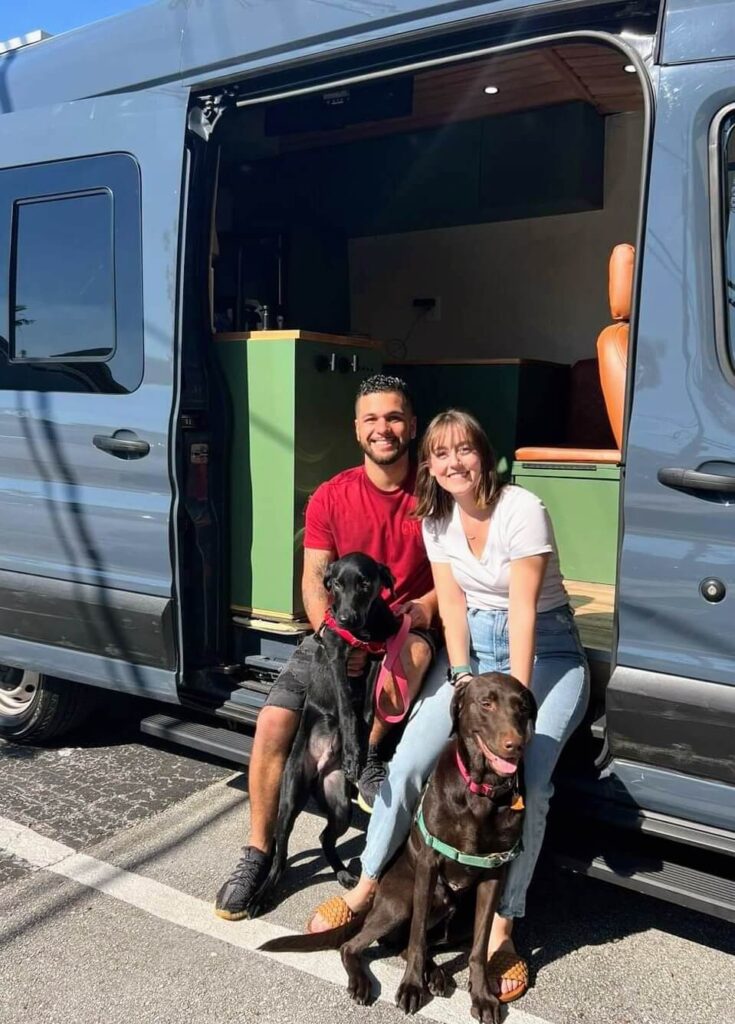
By the end of 2023, their channel had crossed a billion total views. Manufacturers and brands reached out, and they were able to monetize the channel. They went from surviving on savings to fielding offers from companies wanting to be part of what Beer Run Bus had become. “I’m not famous,” Manny laughs. “I’m just a regular dude. It all went viral on accident.”
Meanwhile, people were drawn to their van build tutorials on TikTok. People started reaching out to contract them for custom conversions, and these builds began happening in parallel with their RV reviews. People who found them on TikTok started reaching out for custom conversions.
In all honesty, the division of labor inside the builds is something they worked out the hard way. “When we first started, we argued 24/7 while trying to figure out how to do construction together,” Manny says. Over time, they settled into a rhythm. To date, they’ve completed 17 projects, ranging from full bus or van conversions to electrical system upgrades, cabinet renovations, and food truck setups.
Building DIY Vans
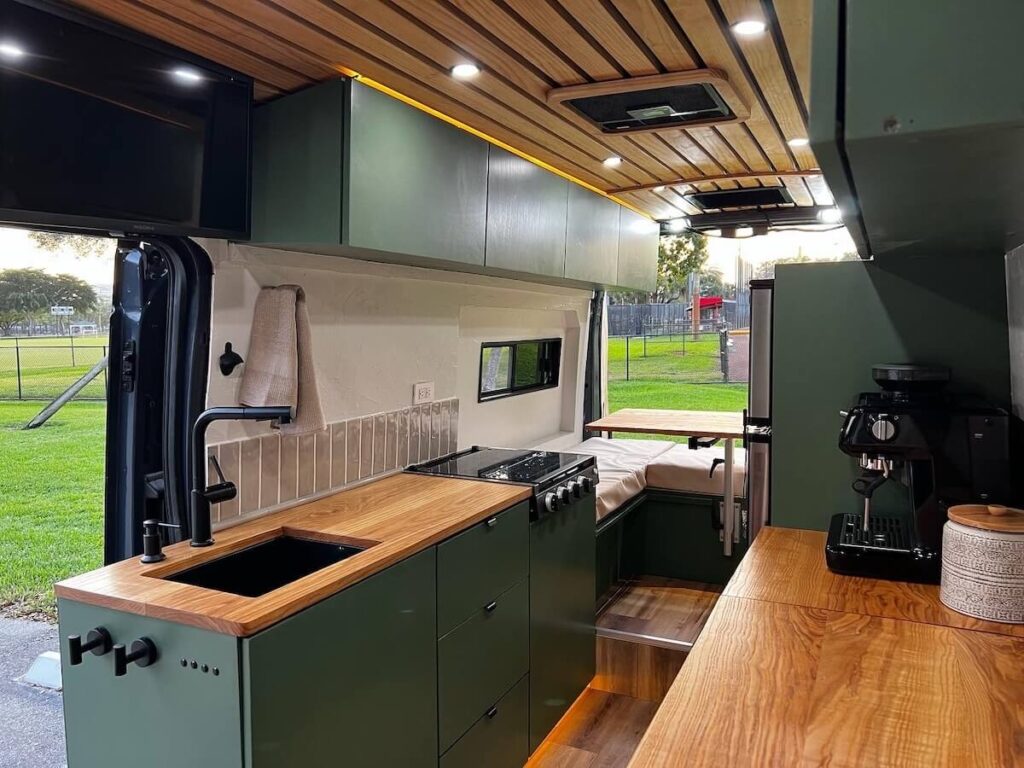
Today, Manny and Hope operate two YouTube channels, run a custom van building business, manage brand partnerships across multiple platforms, review RVs, and are raising two kids (a 13-year-old and a 9-year-old) and two dogs — mostly while covered in sawdust. By any honest measure, it’s a lot.
Beer Run Bus is the original brand: it includes the RV tours, reviews, and travel and lifestyle content that reach over 2.5 million followers across TikTok, Instagram, YouTube, and Facebook.
Builders Blueprint launched about a year and a half ago after a deliberate rebrand. This channel documents builds from start to finish. It has nearly 500,000 subscribers.
“Brand deals would be like, ‘what is this about?’” Manny says. “People were clicking subscribe for a review and then seeing a build. It just didn’t make any sense.” The split was a business decision as much as a creative one — cleaner audiences, cleaner partnerships, a cleaner story for every brand that wanted to work with them. The growing pains were real, but the results made it worth it.
He builds, she films — 100% of the footage viewers see across all their channels is shot by Hope. She handles brand communications, scheduling, and the constant flood of emails. He handles the tools, the electrical systems, and the engineering. She pushes for storage efficiency; he finds ways to make the inches work.
The most recent van build, for a client in California is the most intricate they’ve ever tackled: 800 amp hours of lithium, 600 watts of solar, a 12V rooftop A/C, a projector, a safe, a microwave, and a Victron Energy® Cerbo GX™ communications center with a GX Touch 70™ touchscreen for monitoring power, water, and solar levels, all from a single display.
Years of hands-on experience with Victron components let Manny deliver top-tier electrical systems at a fraction of the market rate. “The average professional builder charges 20 to 50 thousand for an electrical system like this,” he says. “We charge a quarter of that. I just don’t think you need to rip somebody’s arms and legs off.”
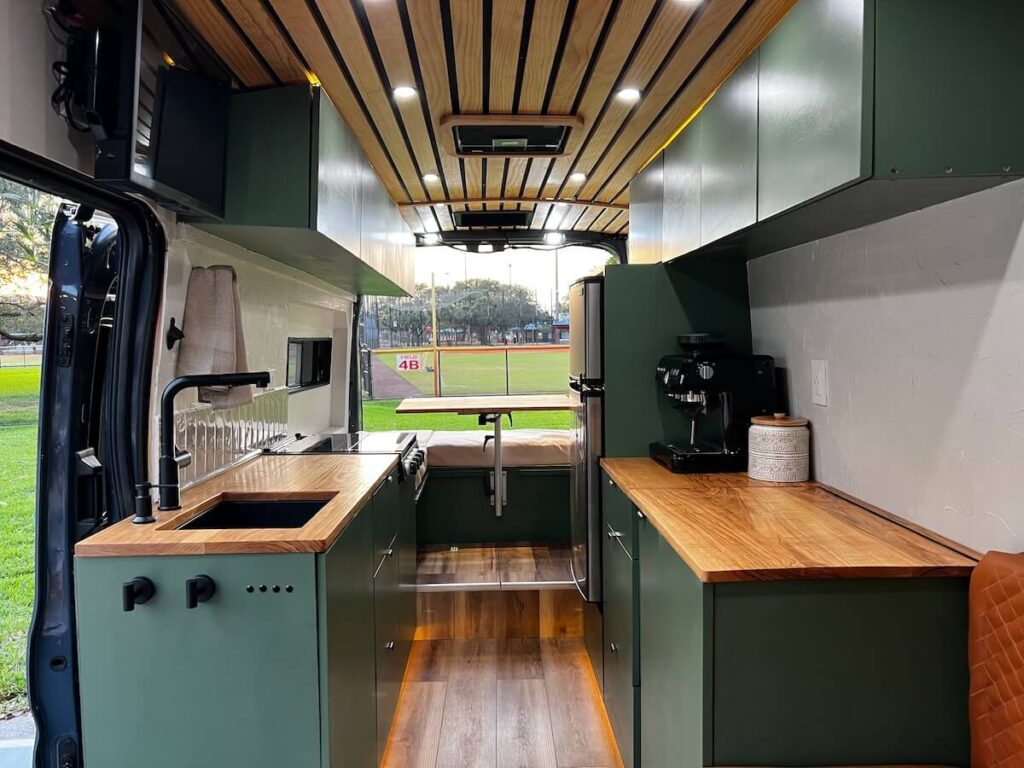
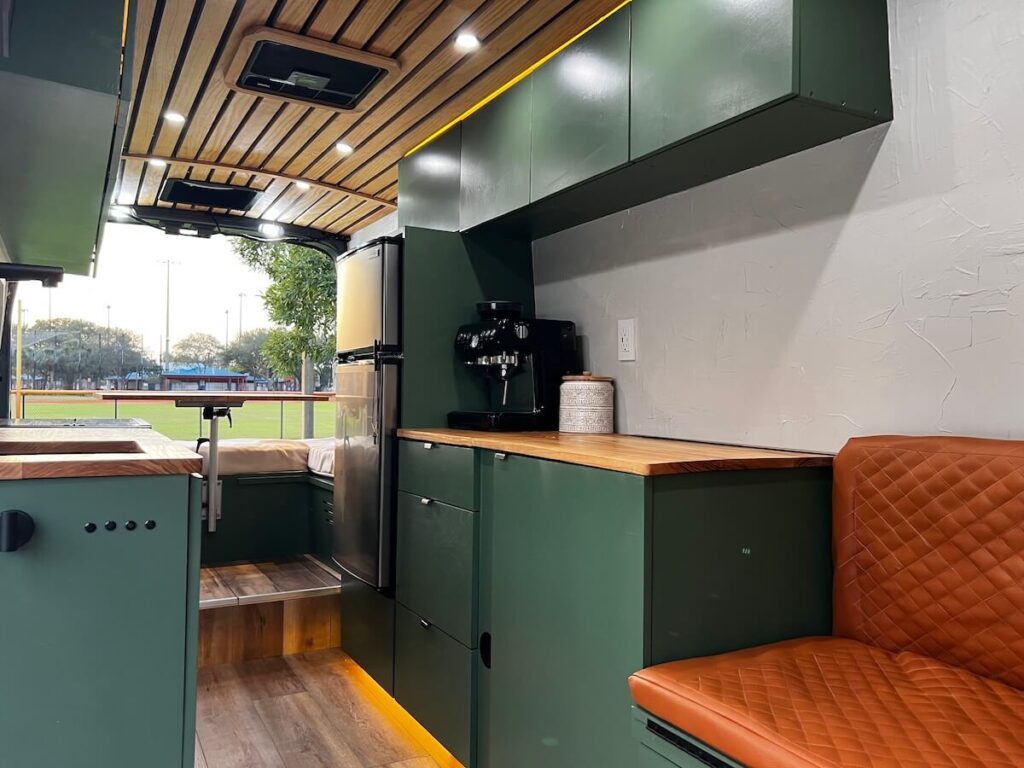
Images by Manny and Hope
What Every Builder Needs to Know
| Get Electrical Right First | Make the electrical system bulletproof before anything else — nothing much runs without it. Victron components are Manny’s brand of choice for inverter chargers, DC-to-DC chargers, and solar controllers. |
| A/C & Heat Before You Build Around It | Get your rooftop A/C and heat source finalized before anything else goes in. Going back after the build is complete means tearing it all apart. |
| Splurge on Appliances | A fridge that fails means rebuilding an entire cabinet. Buy quality the first time on anything you can’t easily swap out later. |
| Read the Instructions | Manny’s most-quoted advice is hard-won: actually read the manual. It doesn’t hurt to crack a beer while you do, but spend the time to learn what you didn’t know you needed to know…before you learn the hard way. |
| Listen to the Comments | His early electrical videos got crushed in the comments — wrong gauge, wrong terminals, wrong fuse. A lot of those commenters were right; some weren’t. Either way, he took notes, did more homework, and came back better. |
| Keep It Simple | From electrical systems to their overarching philosophy: Simplicity is the strategy. Two people, two channels, one focus. |
The Community They Built
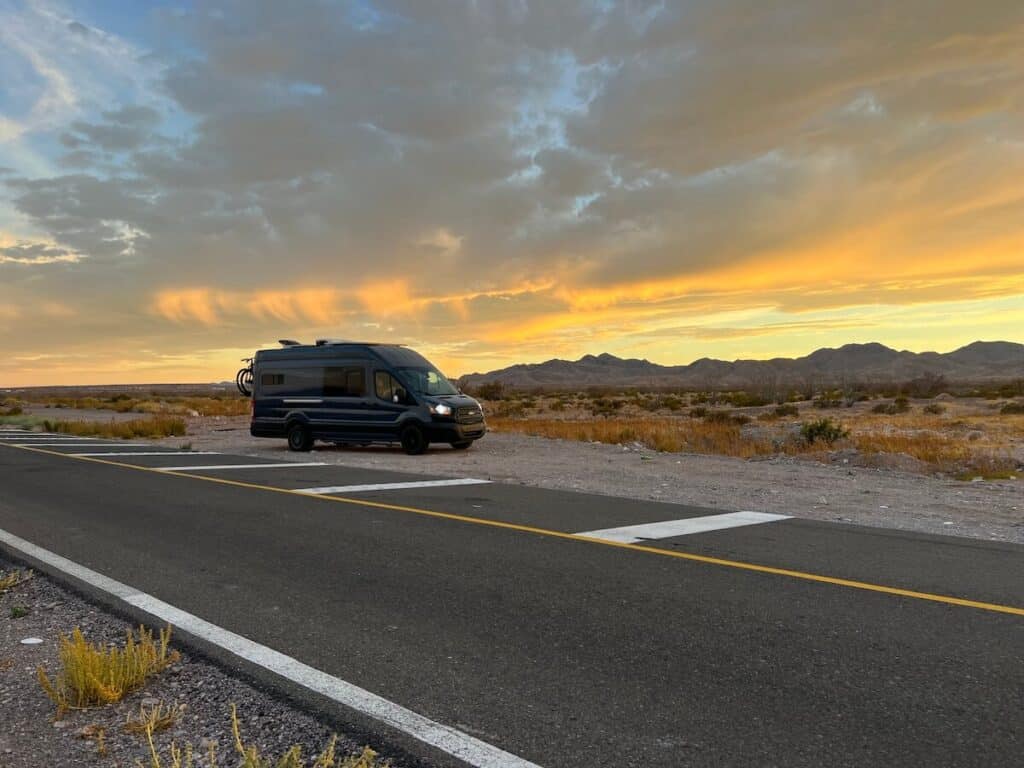
With over a billion total views and nearly three million followers across all their platforms, they believe their numbers come from being relentlessly honest about every mistake they’ve made along the way.
There’s a saying Manny repeats to every first-time builder who asks: “Your first van is built for your enemy. Your second van is built for your friend. Your third van is built for you.” It’s both a warning and a permission slip: you’re going to get it wrong, and that’s exactly how you learn.
He applies the same philosophy to content creation. According to Forbes, breaking one million YouTube subscribers is statistically harder than becoming an astronaut or graduating from Harvard — twice. Manny read that while jogging on a treadmill at Planet Fitness when they were still living in the bus. He turned to Hope and told her they were going to make it. “And here we are,” he says.
“You have to burn your boats. If you’re stranded on an island and you still have a boat, when things get hard, you’ll leave. Burn the boat.”
The advice he gives aspiring creators is less about gear or tools and more about discipline. Start with whether your sink is clean, whether your car is washed, whether your floor is clear. Not because those things matter on camera, but because they signal whether you have the discipline to build anything at all. “If you have a dirty house and a dirty environment, you’re already starting off failing,” he says. “Do what is hard so your life will be easy.”
Since starting, more manufacturers want their honest RV reviews, podcasts fill their calendar, and their community keeps growing because Beer Run Bus never stopped being real.
“Success doesn’t come with an easy price.”
What’s Next?
Images by Manny and Hope
The next big thing in the Beer Run Bus universe is an Airstream.
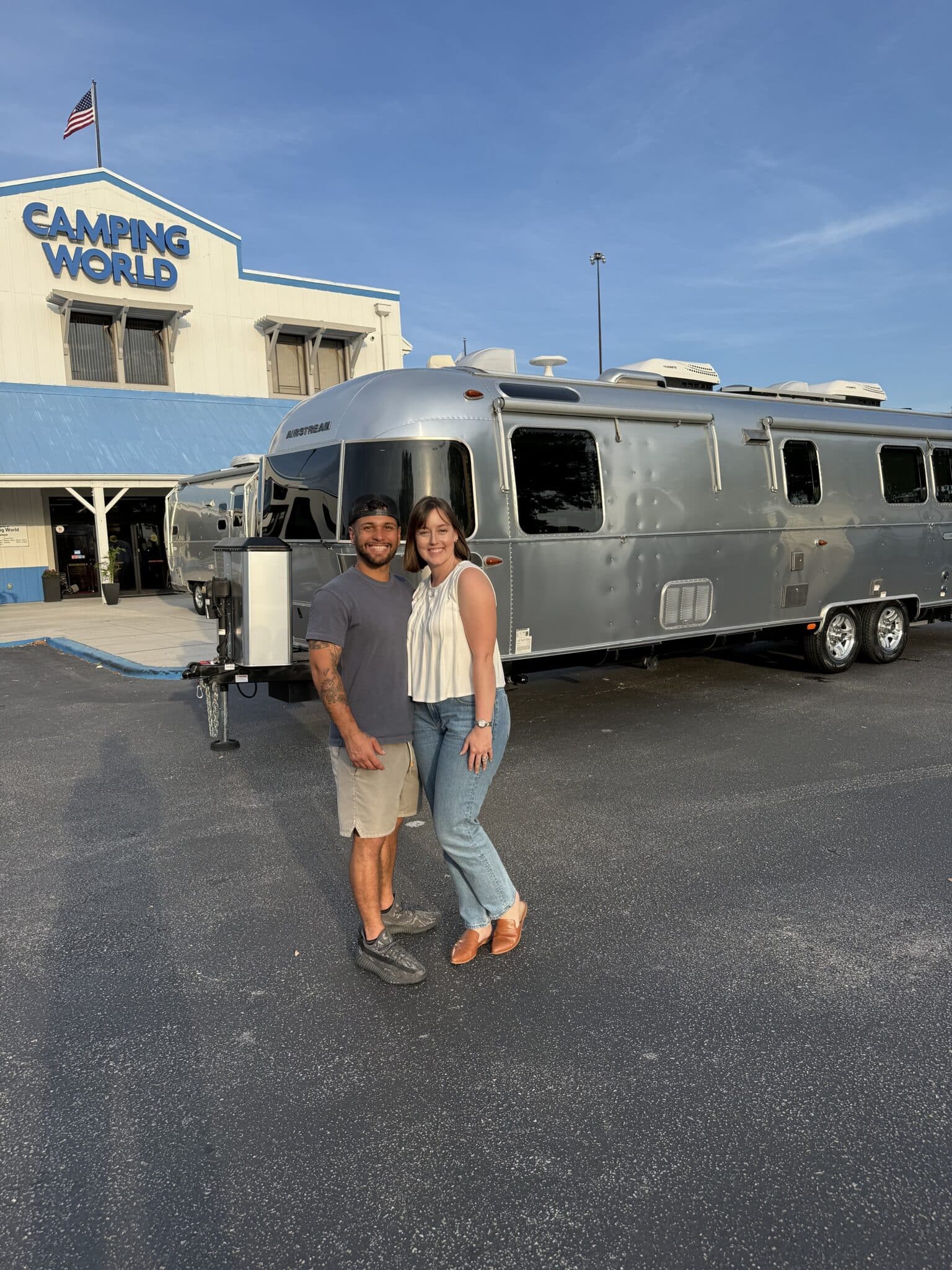
In partnership with Camping World, Manny and Hope purchased an Airstream Classic 33FB Queen travel trailer — documenting their shopping experience on camera. They’re soon to begin “upfitting” the trailer with an off-grid battery system and other upgrades to improve their boondocking capabilities.
“I love Airstream,” Manny says. “But the issue is it’s not designed to be truly off-grid.” That’s where they come in. The goal is to fix that — turning a beautifully built production trailer into the kind of rig that can sit three days in the mountains without a hookup, with power, water, and comfort fully sorted. The no-slides design was a deliberate choice too: easy to get up and go, easy to boondock, no mechanical complexity they don’t control.
The Airstream upfit comes on the heels of another exciting project: the completion of a 42-foot warehouse they’re building outside of Charleston. It’s a dedicated, 1,500-square-foot RV bay with a 12-foot door, full electrical, a finished floor, and enough room to house a large camper. The build is documented wall-to-wall on the @BuildersBlueprint YouTube Channel, from the concrete slab to the shingles, as a step-by-step guide for anyone who wants to build their own RV shop.
And just because they’ve built these South Carolina roots doesn’t mean you won’t see them on the road near you in the near future. Their bucket list is still growing. Yellowstone is a dream, hopefully in the new Airstream. They’ve also talked about Japan or Europe.
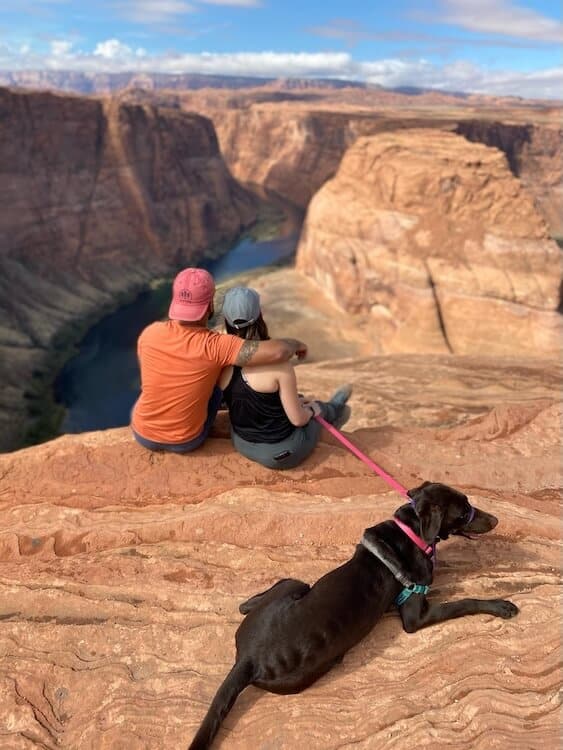
One of their favorites isn’t even in the US. Mulegé, Baja California Sur, is a 50-hour drive from Charleston, and they’d make it again without hesitation. The water is calm, the food is great, the people are warm. Closer to home, it’s Utah, for the rocks and the silence.
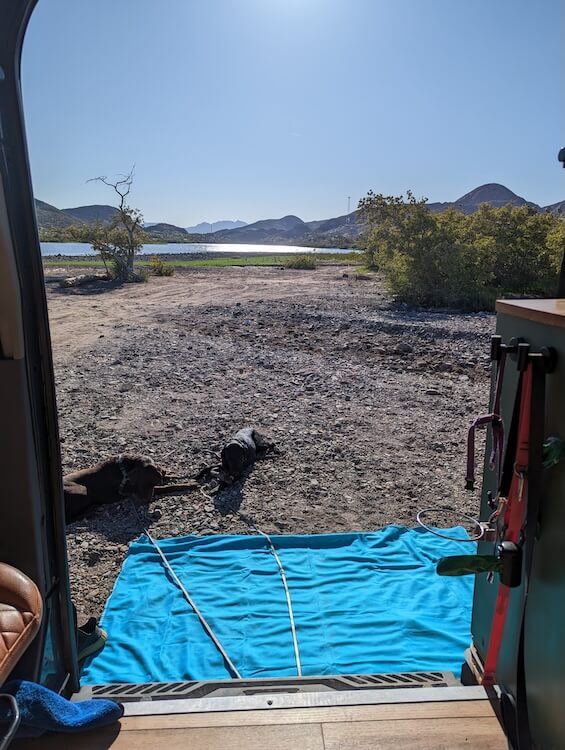
The perfect camp morning, they agree, looks like boondocking somewhere with no cell service, coffee first, dogs walked, breakfast made, no editing, no emails, no work. “Peace and quiet,” Hope says. Manny agrees, then adds: “Summer. A lot of heat. I’m half iguana.”

Images by Manny and Hope
As for the van life trend itself, they see a plateau right now, but expect another boom on the horizon. The housing market is doing the recruiting for them. When a starter home costs $400,000, and that number keeps climbing, a well-built camper van starts looking less like a lifestyle choice and more like a practical one. “In 10 more years, is it going to be a million?” Manny asks. “A $30-an-hour job won’t cover that. Living off-grid is going to be really smart, especially for young people.”
For anyone considering this lifestyle, they’d tell you to start small. Buy a $20,000 or $30,000 Coleman from your local Camping World and see if you actually like it before you go all in. If you do, trade up. If you don’t, you haven’t lost your savings.
And if you’re going to build, burn the boats.
Where to Follow Manny & Hope
| @BeerRunBus | 760,000+ followers | |
| TikTok | @BeerRunBus | 1.7 million followers |
| YouTube (Reviews & Travel) | Beer Run Bus | 97,000 + subscribers | RV tours, manufacturer reviews, van life travel content |
| YouTube (Builds) | Builders Blueprint | 430,000+ subscribers | Full-length step-by-step build documentation |
| Build Inquiries | be********@***il.com |
Ready to find your rig? Whether you’re looking for a starter camper or ready to go all-in, Camping World has the inventory, the gear, and the expertise to get you out there — just like Manny and Hope.


I’m always tempted to build my own Class B because, as musicians, we can never find one where the layout and functionality meets our needs. But, I bet these two could pull it off in stride! Thanks for writing such a great article.
Thanks John!