BEFORE YOU CALL a mobile RV technician, do you know if your specific problem is even something they can handle without towing your RV somewhere? Mobile RV technicians can resolve far more than most owners expect. This guide breaks down exactly what’s typically in scope for on-site repair, and when a service center is genuinely the better call.
What’s Typically In a Mobile Tech’s Repair Scope?
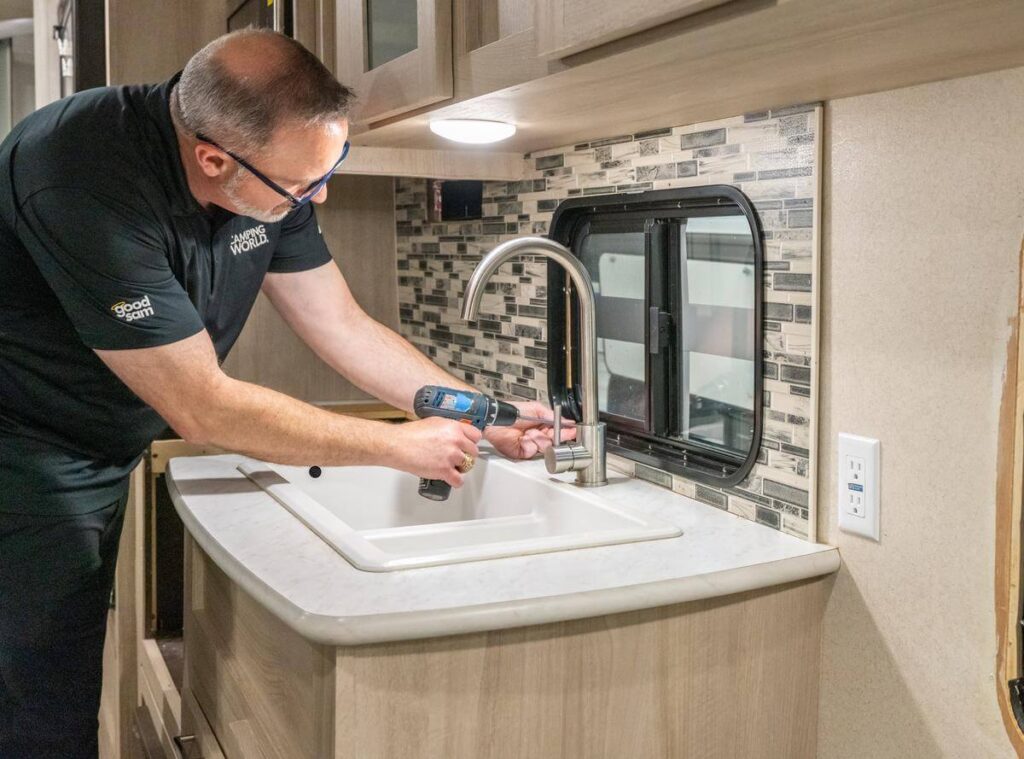
Knowing what’s realistically fixable on-site helps you set expectations and avoid unnecessary stress.
The general rule: if the problem lives inside your RV’s living quarters (i.e., the systems that make it a home rather than just a vehicle), it’s very likely a mobile repair candidate.
If the problem is structural, involves the chassis or drivetrain, or requires equipment too large or specialized to bring to a driveway or campsite, a service center is probably necessary. Here’s how the most common RV repairs break down by on-site fixability.
Air Conditioner
Yes, in most cases.
Most A/C issues can be diagnosed and resolved in a single mobile visit. The exception is a full unit replacement, which requires ordering a new air conditioner and a return visit to install it. If your A/C is running but struggling, there’s a good chance a mobile tech can get it working the same day.
Water Heater
Yes, in nearly all cases.
Thermostat failures, heating element replacements, and anode rod swaps are straightforward on-site repairs for an experienced mobile tech. As long as the correct parts are available or on the truck, most water heater calls are resolved in a single visit.
Plumbing
Yes, almost always.
Failed water pumps, leaking fittings, and faulty valves are among the most common mobile RV repairs. In general, plumbing components are easier to stock, and replacements don’t typically require special ordering. If you’re dealing with a plumbing leak or low water pressure, don’t wait.
Generator
Yes, for maintenance issues, maybe not for internal repairs.
Fuel filter replacements, spark plugs, and carburetor cleaning are all on-site-friendly repairs. More complex internal generator work may require a shop. If your generator won’t start or is running rough, it’s worth a mobile service call.
Electrical
Yes, but diagnostic time is a big variable.
Tripped breakers, shore power connection issues, and converter or inverter failures are frequently resolved on-site once the source is identified. The variable here is diagnostic time. Electrical problems can take longer to trace through your RV’s system. Budget extra time for the diagnostic phase, but many electrical issues are faster to fix than to diagnose.
Slide-Outs
Depends on whether it’s electrical or mechanical.
Electrical slide-out issues (control board, switch, wiring) are strong candidates for an on-site fix. Mechanical issues involving the motor or gearbox are more complex and may require parts specific to your slide system’s manufacturer, which could require a second visit. If your slide is stuck out, and these manual slide retraction tips don’t help, call a mobile tech to diagnose and retract it safely before you move your RV.
Appliances
Yes, for most standalone appliance repairs.
Refrigerators, ranges, and microwaves can typically be diagnosed and repaired on-site, especially for issues involving power supply, ignition, or standard component failure.
Awnings
Yes.
Torn fabric, motor issues, and arm/hardware repairs are standard mobile jobs.
Propane System
Yes, for inspection and most repairs.
Mobile technicians can inspect propane lines and connections and perform most repairs on-site. Given the safety implications of propane work, always confirm your technician is specifically certified for propane system service.
What Typically Requires a Service Center
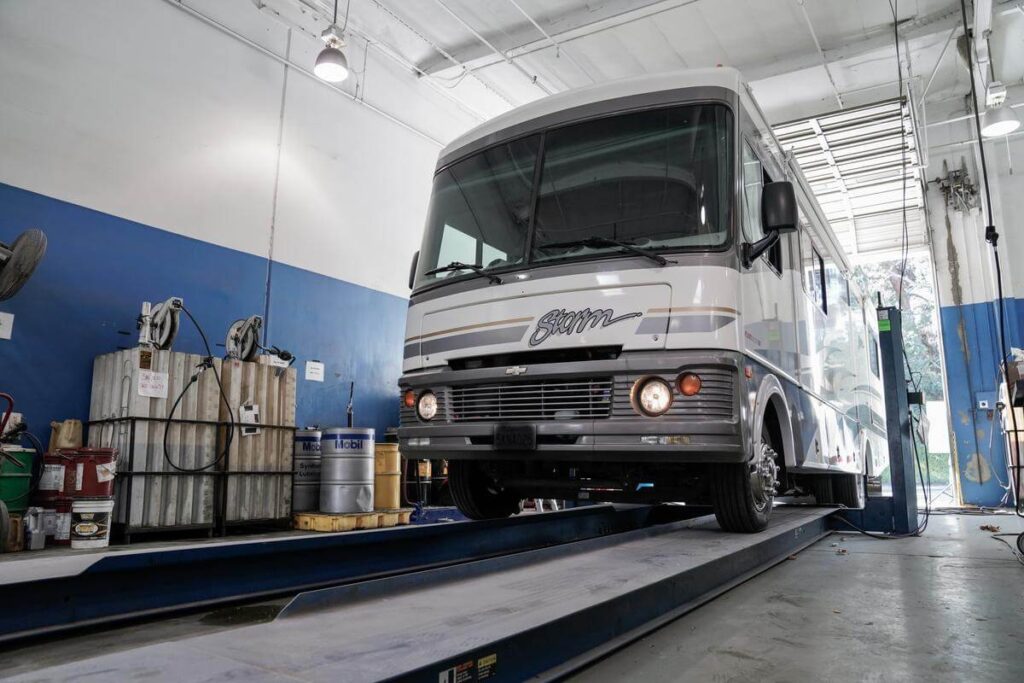
Not everything can be resolved in a driveway or at a campsite. The most common reasons a repair needs to move to a controlled shop environment with specialized equipment include:
- Major structural repairs — roof, frame, or sidewall damage
- Extensive water damage remediation — water intrusion that has caused widespread rot or delamination, requiring disassembly work
- Engine or transmission work (motorhomes) — chassis-level mechanical repairs
- Delamination repair — repairing separated fiberglass or laminate panels
- Repairs requiring alignment equipment or a lift — anything involving suspension, wheel alignment, or underside access
If your issue falls into one of these categories, a mobile technician can still provide an accurate on-site diagnosis before you commit to towing, which helps you avoid paying for a diagnostic twice and gives you a clear idea of what to expect once the RV reaches a shop.
How To Know If Your Issue Qualifies
If you’re not sure whether your specific problem can be handled on-site, the fastest way to find out is simply to call a service center. Be ready to share:
- What system is affected
- What symptoms you see/experience
- Whether the RV is stationary or needs to be moved
- Any visible damage beyond the immediate system
Good Sam Elite Members also have access to experienced techs for troubleshooting assistance by calling 1-844-649-4700. Just have your membership info ready when you call.
Why Mobile Service is Underutilized for Preventive Maintenance
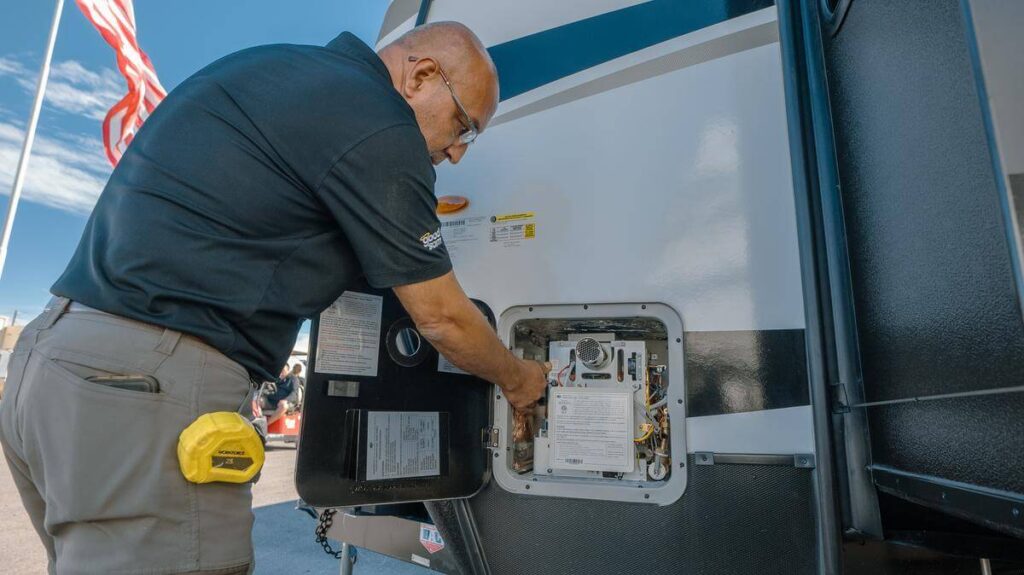
To this point, our focus has been on what mobile techs can repair when things go wrong. And for good reason. Most owners, myself included, don’t bring their RV to the dealership for routine preventive maintenance. We wait until repairs stack up.
I get it. I don’t want to lose weeks of camping while my trailer is stuck at the dealership. If you’re a full-timer, the added cost of alternative lodging while your RV is in the shop can be too much to bear. But if we aren’t careful and we wait too long, the repair bill can become so high that we get stuck.
For many of us, mobile service is a perfect solution. Many seasonal preventive maintenance checks can be done effectively by a mobile tech, saving you travel time and costs. The average time to repair at the dealership can be weeks, whereas a mobile tech can often complete the maintenance the same day. And preventive maintenance is almost always cheaper than repairs or replacements once something is broken, even after accounting for the cost of a tech coming to you.
Here’s a list of seasonal and annual maintenance tasks that mobile techs can handle:
Seasonal
- Fresh water system sanitization
- Winterizing and dewinterizing
- Exterior detailing
Annual
- Roof inspection and touch-up
- Tire rotation, brake inspections, and adjustment
- Bearing packs and seal replacement
- Holding tank chemical treatment and flush
- AC service
- Fresh water system leak testing
- LP system inspection and adjustment
- Water heater flushing or descaling
- Refrigerator service
- Exterior sealant touch-up
- Safety detector battery replacement and testing
See if a location near you offers mobile service for preventive RV maintenance.
Frequently Asked Questions
This depends on the provider, so it’s worth asking before you schedule. Many mobile RV technicians still charge their standard diagnostic and travel fee even if the repair ultimately requires a shop visit, since that fee covers the technician’s time and the value of an accurate on-site diagnosis. Some providers credit that fee toward the eventual shop repair if you use the same company. Always confirm this policy upfront so there are no surprises. Have more questions? Check out our mobile RV repair cost guide.
Mobile RV technicians typically carry diagnostic equipment, common replacement parts, and the tools needed to access and repair most RV systems. Because systems vary by manufacturer, not every specific part can be carried for every brand. If a less common or manufacturer-specific part is needed, the technician may need to order it and schedule a follow-up visit to complete the repair.
In most cases, yes, or at least reachable nearby. Technicians often need access to the interior for diagnostics, may have questions about symptoms or history, and will typically want to walk you through their findings and get approval before starting any repair. Some providers may allow you to leave once the diagnostic is complete and a repair plan is approved, but policies vary, so ask when you schedule.
Advice from a Tech: The most effective diagnostic tool a technician has is the alert and observant customer. It is an incredible time saver to have a competent customer demonstrate the actual issue they are experiencing. The prepared customer will take detailed notes, pictures, or even videos of the issue to share with their tech.
Generally no. Mobile RV technicians specialize in living quarters systems rather than the engine, transmission, or chassis components. Motorhome engine and chassis work typically requires an automotive mechanic (sometimes with diesel experience) or an automotive/chassis shop with the right lift and diagnostic equipment.
Most mobile RV technicians can service the major systems and brands found in travel trailers, fifth wheels, and motorhomes, since appliances and components from major vendors like Lippert®, Dometic®, Suburban®, and Furrion® are widely used across manufacturers.
Less common or older systems may require the technician to order manufacturer-specific parts. If you have a less common brand or a vintage RV, it’s worth asking about a technician’s experience with your specific system before scheduling.
Most single-issue repairs are completed in one visit, but the length of the visit will always depend on the diagnostic and repair time required. More involved repairs, or those that require ordering a part, may require a follow-up visit. Diagnostic time varies depending on how straightforward the symptoms are, so ask for a time estimate when you schedule.
If your RV breaks down on the road rather than at home or a campsite, our guide on handling an RV breakdown walks through the safety steps and the decision framework for mobile repair vs. roadside assistance vs. towing.
Has a mobile RV technician tackled a repair you assumed would need a shop visit? Share your experience in the comments below!