IMAGINE climbing into your RV on a hot day, cranking the air conditioner, and nothing happens. Or worse: the fan is running, but the air blowing out is barely cooler than the air inside. Before you assume the worst, most cases of an RV AC not cooling come down to one of five common issues, and several of them you can check yourself in a few minutes. This guide walks through those five checks in order, from the simplest to the most involved.
Why Is My RV AC Running But Not Cooling?
When your RV air conditioner runs but the air coming out isn’t cold, you can almost always trace the cause back to a handful of culprits:
- Insufficient power
- Restricted airflow from a dirty filter
- A thermostat that isn’t communicating properly with the compressor
- A minor electrical fault that a reset can clear
- A compressor that’s beginning to fail.
AC problems can appear suddenly, even on units that were working fine the day before. A sudden stop in cooling is usually due to either an electrical trip (breaker, fuse, or thermal overload) or a mechanical failure (capacitor or compressor), rather than gradual wear. That distinction matters because it tells you whether to start with the electrical checks below or move more quickly toward a professional diagnostic.
Work through the following five steps in order. Each one takes just a few minutes and rules out (or confirms) a specific cause.
Step 1: Check Your Power Supply and Circuit Breakers
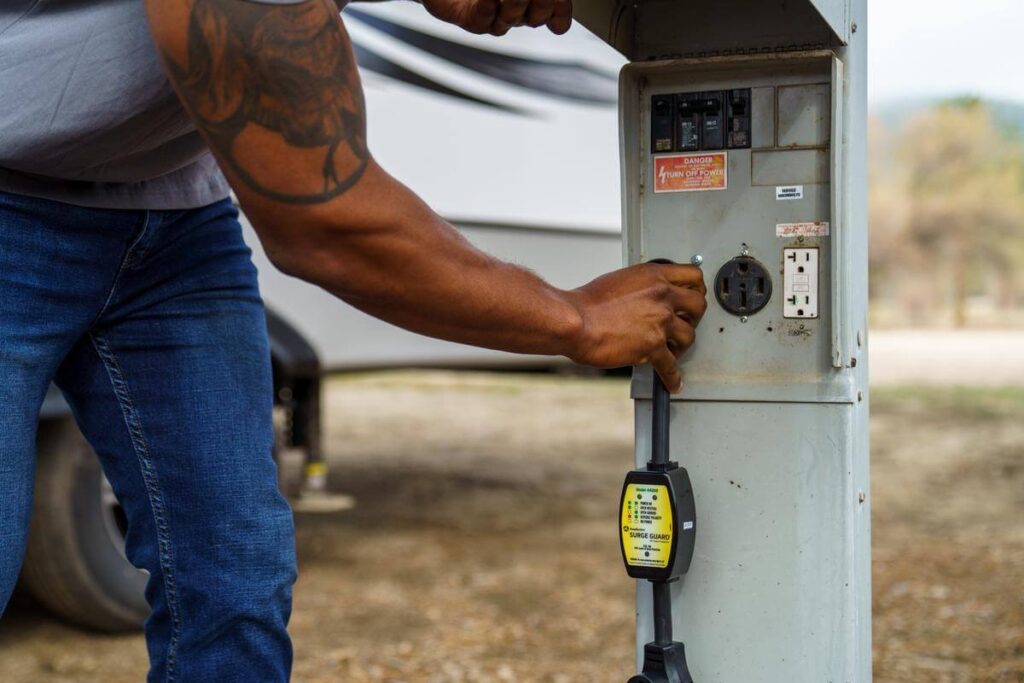
Your RV air conditioner needs a steady, adequate power supply to run the compressor, which cools the air. If the compressor isn’t getting enough power, the fan may run while the unit blows warm air.
- Confirm you’re connected to shore power or that your generator is running and sized appropriately for your AC.
- Check your RV’s breaker panel for a tripped AC breaker.
- Check the pedestal or generator output for a tripped breaker on that end as well.
Your RV AC also relies on fuses for its 120VAC power circuit and its 12VDC control circuit. A blown fuse in either can prevent proper cooling even when the breaker looks fine.
For a full fuse location and testing walkthrough, go here:
Step 2: Inspect and Clean the Air Filter
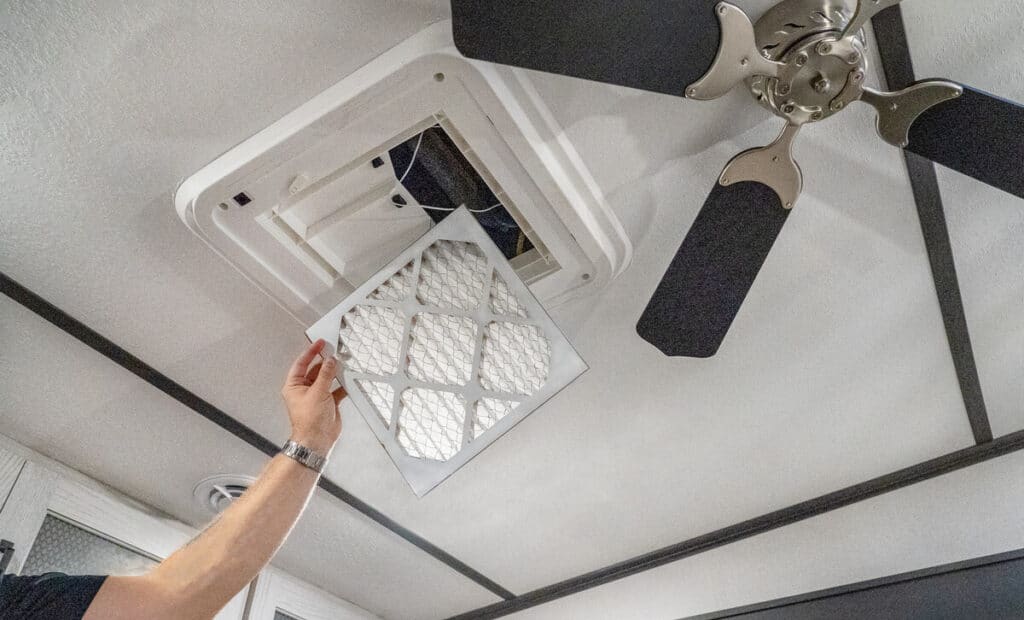
A dirty or clogged air filter is one of the most common (and easiest to fix) causes of poor RV AC cooling. Restricted airflow across the evaporator coil can dramatically reduce cooling capacity and can even cause the coil to ice over.
- Remove your AC’s interior cover and locate the filter.
- Inspect it for dust, pet hair, ice, and debris buildup.
- Clean or replace the filter according to your unit manufacturer’s instructions.
- If you see visible ice on the coil above the filter, turn the AC off completely for 30 minutes to let it thaw before restarting.
Giving the filter a quick look weekly and cleaning it thoroughly every 30-60 days during regular use is one of the simplest ways to prevent this issue from recurring.
Learn more about RV air conditioner maintenance.
Step 3: Check the Thermostat Settings and Function
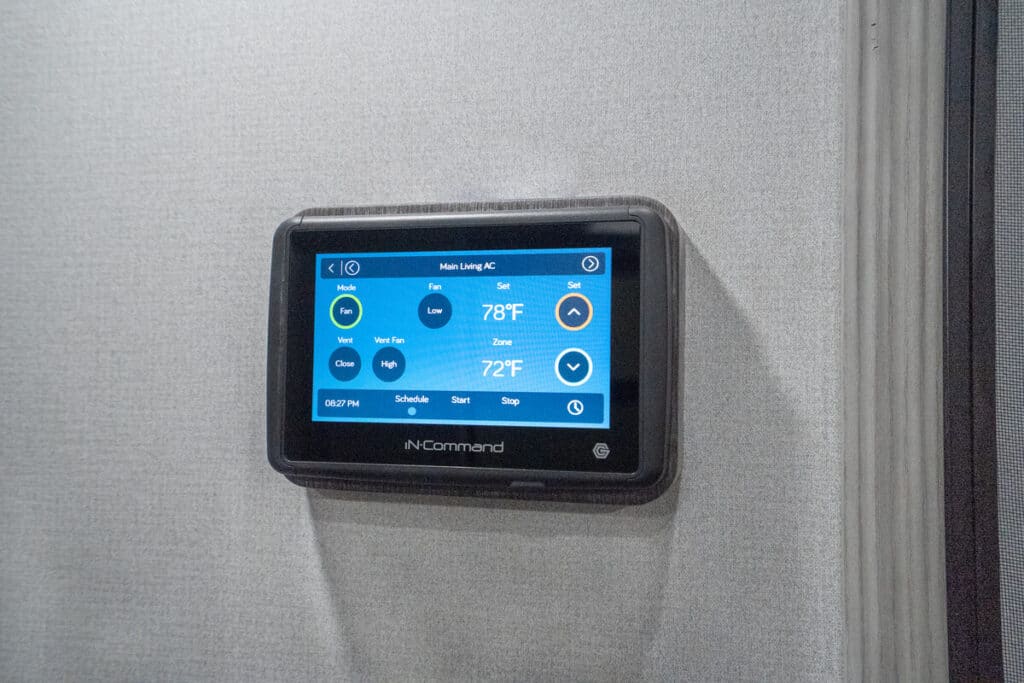
Sometimes, the problem is that the AC unit isn’t actually being told to cool. This shows up as the fan running and running without the compressor kicking in. Or, the whole system may seem unresponsive to thermostat changes.
- Confirm the thermostat is set to Cool mode, not Fan Only.
- Set the target temperature at least 5°F below the current room temperature.
- Check the thermostat battery level if yours is battery-powered. Weak batteries are a common, overlooked cause of unresponsive controls.
- Look at the thermostat’s physical location. Units mounted near a heat source (a stove, furnace, or direct sunlight) can misread the room temperature.
If the thermostat display is working and accepts your input, but the compressor still doesn’t engage, the thermostat itself may be at fault. This is common enough with certain brands that we cover it in more detail in the Dometic-specific section below.
Step 4: Reset Your RV Air Conditioner
If power, filter, and thermostat checks haven’t turned up the problem, a reset is the next step. Resets clear minor electrical faults without requiring any tools.
- Turn the AC off at the thermostat.
- Turn off the AC circuit breaker in your RV’s panel (and at the pedestal, if connected to shore power).
- Disconnect the 12V power system and unplug the shore power cord.
- Wait 3-5 minutes to allow capacitors to discharge and any thermal protection to reset.
- Restore power in reverse order, then set the thermostat and allow 20-30 minutes of runtime before judging performance.
For the complete step-by-step reset procedure, see our dedicated reset recommendations here:
Step 5: Check the Compressor
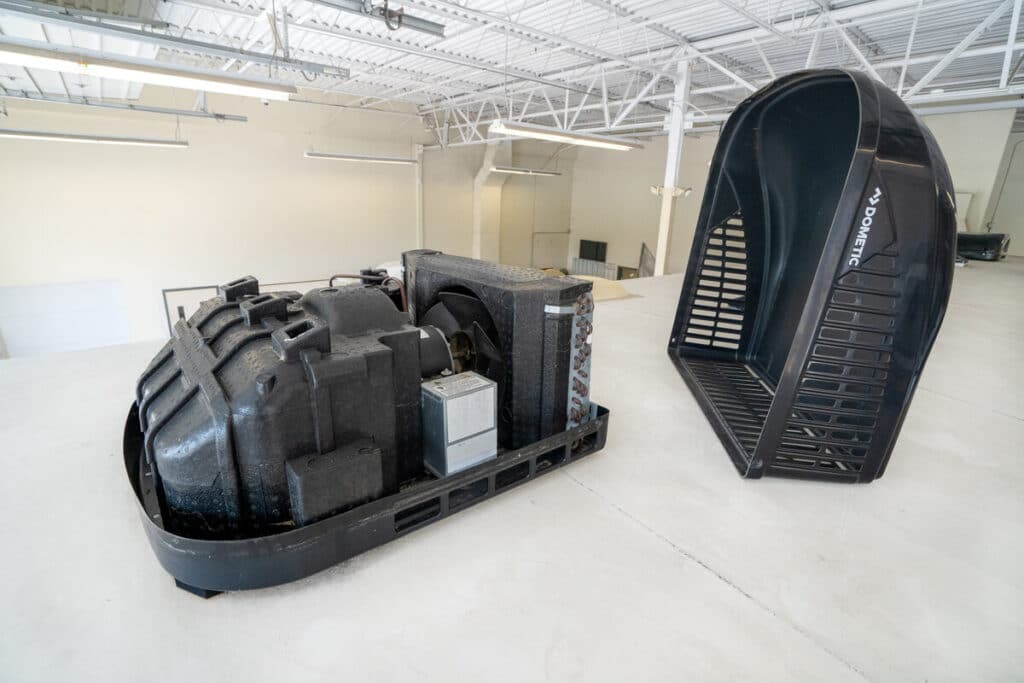
The compressor pressurizes the refrigerant and produces cold air. When it’s not functioning, everything else in the system may appear to work normally, even as the air stays warm.
Signs that point to a compressor issue:
- The fan runs, but you don’t hear the compressor engage at all (no low hum or click from the air conditioner).
- You hear the compressor attempt to start—a brief hum or click—but it doesn’t stay running.
- The AC unit runs continuously without ever reaching a cooler temperature, even after an hour or more.
- You notice a burning smell or unusual noise coming from the compressor area.
A compressor that hums but won’t start is often actually a failing start capacitor rather than the compressor itself, which requires a much less expensive repair. Either way, testing and replacing these components involves working near parts that store dangerous electrical charge, and diagnosing a compressor issue accurately requires specialized tools.
This is the point in troubleshooting where we recommend scheduling a professional AC diagnostic rather than continuing to test further on your own.
Why Does My RV AC Stop Blowing Cold After a Few Minutes?
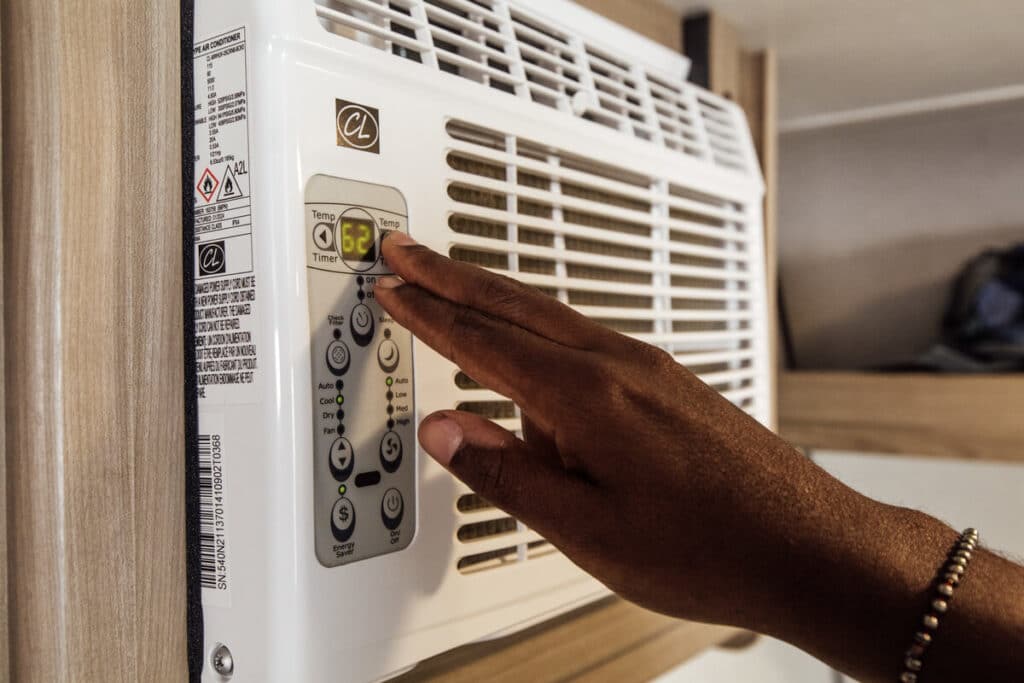
If your AC starts out cold and then gradually warms up while still running, rather than never getting cold in the first place, this pattern typically points to one of the following:
- Ice buildup on the evaporator coil restricts airflow more and more the longer the air conditioner runs. This is often caused by the same dirty filter issue covered in Step 2, but it can also result from low refrigerant, air leaks between the return and discharge sides of the ceiling assembly, and leaving the quick-cool vent open too far (or for too long).
- A refrigerant leak, which allows the system to cool briefly before losing the pressure it needs to keep working.
- Voltage drop from campground power that’s adequate to start the AC but insufficient to sustain it under load, especially during peak-usage hours.
If your AC shuts off completely a few minutes after starting, that’s a different symptom with a different likely cause: compressor thermal overload. We cover that scenario, along with the voltage checks that resolve it, here:
Dometic RV AC Not Getting Cold: Brand-Specific Tips
Dometic is one of the most common RV air conditioner brands, and one issue that shows up often enough on these units to call out specifically is a thermostat that mimics a compressor failure.
On some Dometic systems, the thermostat display will show a set temperature and appear to be functioning normally. But the signal that tells the compressor to engage is never actually sent. From inside the RV, this can look like a dead compressor: the fan runs, the air stays warm, and nothing you do at the thermostat changes anything.
Before assuming compressor failure on a Dometic air conditioner, it’s worth ruling out the thermostat first, since it’s a far less expensive fix if that turns out to be the cause.
Dometic units also have specific reset procedures that differ by model. Some use a control-board button, while Comfort Control Center 2 systems reset from the thermostat itself. Use the link below to read our full brand-specific breakdown, including Coleman Mach:
When to Call a Tech
If your RV AC still isn’t cooling, don’t keep running it. Continuing to operate a struggling compressor risks turning a repairable issue into a much more expensive one. Turn the AC unit off and let it rest.
The most likely remaining causes at this point—a failing compressor, a refrigerant leak, or a failing start capacitor—all require a certified technician. Capacitors store electrical charge that remains dangerous even after power is disconnected, and refrigerant work requires EPA-certified handling.
When you’re ready, Camping World’s certified technicians can diagnose the issue and get your AC back to cooling. Find your nearest service center and schedule an appointment using the link below:
For a complete list of the fault types that require professional service, go here:
Good Sam Elite Members can also call 1-844-649-4700 to speak with experienced techs for additional troubleshooting assistance.
Having Other RV AC Issues?
Read our full guide on RV air conditioner troubleshooting for help with power issues, tripped breakers, water leaks, strange noises, and more.
Did this guide resolve your RV AC issue? Let us know in the comments below!