“The fascination and growing popularity of autocamping harks back over the generations and ages to an inborn urge that breaks us away from cult and convention, from aping etiquette and artificial antics, from traffic cops and the tedium of supercivilized toil, and rushes us for a vacation into the realm of freedom, liberty, independence.”
“Autocamping” by F.E. Brimmer
AS SOON AS AMERICANS had vehicles, they were trying to live out of them. Even before the novelty of the Model T had worn off, we were already camping out of our cars, building trailers for them, and modifying those initial vehicles into what would become the first-ever motorhomes. All for the sake of exploration and enjoying the great outdoors. It sounds pretty idyllic—maybe too much so. Because the true evolution of the American RV has been shaped by some of the country’s most difficult times.
As America marks 250 years, we’re looking back at how we became a nation that travels and lives on wheels. These are the five most surprising moments in our history that built the modern RV (along with a few indicators of where it’s headed in the next few years).
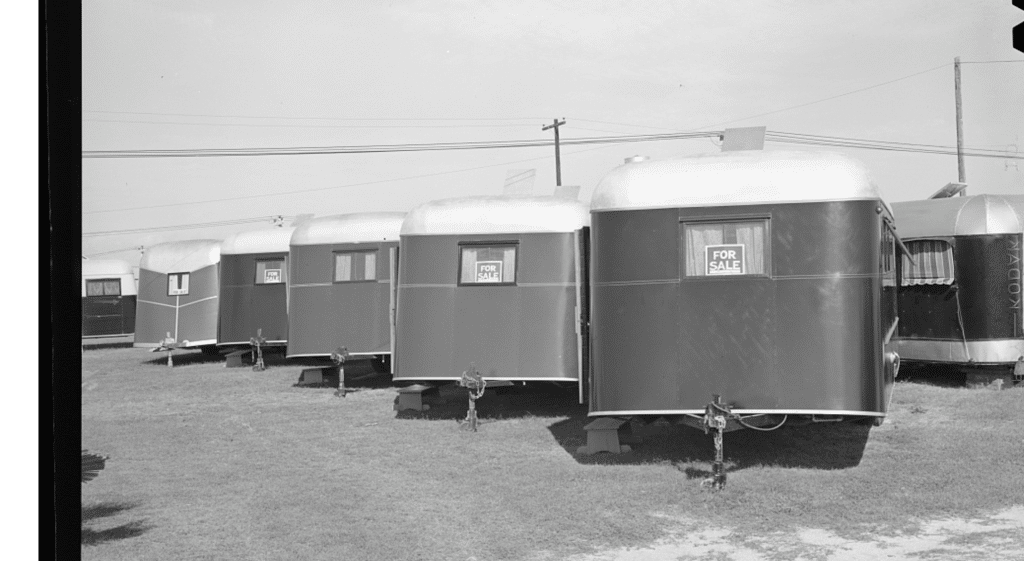
In 1929, a Detroit scientist named Arthur Sherman designed a simple hard-sided home on wheels. He called it the Covered Wagon. Affordable, weatherproof, and ready for camping the moment you stop. The camper was inspired by Sherman’s own frustration after getting rained out on a family camping trip. By no means was the Covered Wagon the first RV. But like the Model T, it was the first mass-produced travel trailer. And as the Great Depression loomed over the country, the Covered Wagon, and travel trailers like it, would become a refuge for thousands of Americans.
Our first example: the timeliness of a mobile home base during the depths of the Great Depression.
By 1936, Covered Wagon’s factory was the nation’s largest RV manufacturer, turning out 1,000 trailers a month. By 1938, there were as many as 400 trailer manufacturers, 250,000 trailers on the road, and a million people using them — all through the Depression. Covered Wagon led on volume, but it was far from alone: makers like Schult, Palace, and Silver Dome were among the era’s biggest producers. Meanwhile a smaller, pricier class of builders chased innovation instead — borrowing aerodynamic shapes and aluminum from the aircraft industry, like the streamlined Curtiss Aerocar, Bowlus Road Chief, and Airstream Clipper.
But for most families, affordable travel trailers offered what that era rarely did: the freedom to follow work wherever they went, a home that owed no rent or property tax, and some independence when nearly everything else was in flux. While the growing number of “trailerites” roaming the country underscored the ongoing need for campgrounds and camping regulations, it also cemented a national interest in outdoor recreation. Meanwhile, as part of the New Deal, Roosevelt enrolled millions in the Civilian Conservation Corps, which would carve campgrounds and trails and prepare the national and state parks for widespread use.
Notable RV of the Era
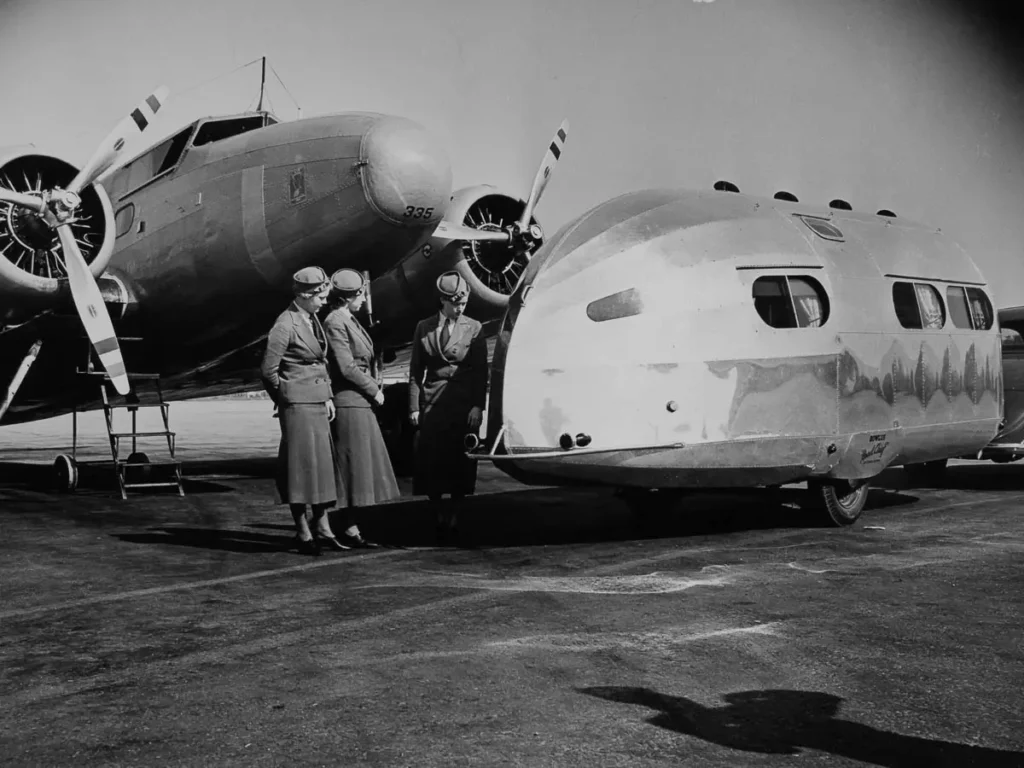
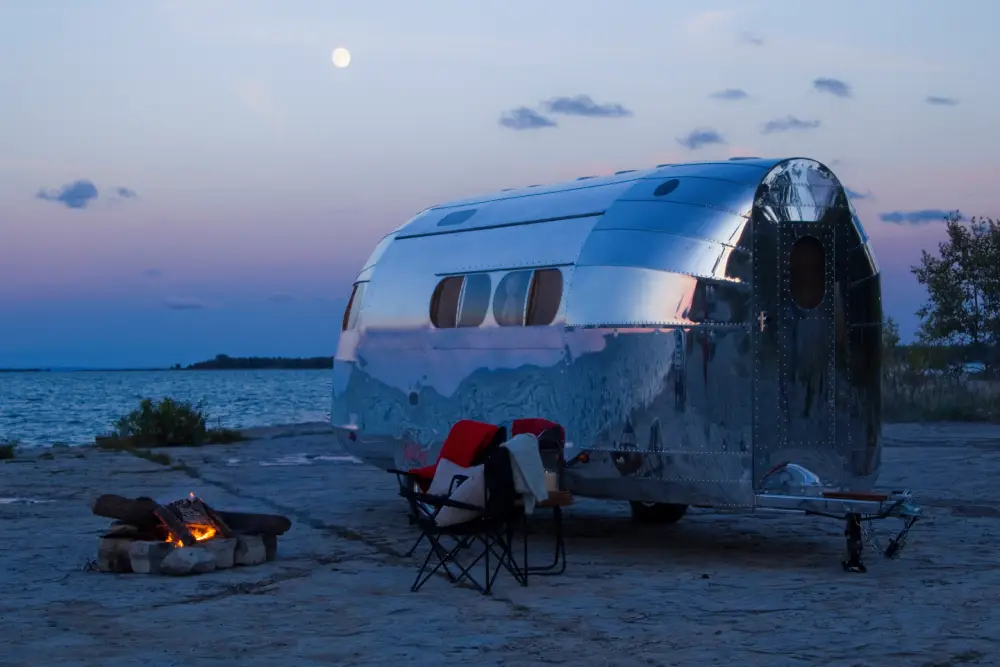
The Bowlus Road Chief (1934)
Images courtesy of Bowlus
In 1934, Hawley Bowlus — the Superintendent of Construction for Lindbergh’s Spirit of St. Louis — applied that aircraft know-how to a riveted-aluminum travel trailer known as the Road Chief. Only about 80 were built at his family ranch before production ended in 1936, but the design wasn’t gone forever. Decades later, the Bowlus name returned, and the company today builds polished-aluminum trailers that carry the same iconic look into a new era — now all-electric, with yacht-grade lithium power and solar that charges as you drive, built for off-grid travel and even able to park themselves by remote.
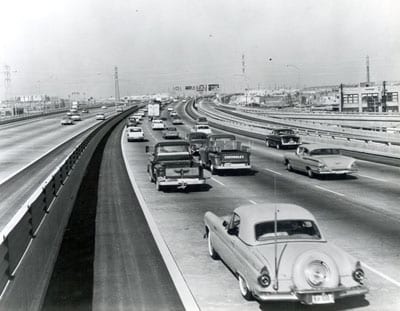
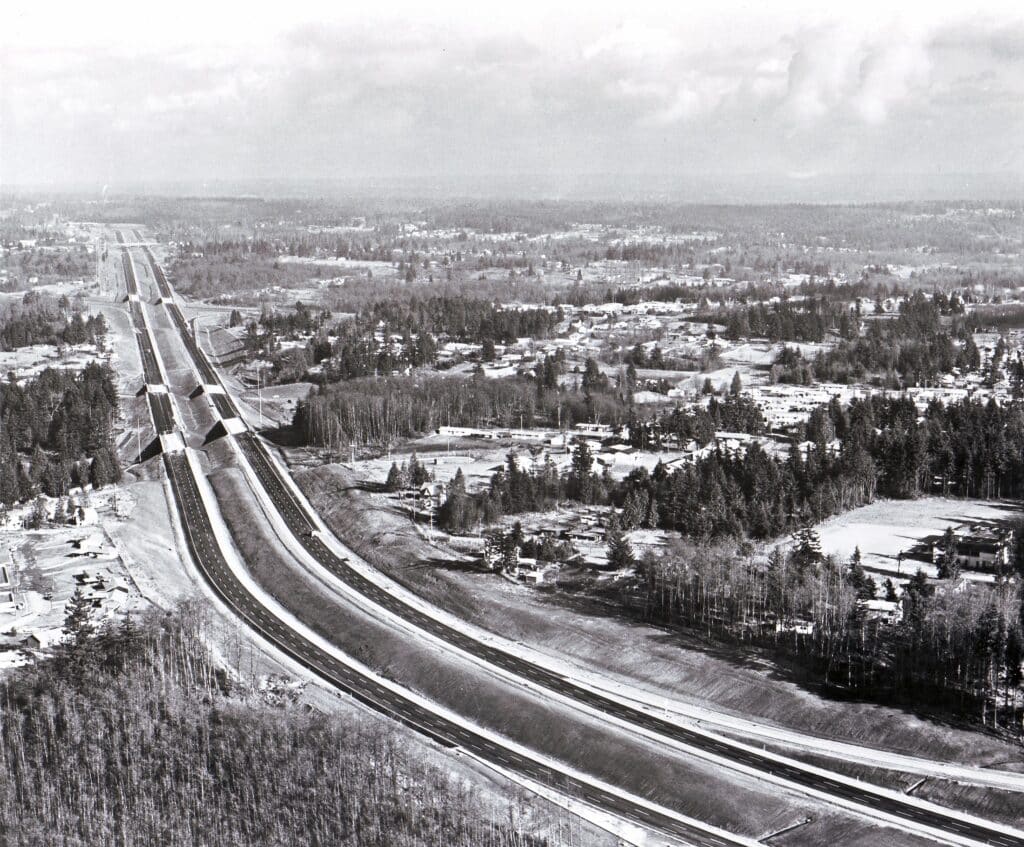
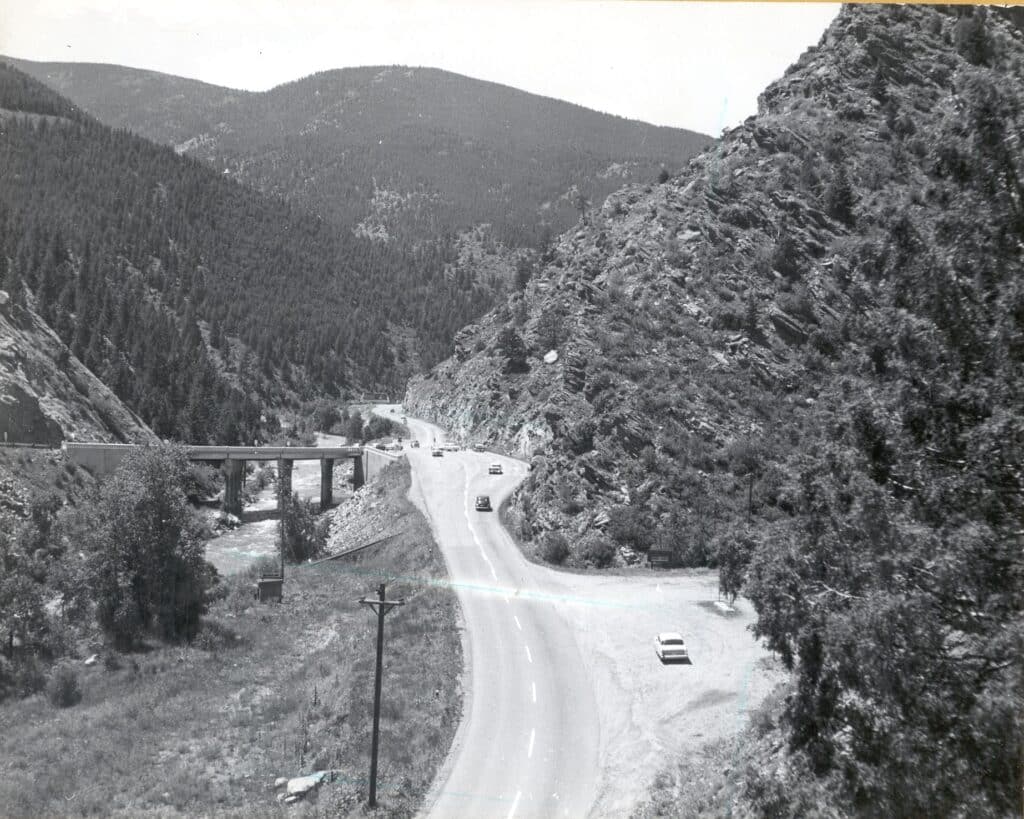
Los Angeles freeways, 1963Interstate 5 in Washington, 1965.Floyd Hill, Colorado, 1960, before I-70 construction
Images courtesy of the Federal Highway Administration / National Archives
During WWII, General Dwight D. Eisenhower saw how the German autobahn let armies move quickly across the country. After the war — as president — he signed the Federal-Aid Highway Act of 1956 — the largest public works project in American history to that point, which called for over 40,000 miles of connecting interstate, open to the public. A cross-country trip that once took weeks could soon take about 5 days.
Now, after the war, middle-class Americans had access to the country’s backyard — including the national parks, established many decades prior. Gas was affordable, and many workers now had two weeks’ vacation to spend. We started traveling more, and we started traveling differently. By 1954, visitation had already leapt to 47.8 million from just 11.7 million a decade earlier — before the Federal-Aid Highway Act. Within another decade—once highway construction was well underway—visitation had climbed past 120 million.
Image by Camping World
Private campgrounds followed the highways. Kampgrounds of America (KOA) opened its first standardized, hookup-equipped sites in 1962. And in 1966, drivers in California started putting “Good Sam” stickers on their rigs to signal they’d help a fellow traveler in a jam — the start of what’s now Good Sam.
The United States’ mobilization for WWII brought RV manufacturing to a halt. After the war, however, the future of the RV would be shaped by two related developments: the interstate highway system, as we mentioned, but also a steel-heavy manufacturing powerhouse based in northern Indiana. While the country was building places for travelers to go, the Midwest was busy building the RVs to get them there.
By 1948, Elkhart, Indiana, was already known as the “Trailer Capital of the World,” with about 100 companies building trailers in and around the county. After the war, its proximity to the booming steel yards in Gary, Indiana, did for RV manufacturing what proximity to steel and glass had done for Detroit’s auto industry decades earlier — just on a far smaller scale.
Notable RV of the Era
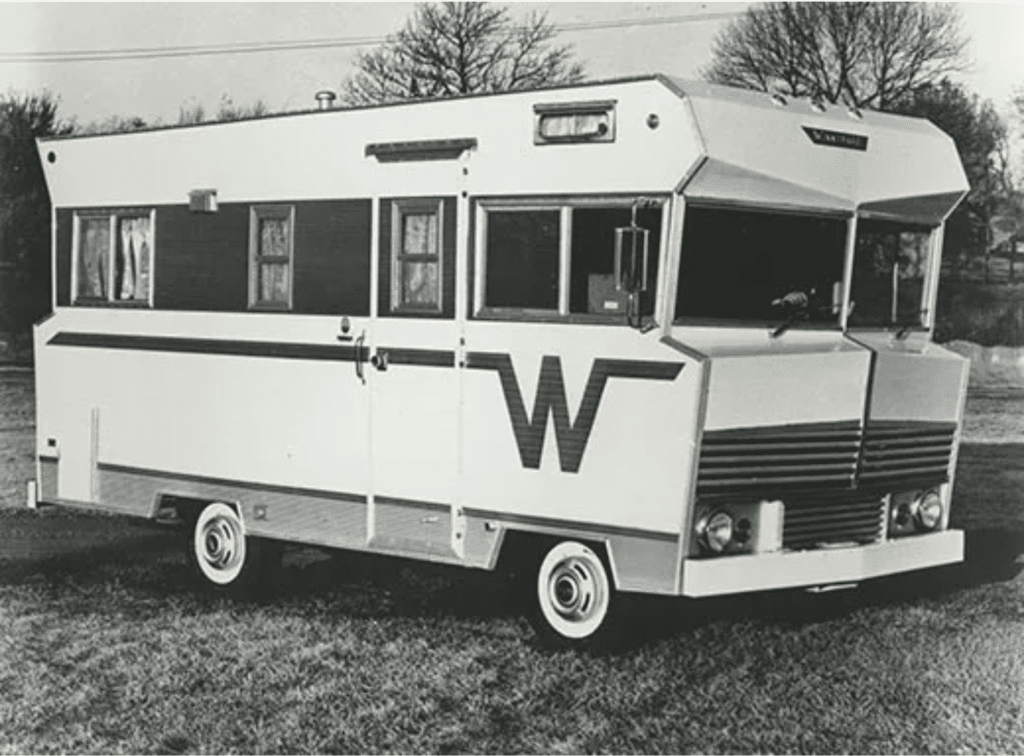
The Winnebago F-17 (1966)
Image courtesy of the RV/MH Hall of Fame
Before Winnebago’s F-17, motorhomes were custom-built and often priced out of reach for the average family. Built on an assembly line with in-house parts, the Winnebago sold for roughly half the price of its competitors, which made it ubiquitous. Just like the Model T, it was the first of its kind realistically available to a large segment of the population — and the brand name became shorthand for “RV.”
The price of fuel has always played a pivotal role in the story of the RV. In October 1973, OPEC’s embargo on the United States nearly quadrupled crude oil prices, raising them from about $2.90 per barrel to $11.65. The government even imposed a national speed limit of 55 miles per hour to limit fuel use. Six years later, the Iranian Revolution delivered another shock, and gas climbed past a dollar a gallon — the highest price American drivers had ever paid, adjusted for inflation.
For a while, things looked pretty bleak… RV production declined, and several manufacturers closed altogether. The motorhomes of the 1960s boom were big and heavy, and a coach getting single-digit gas mileage was nearly impossible to justify when you couldn’t reliably buy fuel. Even small RVs were difficult to justify. But the constriction led manufacturers and RVers to lean further into towables, like smaller travel trailers, and a new wave of compact motorhomes built on car and truck chassis instead. In 1973, the same year as the embargo, Toyota partnered with a small California outfit to launch the Toyota-Chinook — one of the first “mini motorhomes,” built right on a pickup truck. A year later, Roadtrek began building small, van-based motorhomes of its own — an early entry in what would become the modern Class B.
But leaning into fuel efficiency didn’t mean RVers got less comfortable. At least not in the long term.
RVs have often shadowed the American home, and in the late 70s, the same color TVs, microwaves, and rooftop air conditioning spreading across the suburbs were found in fifth wheels, travel trailers, and motorhomes. (That pattern continues today — solar panels, lithium batteries, and WiFi boosters have followed the same path from home to road, helping RVers sustain longer, more comfortable stays). So while the energy crisis made RVing more complex, the actual design of RVs trended toward comfort and livability.
Notable RV of the Era
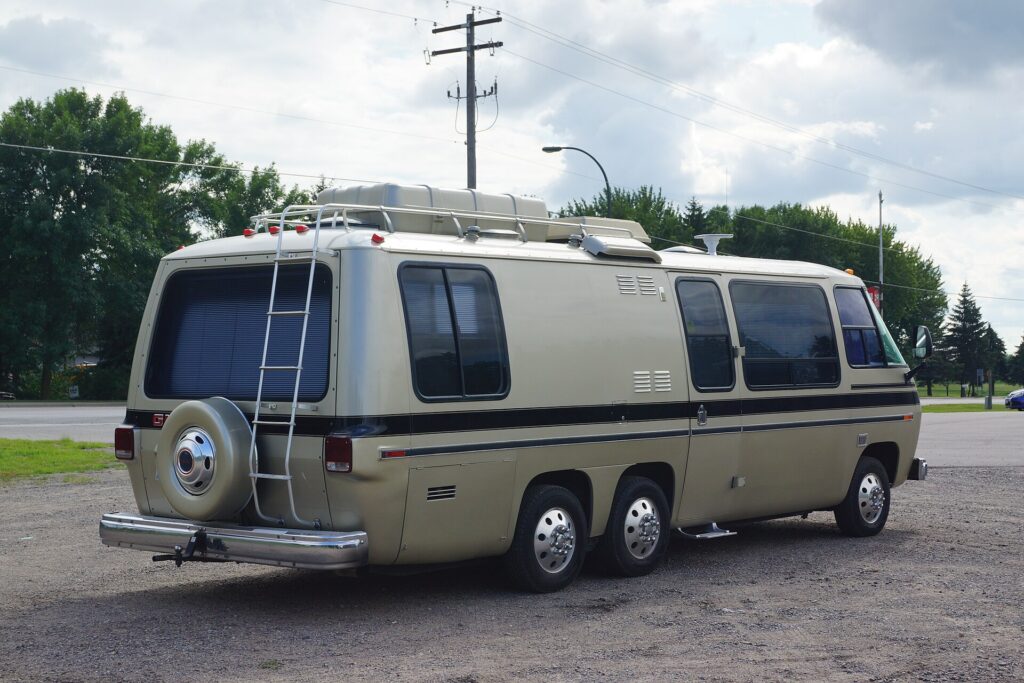
The GMC Motorhome (1978)
“1978 GMC Motorhome RV”
Image by Greg Gjerdingen via Creative Commons
The RV that was never meant to be… In 1973, GM engineered a motorhome as a single, integrated vehicle — chassis, drivetrain, and body all designed together, rather than an RV body bolted onto someone else’s truck frame. The result was a sleek, front-wheel-drive coach with an aluminum-and-fiberglass body that drove more like a luxury sedan than a truck. But its timing was brutal — it launched the very year of the oil embargo. Even at a relatively thrifty ~10 mpg, fuel shortages spooked buyers, and GM pulled the plug in 1978 after just 12,921 were built.
The Late 00s, The Recession
When the housing market collapsed in 2008, discretionary purchases like RVs were among the first things to get hit, and shipments fell by roughly 59%. Brands like Monaco and Country Coach went under, and once again, manufacturers leaned into affordable, lightweight towables.
Yet some Americans sought refuge in the RV, not unlike those who turned to the Covered Wagon during the Great Depression 80 years earlier. Jessica Bruder’s Nomadland — a book, then an Oscar-winning film — followed the story of those who moved into vans and RVs and hit the road to find work and an alternative lifestyle.
Online communities swelled even after the economy recovered (#vanlife racked up more than 11 million posts on Instagram), and “full-timing” and “van life” entered the vocabulary. What began for some as a last resort became a choice for many others. Of course, full-time RV living had existed prior to the 2008 economic downturn, but social media enabled more RVers to share their stories and educational content with others.
Notable RV of the Era
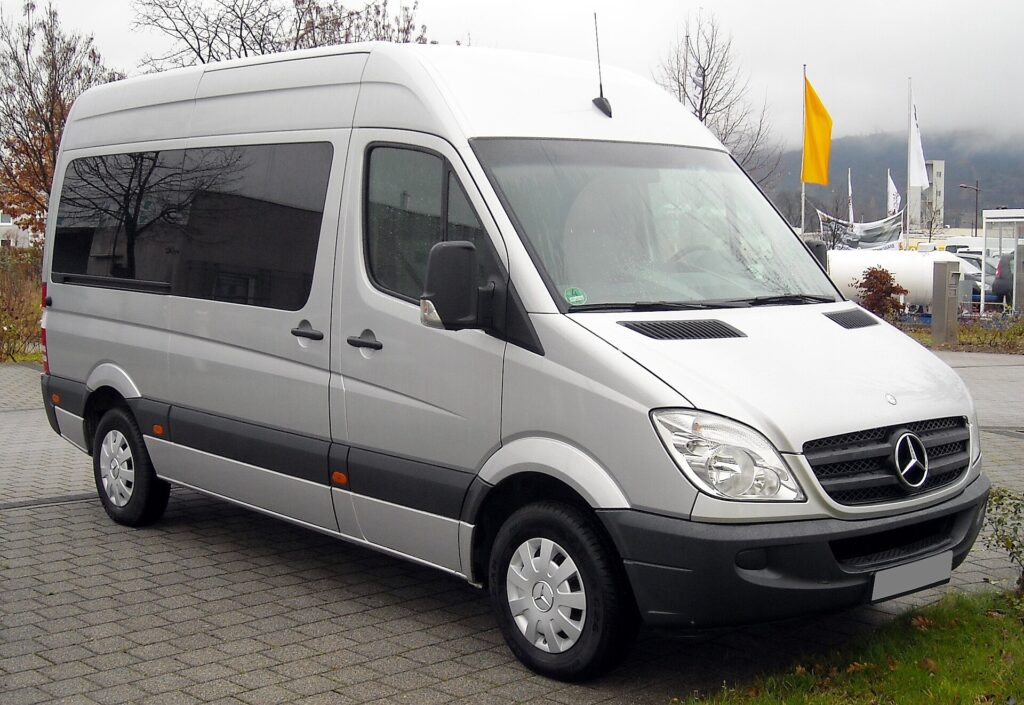
The Mercedes-Benz® Sprinter Camper Van
“Mercedes-Benz Sprinter W906” by Rudolf Stricker, via Wikimedia Commons.
The Sprinter was the nomad’s blank canvas. As full-timing spread from fringe to movement, the tall, roomy Sprinter became the signature platform of “van life,” the ideal DIY conversion canvas, paired with cheap solar and early mobile internet that let a new generation live and work on the road.
The 2020s: The Global Pandemic
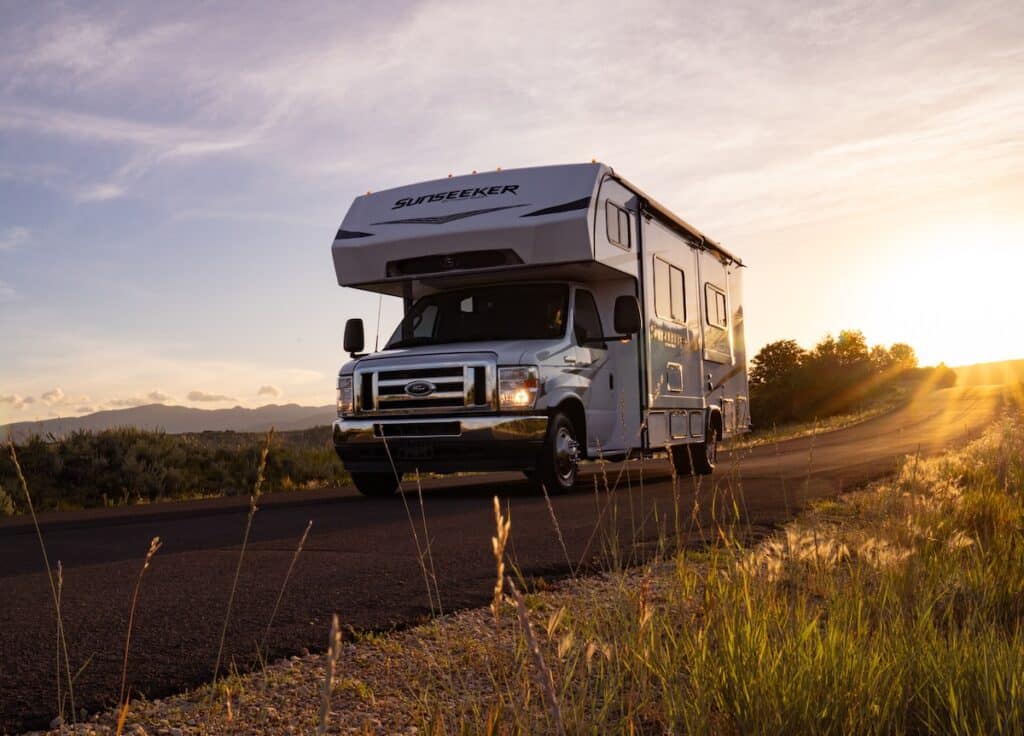
Image by Camping World
When COVID-19 shut the country down in the spring of 2020, travel itself mostly stopped — with the exception of RVs. Flights were grounded, hotels closed, but after a brief pause, RVing took off. It was now a safer, more affordable option for Americans to still travel, go on vacation, and explore while almost everything else was temporarily suspended.
In 2020, even with a two-month factory shutdown, RV shipments finished up 6% over the year before — and 2021 became the biggest year the industry had ever seen, with roughly 602,200 units shipped, past every prior record. Dealers reported first-time buyers making up as much as 80% of sales in some markets, compared with a typical 25% before the pandemic. And the median age of an RV owner began to drop, from 53 to 49 by 2025. Their on-ramp was the affordable, lightweight travel trailer — small enough to tow behind an SUV, cheap enough to be a first rig, and roomy enough for a family.
Remote work also untethered millions from the office, and the RV became somewhere you could both live and earn a living. The full-timers and van-lifers who set the stage after 2008 suddenly found themselves the leading edge of a much larger crowd. Even as a temporary solution, many Americans could leave the cities and maintain an off-the-grid presence at their jobs, a pattern that would continue even after the pandemic.
What began as the only safe way out of the house turned into something larger: the same freedom and independence Americans had reached for in every hard stretch before, now within reach of a whole new generation.
Notable RV of the Era
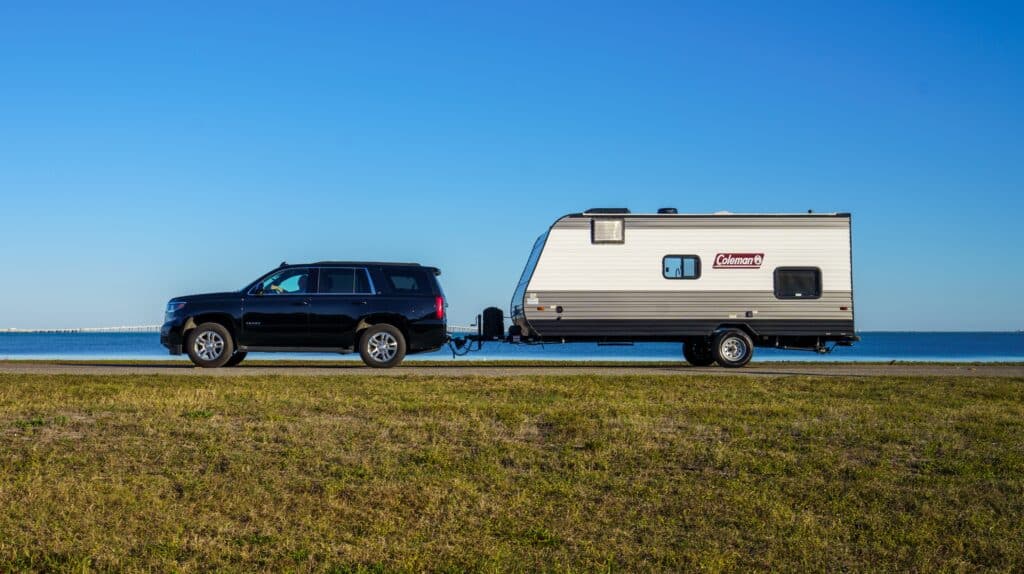
Coleman 17B
Image by Camping World
The everyman’s first rig. Light enough to tow behind an SUV and cheap enough to be a first purchase, the compact single-axle travel trailer was the on-ramp for the millions of first-time, younger buyers who flooded in — the exact embodiment of “livability meets affordability” .
While the boom period of the pandemic would eventually level off, some of the patterns established then remain true today. RVing attracts a younger audience. More and more Americans see RVing as a cost-effective way to travel and vacation. In the summer of 2026, 37 million Americans plan to go RVing, while approximately 3 million are expected to rent.
And the RVs themselves continue to evolve: campers keep getting lighter and more self-sufficient, with added off-grid capability with solar panels and bigger batteries. We see more and more electric prototypes as manufacturers continue to try to find the balance between range and fuel efficiency. And still the affordable family trailer — the same basic idea Arthur Sherman stumbled onto in 1929 — remains one of the most popular ways to RV. Easy to operate, within budget, and easy to tow.
Two hundred and fifty years in, the country that taught itself to camp out of a Model T continues the tradition.
What RV era stands out the most to you? Let us know in the comments below.
Carl is our Written Content Manager here at Camping World. He's an avid reader, road tripper, and camper, and enjoys all things outdoors, especially near rivers. He lives with his family in Indianapolis, Indiana.
Join our email list and stay up-to-date on the latest news, product innovations, events, promotions, and lots of other fun updates.
The information provided in this blog is for general informational purposes only and not intended to take the place of professional service providers. While we strive to provide accurate and up-to-date information, we make no representations or warranties of any kind, about the completeness, accuracy, reliability, suitability, or availability with respect to the information, products, services, or advice contained on the blog for any purpose. Any reliance you place on such information is therefore strictly at your own risk. In no event will we be liable for any loss or damage including without limitation, indirect or consequential loss or damage, or any loss or damage whatsoever arising from loss of data or profits arising out of, or in connection with, the use of this blog.



Very enjoyable and educational for a newbie like me.
Glad to hear Mary, thanks for sharing.
Great read thank you!
Very good article.
Thank you!