Winnebago recently launched the Elora/Resa, a new, small motorhome designed to ease first-timers into the RV lifestyle with a more manageable learning curve—and possibly pricetag. The roughly 20-foot rig is one of the brand’s most affordable motorhomes yet, and it arrives with a chassis choice that stands out in this segment.
Alongside the Elora, Winnebago sells the identical rig as the Resa—a similar situation as their View and Navion motorhomes.
Note: Winnebago calls the Elora a Class C, which it does for all of their motorhomes built on standard truck (Ford®/Chevy®) chassis, as well as those built on extended van chassis (Transit®, Sprinter®, and now ProMaster®). We define the latter as B+ motorhomes, those built on traditional Class C van chassis, but with extended built living spaces more reminiscent of Class C RV construction.
A ProMaster® in B+ Territory
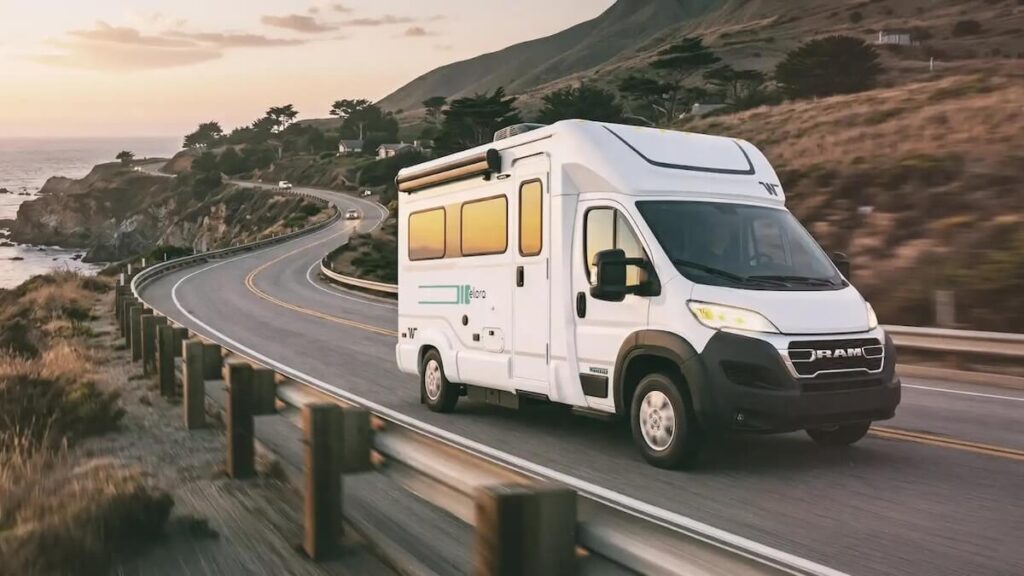
Most affordable, beginner-oriented C motorhomes we’ve seen to date are built on a Ford Transit® or Mercedes Sprinter® chassis. Winnebago’s new B-plus breaks from that pattern by riding on a RAM ProMaster® 159 with a 3.6-liter V6 engine and nine-speed automatic transmission. It’s the same platform Winnebago already uses for its Solis camper vans, but with a larger motorhome box built onto the back.
It’s a notable departure for the small Class C/B+ category, and one that adds a reliable RAM option into a segment we like to call the “Goldilocks of motorhomes.”
Small Touches, Big Payoff
Images by Winnebago
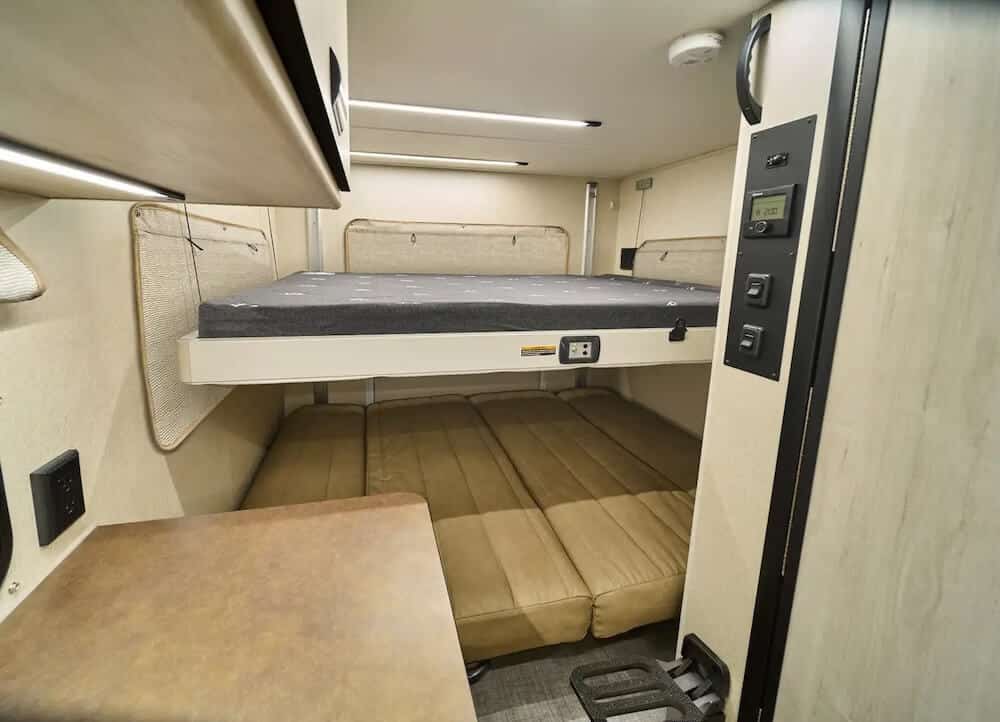
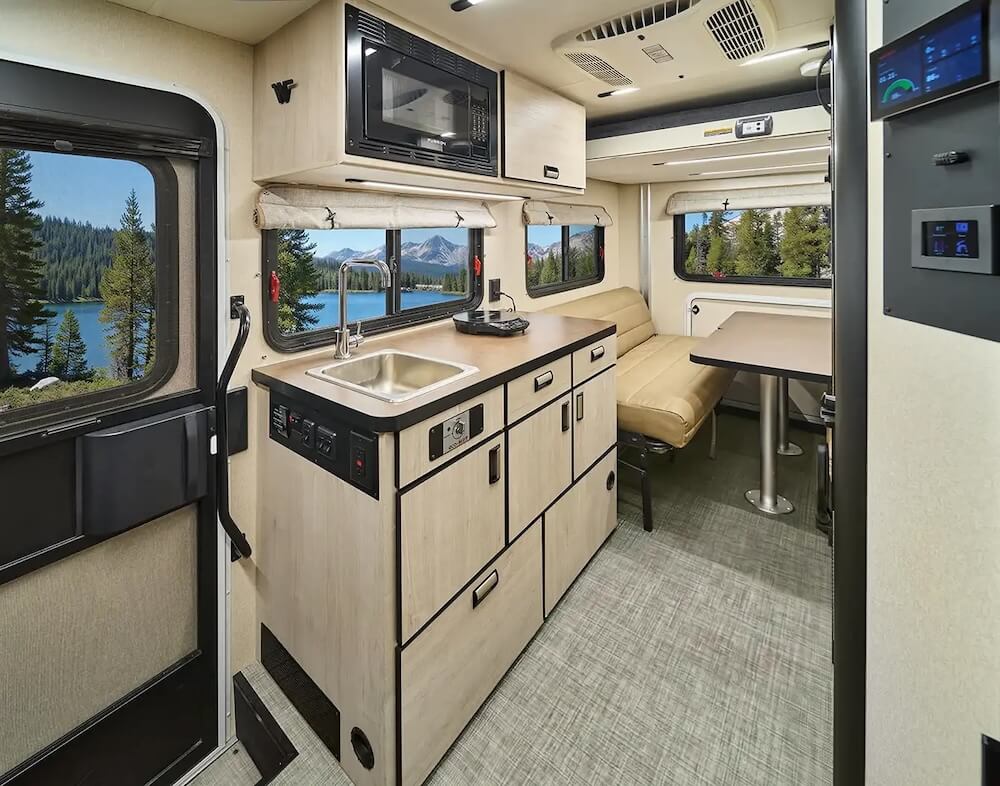
Winnebago added some clever details aimed to make life easier for first-time owners. The rear lounge features opposing sofas that convert into a 60” x 80” queen bed. A second, motorized bunk descends from the ceiling on a cable-lift mechanism to add two more sleeping spots. When you don’t need the beds, the whole lounge setup tucks away, clearing a flat cargo floor that loads through a rear hatch — essentially the same trick toy haulers use with their rear garages, just scaled down to fit a compact motorhome.
Another standout, and this one is easy to overlook: the cap to the waste tank termination includes a chunky, oversized grip — so you have a dedicated handle to open that cap further away from the stuff that’s on the other side of it. It solves a genuinely annoying problem that most manufacturers have simply left alone for years.
One Tank, Some Questions
Instead of a propane system, the Elora pulls fuel for the engine and the onboard appliances from a single gasoline tank. It’s a simpler ownership experience on paper: one fuel type, no separate bottles to fill, swap, or monitor. But it’s also worth a second look. With towables, shutting off the propane at the bottle before traveling is an effective way to reduce the risk of flammability in the event of an accident.
While motorhomes make it a bit safer to keep some LP-fed appliances (like two-way refrigerators, now increasingly rare) running while underway, it’s not yet clear whether the Elora’s gas system includes a dedicated shutoff that isolates the engine’s fuel supply from the appliance lines — a detail I’d want to learn more about before calling this a definitive upgrade.
Elsewhere, the Elora leans on a 5-kWh EcoFlow battery and PowerHub with 200 watts of solar, an optional 2,800-watt gas generator, and a hybrid wet/dry bathroom layout carried over from the Ekko, Winnebago’s off-grid B+ line.
What do you think of Winnebago’s approach with the Elora/Resa? Let us know in the comments below.